

Teacher Newsletter for Classroom Yoga: Explaining Mindful Movement to Families
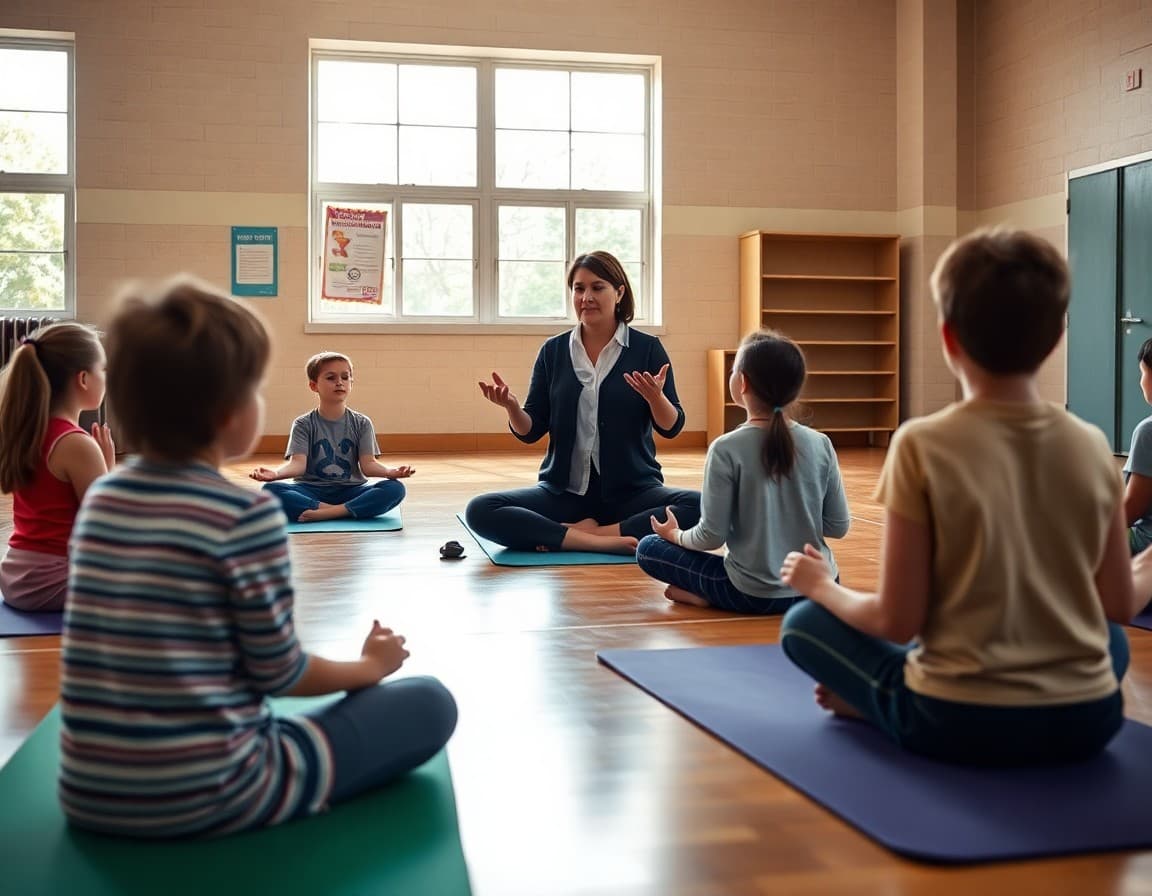
Classroom yoga is one of those additions to the school day that generates questions from families until they understand what it is and what the research shows. A clear, warm newsletter introduction to your yoga practice prevents most of the uncertainty and invites families to see the practice as a valuable tool rather than an unusual intrusion into academic time.
Define classroom yoga clearly and specifically
Start with what it is. Classroom yoga is a brief mindful movement practice, typically three to seven minutes, that uses simple physical poses and breath awareness to help students regulate their attention and emotional state. It is done at desks or in a clear floor space. It requires no equipment, no prior experience, and no particular fitness level. And it is not a spiritual or religious practice in educational settings. Say that explicitly.
Share the research behind the practice
Research on school-based yoga programs consistently shows improvements in emotional regulation, focus, and self-reported stress. The mechanism is the breath-body connection: slow, controlled breathing activates the parasympathetic nervous system, which counteracts the stress response. Students who learn to use their breath to shift their physiological state are developing a self-regulation skill they can use for the rest of their lives.
Describe when and how you use yoga in the classroom
Tell families where the yoga practice fits in the school day. Before a focused work period? As a transition after recess or a difficult lesson? As a calming close to the day? The timing tells families a lot about the purpose. "We do three minutes of yoga right before writing workshop. Students arrive more settled and the quality of focused work improves noticeably" is the kind of specific observation that makes the practice feel intentional rather than incidental.
Name the poses and practices students are learning
You do not need to name everything, but a short list of the poses students are practicing gives families something to reference. Mountain pose teaches grounded attention. Child's pose teaches self-calming. Tree pose teaches balance and focus. Seated cat-cow stretch teaches breath coordination. Simple names and functions are enough for families to understand what their student is doing.
Address concerns respectfully and directly
Some families may have concerns about yoga in a school setting based on religious or philosophical grounds. Acknowledge this possibility in the newsletter and restate the educational frame clearly. "The poses and breathing exercises we use come from yoga tradition but are practiced here as physical education and self-regulation techniques. If you have concerns, please reach out so we can discuss an alternative arrangement for your student."
Give families a simple home practice
Suggest two or three poses students can teach their family. Students who know that their parents are curious about the practice will often demonstrate spontaneously. "Ask your student to show you mountain pose and the three-breath reset. Doing it together for two minutes before homework starts can help everyone settle." This invitation makes the practice feel like a shared tool rather than something that only belongs at school.
Connect the practice to emotional regulation skills
The deepest benefit of classroom yoga is not the physical movement. It is the practice of recognizing when you are dysregulated and having a tool that works. Students who learn to take a breath and change their posture when they are anxious or frustrated are less likely to act out, shut down, or give up. Tell families that the yoga practice is a self-regulation investment that pays out in every challenging moment their student faces.
Get one newsletter idea every week.
Free. For teachers. No spam.
Frequently asked questions
How do I explain classroom yoga to families who might question it?
Frame it as mindful movement and stress regulation, not as a spiritual practice. Research on school-based yoga consistently shows improvements in attention, emotional regulation, and self-reported stress levels. The physical practice of yoga, separate from any philosophical or religious context, is what is used in educational settings.
What does classroom yoga actually look like?
In most school settings, classroom yoga involves three to five minutes of slow, age-appropriate stretches and poses combined with breath awareness. It is done seated or standing at desks, often as a transition activity or before a focused work period. No special equipment, no religious content.
What benefits does yoga in school research show?
Peer-reviewed studies show that regular brief yoga practice in school settings improves self-regulation, reduces anxiety, improves focus during subsequent tasks, and supports positive social-emotional outcomes. The body-breath connection specifically trains the ability to calm a stress response, which is a learnable skill.
How can families continue the practice at home?
Suggest two or three simple poses that require no equipment: mountain pose for standing and grounding, child's pose for calming, and seated cat-cow stretch for the spine and breath. A short bedtime routine using these poses can help students settle before sleep.
Can Daystage help me send a classroom yoga introduction newsletter to families?
Yes. Daystage is ideal for sending a focused, professional introduction to a new classroom practice like yoga, with clear information and a warm tone that sets families at ease.

Adi Ackerman
Author
Adi Ackerman is a former classroom teacher and curriculum writer with 8 years in K-8 schools. She writes about school communication, parent engagement, and what actually works in real classrooms.
More for Classroom Teachers
Teacher Newsletter for Brain Breaks: Why Movement Supports Learning
Classroom Teachers · 6 min read
Teacher Newsletter for Physical Breaks in Class: Movement That Improves Learning
Classroom Teachers · 6 min read
How to Explain Student Self-Assessment to Families in Your Teacher Newsletter
Classroom Teachers · 6 min read
Ready to send your first newsletter?
3 newsletters free. No credit card. First one ready in under 5 minutes.
Get started free