
How to Write a Winter Olympics Unit Newsletter to Families
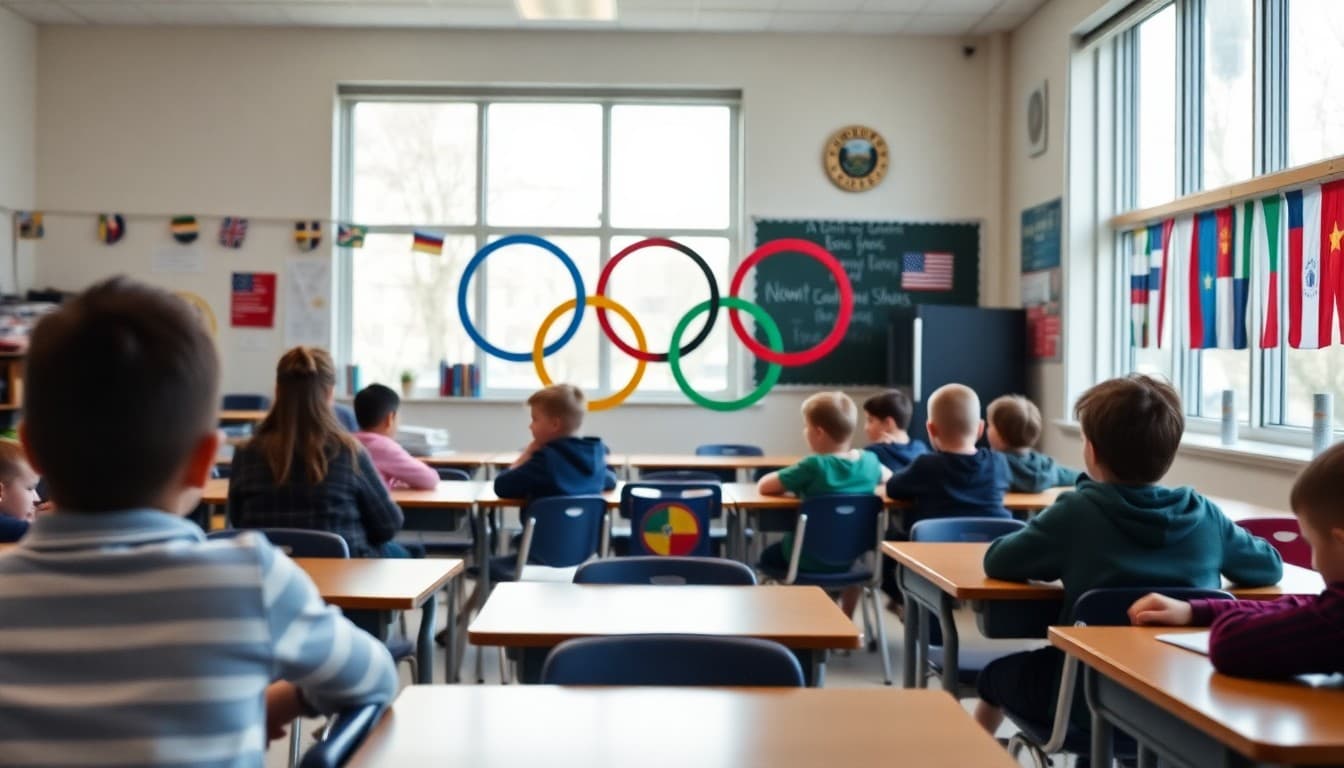
The Winter Olympics is one of those real-world events that lands in your classroom with built-in student curiosity and a ready-made global context for learning. A newsletter at the start of a Winter Olympics unit tells families what their student is investigating, invites them to watch events together as a learning activity, and shows how an international sporting event can be the entry point for genuine academic inquiry.
Open with the real-world hook
Start with the event itself. The Winter Olympics is a global competition where athletes from more than ninety countries gather to compete in sports that most students have never tried. It happens every four years. It will be happening right now while students are in school. That context is the hook. The curriculum connections follow naturally.
Describe the curriculum connections specifically
Name what your class will be investigating through the lens of the Games. Geography: locating host and participating countries, studying the physical geography that makes certain sports possible. Math: tracking medal counts, calculating speeds and times, working with real data sets. Science: the physics of sliding, jumping, and flying on ice and snow. History and social studies: the origins of the Olympic movement, how international events connect nations. Be specific enough that families see this as serious curriculum work.
Give families specific ways to watch together
Watching events together with academic curiosity is one of the most accessible at-home extensions of a Winter Olympics unit. Give families specific things to look for and discuss. Ask their student which countries are competing in a given event. Ask where those countries are in the world. Ask how athletes train for sports most students have never tried. These questions turn passive viewership into active inquiry.
Suggest the medal count as a math activity
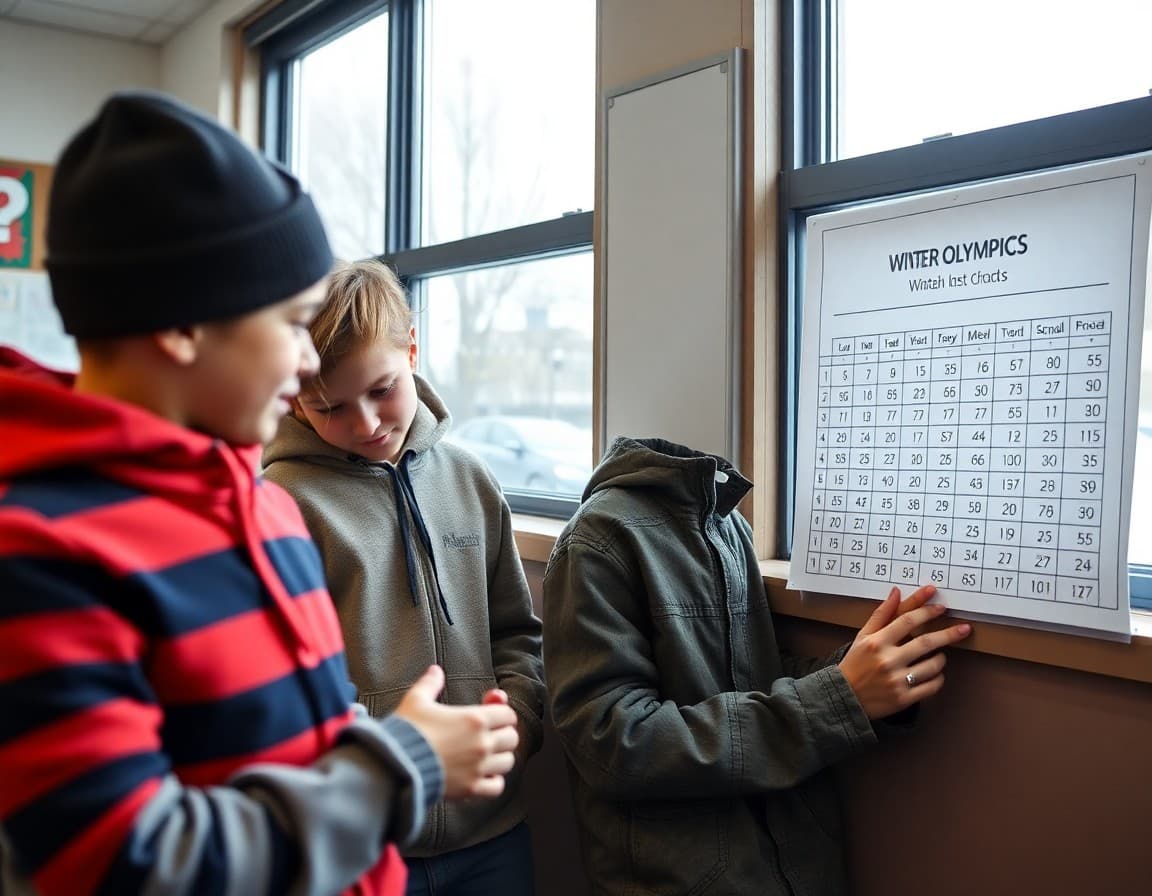
Medal tracking is a natural data literacy activity. Families and students can track counts together, compare countries, create their own graphs, and make predictions. This is real-world math that students often find more engaging than textbook problems because the data changes every day and the context is genuinely interesting.
Include the host country specifically
The host country is a natural starting point for geography, culture, and history investigation. Give families a few interesting facts about the host country and suggest one way to learn more about it. Students who feel like they know something specific about the place where the Games are happening are more engaged with the events than students who watch without context.
Share a sport that connects to your curriculum
If your class is studying physics, ski jumping provides a real-world application of projectile motion and aerodynamics. If you are covering geometry, figure skating scoring involves angle analysis and symmetry. One specific sport connection to something students are already studying creates a moment where school knowledge suddenly applies to something on television.
Describe the unit's culminating activity
Tell families what the unit builds toward. A country research project, a class data analysis presentation, an Olympic-themed problem-solving challenge, an athlete biography. The culminating activity gives students a goal and gives families something specific to anticipate and support.
Daystage makes it easy to send a Winter Olympics unit launch newsletter and to follow up with updates as the Games progress and student learning deepens. Real-time events make for the most engaging curriculum connections of the year.
Get one newsletter idea every week.
Free. For teachers. No spam.
Frequently asked questions
What curriculum connections can a Winter Olympics unit support?
Geography (host country and participating nations), math (medal tally data analysis, speed and distance calculations), science (physics of ice and snow sports), social studies (Olympic history, international cooperation), and reading and writing (athlete biography research, sports journalism). The Olympics is one of the richest cross-curricular real-world events available to classroom teachers.
How can families support a Winter Olympics unit at home?
Watching events together and asking questions about the sports, the countries, and the athletes. Tracking medal counts as a math activity. Looking up the host country on a map and finding it relative to your own location. Discussing what it means to represent your country in a global competition. These are all natural, low-effort home extensions.
How do I make the Winter Olympics unit inclusive for students from countries that do not participate in winter sports?
Frame the unit around global participation and the ideals of international cooperation rather than only around traditional winter sports powers. Exploring which countries are sending athletes for the first time, or how winter sports have spread to warmer climates, opens the unit to every student's background.
Can a Winter Olympics unit work in a summer Olympics year?
Yes. You can adapt the unit to the Summer Games just as effectively. The curriculum connections (geography, data analysis, culture, history, science of sport) transfer directly. Your newsletter would simply reference the current or upcoming Summer Games context.
What tool helps teachers send Winter Olympics unit newsletters?
Daystage makes it easy to send a unit launch newsletter and follow up with weekly updates as the Games progress so families stay connected to the real-time learning their student is doing.

Adi Ackerman
Author
Adi Ackerman is a former classroom teacher and curriculum writer with 8 years in K-8 schools. She writes about school communication, parent engagement, and what actually works in real classrooms.
More for Classroom Teachers
Ready to send your first newsletter?
3 newsletters free. No credit card. First one ready in under 5 minutes.
Get started free