

Teacher Newsletter for Timelines: How to Explain This History Skill to Families
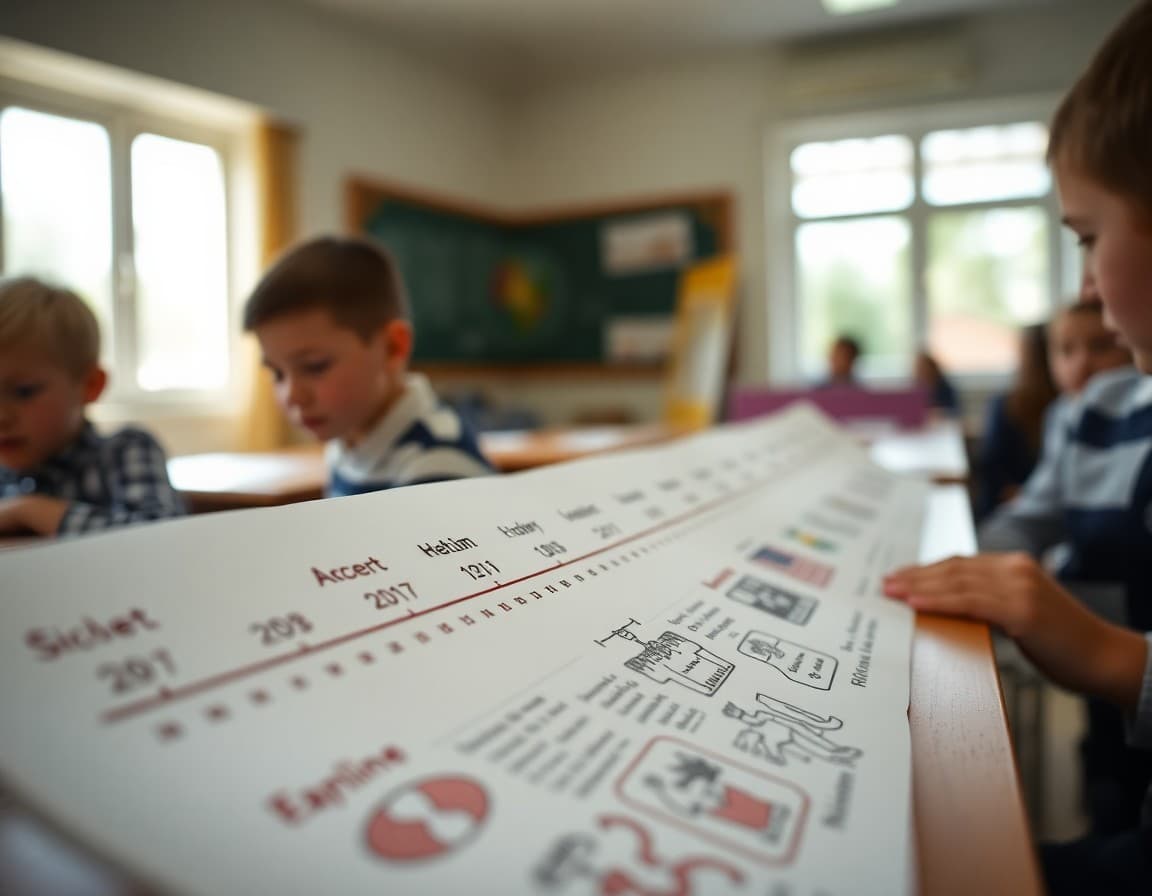
Timeline projects are one of the most versatile and enduring tools in history and social studies instruction. They teach students to think chronologically, to identify what matters most within a period, and to visualize how events connect over time. A newsletter that helps families understand the skill behind the project turns a poster assignment into a meaningful conversation piece at home.
Explain what timelines teach beyond dates and facts
Parents often see timelines as memorization exercises. The real learning is different. Students who build a timeline are making decisions about what is significant, what belongs and what does not, and how one event connects to or causes the next. That curatorial and causal thinking is the goal. The dates are the scaffolding, not the destination.
Describe the current timeline topic or period
Tell families what historical period, event, or topic the current timeline covers. Is it a personal history timeline? A unit on the Civil Rights Movement? The life of a famous scientist? The topic determines what kinds of events belong and how students are making selection decisions. Parents who know the topic can ask their student why they included a specific event and what they left out.
Explain the project format and requirements
If students are creating a physical timeline, a digital one, or integrating a timeline into a larger research project, tell families. Include the scope: how many events are expected, whether illustrations are required, how much written explanation should accompany each event. Families who understand the requirements can support rather than second-guess the work students bring home.
Connect timeline thinking to reading and writing skills
Chronological thinking is not exclusive to history. Understanding the sequence of events in a story, the order of steps in a scientific process, or the causal chain in a current events article all require the same temporal reasoning. Tell parents that timeline skills transfer directly to how students read complex texts and structure their own writing.
Suggest a home timeline activity
Families who build their own mini-timelines reinforce the skill in a memorable way. Suggest something personal and accessible: a timeline of the school year so far, a timeline of one day from morning to bedtime, or a timeline of a favorite book's major events. The structure is the same at any scale. Practicing at home with familiar content prepares students to apply it with unfamiliar historical content.
Address the common mistake of listing too much
Students who try to include every event they find end up with cluttered timelines that communicate nothing clearly. Teach families to encourage selectivity. "Which three events on your list were the most important? Why those?" is the question that develops historical judgment rather than just recall. Helping students prioritize is the most valuable support a parent can offer during this project.
Share a finished timeline example after the project
A photograph of a completed timeline, included in a post-project newsletter with the student's permission, shows families the quality of work happening in your classroom. It also celebrates the student who created it and signals to every other family that this project was worth taking seriously.
Get one newsletter idea every week.
Free. For teachers. No spam.
Frequently asked questions
What should I include in a timelines newsletter?
Explain what timelines teach (chronological thinking, cause and effect, sequence), what topic or period the current timeline covers, what format students are using, the project requirements if applicable, and how families can practice sequencing skills at home.
What are the key skills timelines develop?
Chronological thinking, understanding cause and effect as a sequence, selecting the most significant events to include, and representing information visually. These skills support comprehension in reading, research, and writing as well as history specifically.
How can families practice timeline skills at home?
Build a family timeline together: key dates from each family member's life, pets the family has had, homes they have lived in, or major events they remember. Even sequencing the steps of a recipe is practicing the same thinking. Connecting the skill to the familiar makes it stick.
How detailed should a student timeline be?
That depends on the grade level and the purpose of the assignment. Share your specific expectations in the newsletter. Events should be specific enough to be meaningful but not so numerous that the timeline loses its organizing function. For most projects, ten to twenty well-chosen events tell a better story than forty brief ones.
Can Daystage help me share timeline project updates with families?
Yes. You can send updates at the start of a timeline project and again when it is complete, including a photo of the finished work with permission. Daystage makes it easy to keep families connected throughout a multi-day project.

Adi Ackerman
Author
Adi Ackerman is a former classroom teacher and curriculum writer with 8 years in K-8 schools. She writes about school communication, parent engagement, and what actually works in real classrooms.
More for Classroom Teachers
Teacher Newsletter for Primary Sources: Helping Families Understand Historical Evidence
Classroom Teachers · 6 min read
Teacher Newsletter for History Fair: What to Tell Parents and When
Classroom Teachers · 6 min read
Teacher Newsletter for Current Events Friday: Building News Literacy With Families
Classroom Teachers · 6 min read
Ready to send your first newsletter?
3 newsletters free. No credit card. First one ready in under 5 minutes.
Get started free