

Teacher Newsletter on Time Management: Communicating With Families
Time management is one of the most complained-about student deficits and one of the least explicitly taught skills. If you are teaching it, families need to know, both to support the work and to stop doing things at home that undermine it. Your newsletter is the place to make that case.
Name the Specific Skills You Are Building
Time management is not one skill. Tell families what its components are: time estimation (how long will this actually take), task sequencing (what order to do things in), transition readiness (being done with one thing before starting another), and self-monitoring (noticing you are running behind and adjusting). Students can be strong in one and weak in another. Naming these components helps families understand where to pay attention at home.
Explain Why Students Underestimate Task Time
Planning fallacy is a real cognitive tendency. Students consistently estimate that tasks will take less time than they do. Tell families this is not laziness. It is a developmental pattern that can be corrected with practice and feedback. "When a student says a project will take an hour and it takes three, the goal is not to scold. It is to sit down afterward and say: what took longer than you expected? Why? What would you estimate differently next time?"
Describe What You Use in the Classroom
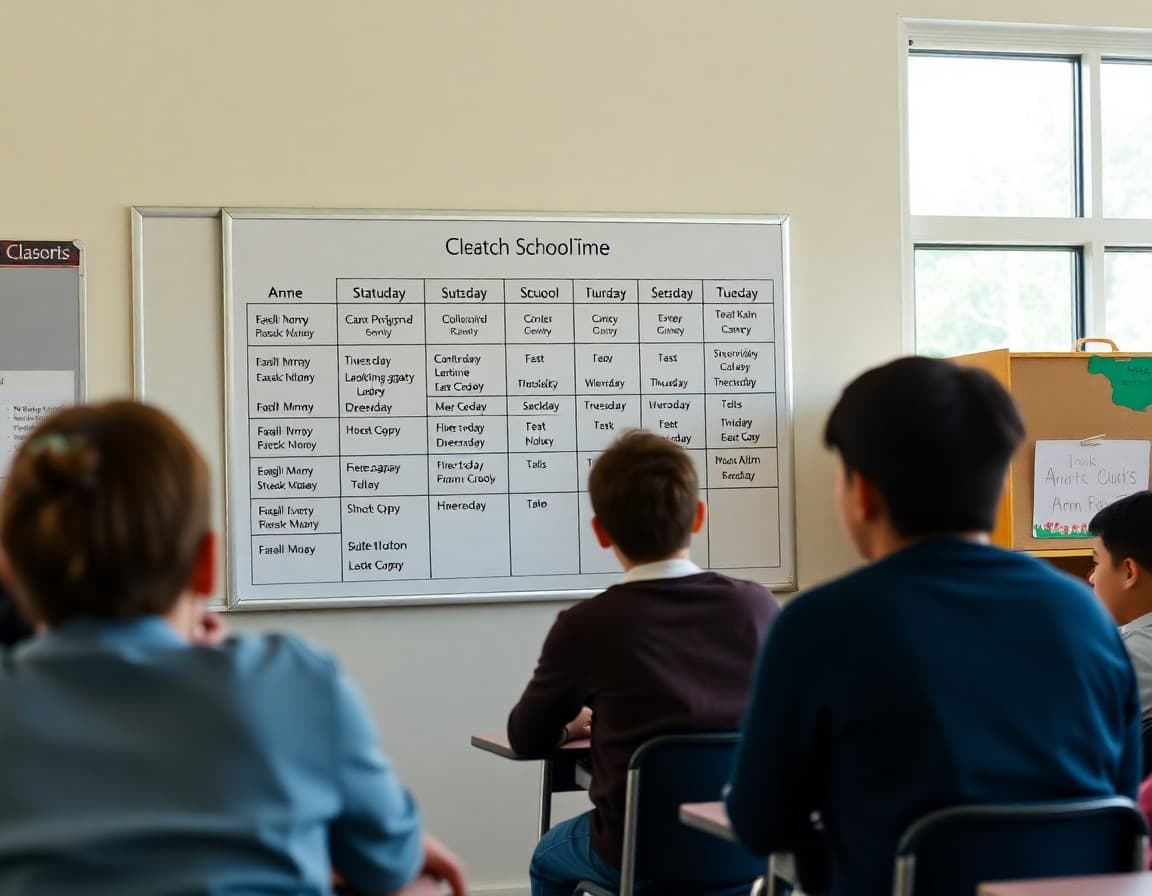
Tell families about the tools students are using: visual timers, daily planners, project breakdown charts, checklist systems. When families recognize these tools, they can use the same language at home: "What does your task breakdown look like?" or "Did you time yourself to see how long that took?" These connections between school and home are where the skill actually transfers.
Give Families a Specific Home Practice
Give them one concrete thing to try: before starting homework, have the student estimate how long each assignment will take and write it down. After finishing, compare the estimate to actual time. That three-minute activity builds time awareness faster than any amount of telling a child to hurry up. It is also a neutral activity, not a criticism, which reduces the emotional charge around homework time for a lot of families.
Address the Rescue Pattern
Many families manage their child's time for them: reminding them every five minutes, packing their bag, waking them up repeatedly. This removes the feedback loop the child needs to develop time awareness independently. Ask families to reduce one rescue behavior at a time. Not all at once. Start with one: "Let your child pack their own bag for a week, even if they forget something. The consequence of forgetting is the lesson."
Connect to Project-Based Learning
If your class does multi-week projects, explain how time management connects directly to the quality of the final product. Students who break a project into daily steps and stick to them produce significantly better work than students who work the night before the deadline. Tell families this plainly. They understand the connection when you make it explicit.
Set Expectations for the Rest of the Year
Tell families that the time management skills you are teaching now will show up in every long-term assignment for the rest of the school year. You are not just teaching a unit. You are building a system. Students who internalize it spend less time in panic mode and more time producing work they are proud of. That is worth communicating at the start.
Get one newsletter idea every week.
Free. For teachers. No spam.
Frequently asked questions
What should a time management newsletter cover?
Cover the specific skills you are teaching: estimating how long tasks take, breaking large tasks into steps, using planners or checklists, managing transitions between activities, and recognizing when they are running behind. Also include what families can do at home to build the same habits without micromanaging.
How do I explain time management to families without it sounding like discipline?
Frame it as an executive function skill, not a character trait. 'Time management is a cognitive skill that develops with practice, just like reading fluency. Students who have strong time awareness handle multi-step assignments, test pressure, and project deadlines with significantly less distress. We are building that skill explicitly.'
What does time management instruction look like in elementary school?
Early elementary focuses on transitions and following schedules. Upper elementary adds task estimation, project planning over multiple days, priority sequencing, and self-monitoring during work time. Students learn to notice when they are spending too long on one part of a task and adjust.
How can families build time awareness at home?
Ask them to use visible timers during homework and chores, involve children in the planning process, and stop rescuing when a child underestimates how long something takes. Natural consequences from poor time estimates are the most effective teacher, as long as families do not absorb the consequence instead.
Does Daystage help teachers communicate time management unit content to families?
Yes. You can build a structured update in Daystage with the unit goals, a home tips section, and a visual of the classroom tools students are using. Tracking open rates lets you identify which families may need a personal follow-up.

Adi Ackerman
Author
Adi Ackerman is a former classroom teacher and curriculum writer with 8 years in K-8 schools. She writes about school communication, parent engagement, and what actually works in real classrooms.
More for Classroom Teachers
Ready to send your first newsletter?
3 newsletters free. No credit card. First one ready in under 5 minutes.
Get started free