

Teacher Newsletter on Test-Taking Strategies: Preparing Families
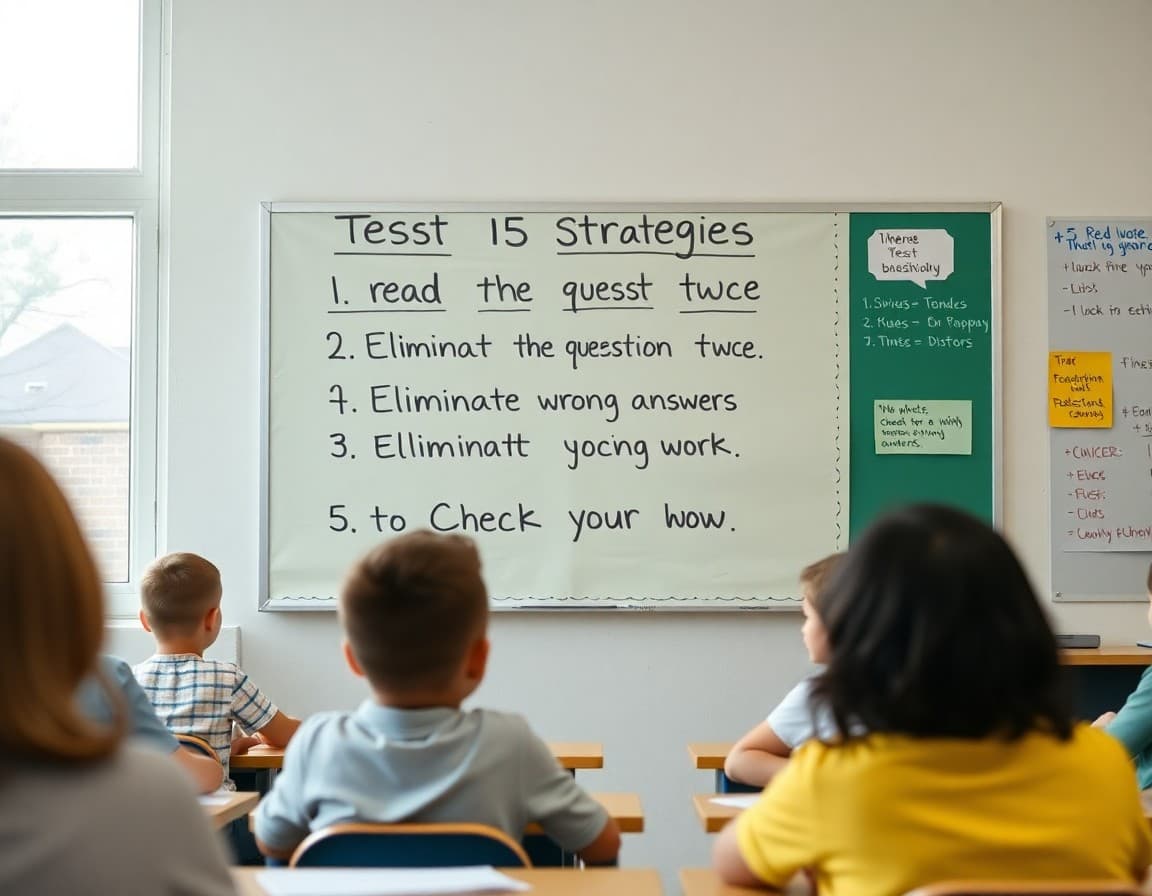
Test-taking is a skill separate from content knowledge. A student who knows the material but does not know how to navigate a test format will underperform. Your newsletter before a major assessment can both prepare families logistically and give them the tools to support their child's performance without adding to the pressure.
Explain That Test-Taking Is a Taught Skill
Start by reframing the test. "Knowing the material is necessary but not sufficient. Students also need to know how to read a question carefully, manage their time across a multi-section test, handle questions they are not immediately sure about, and avoid common traps in multiple-choice formatting. These are skills we teach and practice. The test is a chance to use them."
Name the Specific Strategies Students Are Practicing
List what you have taught: read the entire question before looking at the answer choices, use process of elimination, skip hard questions and return to them, use all available time rather than rushing to finish, underline key words in word problems. When families know what strategies exist, they can ask about them during home practice: "Did you use process of elimination on that one? What did you eliminate?"
Give Families a Night-Before Protocol
Provide a specific evening routine: pack materials needed for the test, do a brief fifteen-minute review of key concepts only (not a two-hour cram session), go to bed at the normal time, and avoid discussing the stakes. Tell families plainly: "The most valuable thing you can do the night before a test is make sure your child is rested and calm. Everything else is secondary."
Address the Morning-Of Routine
A rushed morning elevates cortisol and reduces working memory capacity. Ask families to build in ten extra minutes on test days: a calm breakfast, time to arrive without rushing, no last-minute quizzing at the door. That margin matters. A student who arrives at school calm performs better than a student who arrived anxious, even with identical content knowledge.
Explain What You Are and Are Not Assessing
Tell families what the test measures. If it measures the skills from the unit rather than everything ever taught, say so. If partial credit is available, say that too. Families often assume tests are all-or-nothing, which amplifies stakes anxiety unnecessarily. "This test assesses four specific skills from our unit. Students do not need to know everything. They need to demonstrate these four things clearly."
Provide Context for Results
Tell families when results will be available and how you plan to use them. If the test informs your instruction (which it should), explain that. "The results tell me which students need more practice with constructed response and which students are ready for the next level. I use this to plan the next two weeks." That framing positions the test as instructional data, not a verdict.
Reduce the Stakes Without Minimizing the Work
Reassure families that one assessment does not define a student academically. "This is one data point. Students who prepared, arrive rested, and use the strategies they have been taught will perform well regardless of test anxiety. And if the result is surprising, we have time in this year to address it." That is honest and calming without being dismissive.
Get one newsletter idea every week.
Free. For teachers. No spam.
Frequently asked questions
What should a test-taking strategies newsletter include?
Include the specific strategies you are teaching, what to do the night before and morning of a test, how families can help reduce test anxiety without amplifying it, and a clear statement of what you are and are not assessing so families have accurate expectations.
What are the most important test-taking strategies for elementary students?
Read the question twice before answering, eliminate obviously wrong choices before guessing, skip and come back rather than getting stuck, check work after finishing if time allows, and use context clues for vocabulary questions. For constructed response, answer the question directly in the first sentence rather than restating it.
How do I help families reduce test anxiety without accidentally increasing it?
Ask families to talk about the test the same way they talk about other schoolwork: as something to prepare for and then do, not as a high-stakes judgment. Telling a child 'this really matters' or 'you need to do well' increases anxiety. Saying 'you know this material, let's make sure you're rested' is more useful.
What should families avoid doing the night before a test?
Last-minute cramming after 8 PM, late bedtimes, heavy discussions about the stakes, and quizzing children aggressively right before sleep. Sleep consolidates memory. A rested student with no additional stress will outperform a cramming student who slept poorly.
Can I use Daystage to send a test prep update to families?
Yes. Daystage is a good option for this because you can structure the message with a preparation checklist, a morning-of protocol, and a reminder about start time and materials needed. Families can reference the newsletter the morning of the test rather than trying to remember a verbal reminder.

Adi Ackerman
Author
Adi Ackerman is a former classroom teacher and curriculum writer with 8 years in K-8 schools. She writes about school communication, parent engagement, and what actually works in real classrooms.
More for Classroom Teachers
Ready to send your first newsletter?
3 newsletters free. No credit card. First one ready in under 5 minutes.
Get started free