

How to Write a Talent Show Newsletter to Families
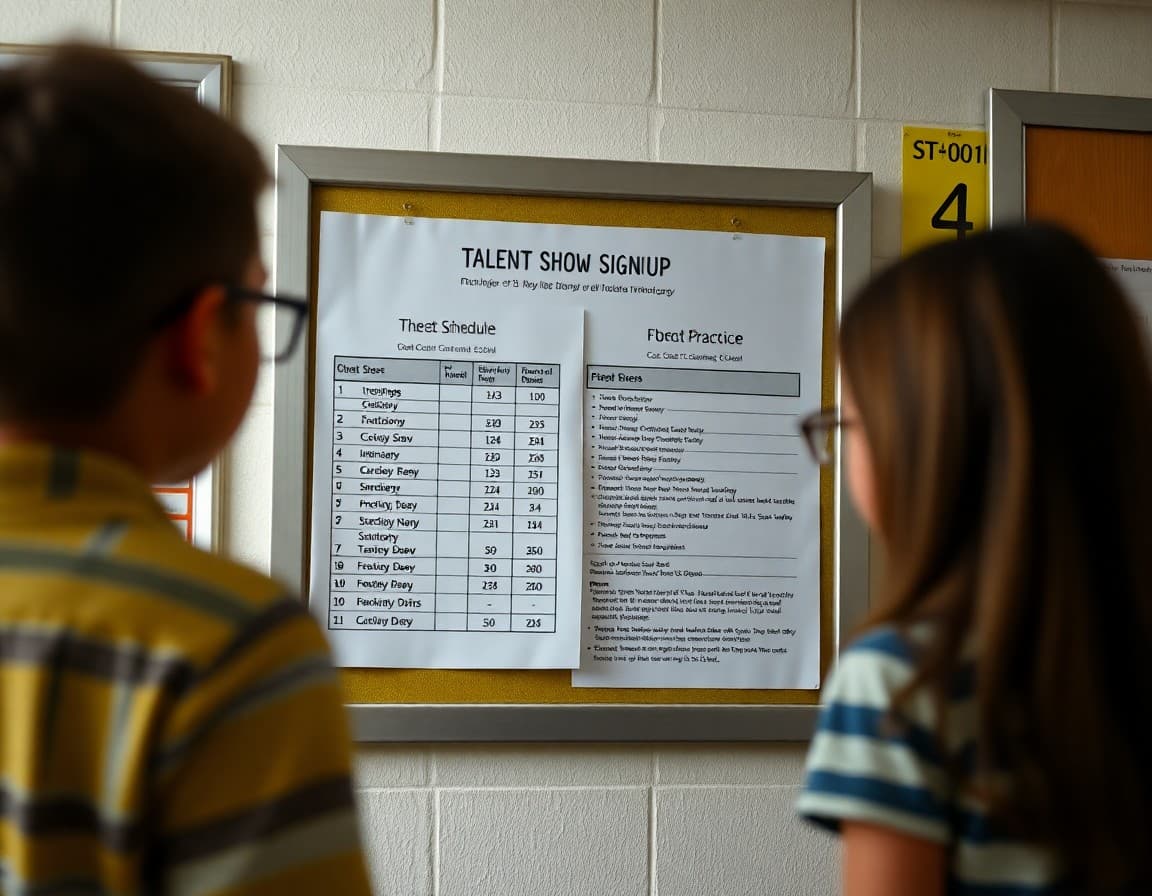
A talent show is one of the few school events that can genuinely belong to every student rather than just the highest achievers. But it only reaches that potential when the invitation is broad enough and the communication clear enough to draw in students who would not otherwise think of themselves as performers. The newsletter is where that starts.
Open with an expansive definition of talent
The biggest mistake a talent show newsletter can make is implying that talent means singing or dancing. Lead with a wide-angle view of what belongs on a talent show stage. Instrumental performance, magic, comedy, spoken word, athletic demonstrations, art creation, yo-yo, juggling, cooking techniques, robotics demos. The wider the invitation, the more students feel genuinely welcome to try.
Explain the participation process clearly
Walk families through the steps. Is there a signup sheet? An audition? An online form? What is the deadline? If space is limited, how will you handle more signups than spots? Students and families who know exactly how to participate are far more likely to do so than those who are trying to figure it out from incomplete information.
Describe act guidelines
Give clear and brief guidance on act length, content standards, and any technical requirements. If acts should be under three minutes, say so. If students need to submit music tracks in advance, say so. If props requiring electrical setup need approval, note the process. Handled upfront, these logistics prevent surprises at rehearsals and keep the planning process smooth for everyone.
Set the community tone
A talent show is an opportunity to build community around the idea that everyone has something to contribute. Your newsletter can set this tone explicitly. Encourage students to perform for the experience rather than the competition. Note that the audience's job is to be an enthusiastic, respectful crowd. Frame the event as a celebration of courage and creativity rather than a ranking of skills.
Share the rehearsal and logistics timeline
If there are tech rehearsals or run-throughs, include the schedule. Let families know what performing students need to bring, what time they should arrive, and how the seating and ticketing works for the audience. Parents with logistics answers in advance are parents who can be fully present at the event rather than navigating confusion.
Address what happens if a student gets nervous
It is worth a brief acknowledgment that performance anxiety is real and that students who get nervous backstage will be supported. Let families know that this is a safe environment for imperfect performances and that courage is worth celebrating even when things do not go exactly as planned. Families whose students are on the fence about participating are more likely to encourage them forward when they know the stakes are low.
Close with the audience invitation
Not every student will perform, but every student deserves to feel like part of the event. Close your newsletter with a warm invitation for all families to come as audience members, cheer loudly, and help make the experience meaningful for every student on stage. The audience is half of a talent show.
Daystage lets you send the full communication arc for the talent show, from the signup announcement to the performance day reminder, so every family arrives knowing exactly what to expect and ready to celebrate.
Get one newsletter idea every week.
Free. For teachers. No spam.
Frequently asked questions
How do I encourage students with non-traditional talents to participate?
Your newsletter should explicitly name the range of talents that are welcome. Singing and dancing are obvious, but also magic tricks, comedy, origami demonstrations, reciting a memorized poem, playing chess speed-style, juggling, or spoken word. The broader the list in your invitation, the more students feel there is a place for them.
What should a talent show newsletter include?
The event date and time, audition or signup dates if applicable, any guidelines for act length or content appropriateness, technical requirements for music or props, what families need to know about attendance, and a note on the supportive community values the event is built around.
How do I handle the audition process in the newsletter?
Be clear about whether auditions are competitive or if everyone who signs up performs. If space is limited, explain the selection process plainly so families understand how decisions are made. If all students are welcome to participate regardless of audition results, say so explicitly so no family worries about their child being rejected.
How do I address content guidelines for talent show acts?
Set clear expectations in your newsletter about appropriate content: age-appropriate music lyrics, no acts that could be physically unsafe, and routines that respect the dignity of all audience members. Frame it as a community standard rather than a restriction so families understand the spirit behind the guideline.
What tool helps teachers communicate about the talent show?
Daystage makes it easy to send a talent show announcement, collect act signups, and follow up with rehearsal schedules and performance day logistics all through one simple newsletter platform.

Adi Ackerman
Author
Adi Ackerman is a former classroom teacher and curriculum writer with 8 years in K-8 schools. She writes about school communication, parent engagement, and what actually works in real classrooms.
More for Classroom Teachers
Ready to send your first newsletter?
3 newsletters free. No credit card. First one ready in under 5 minutes.
Get started free