

How to Write a Student Goals Conference Newsletter to Families
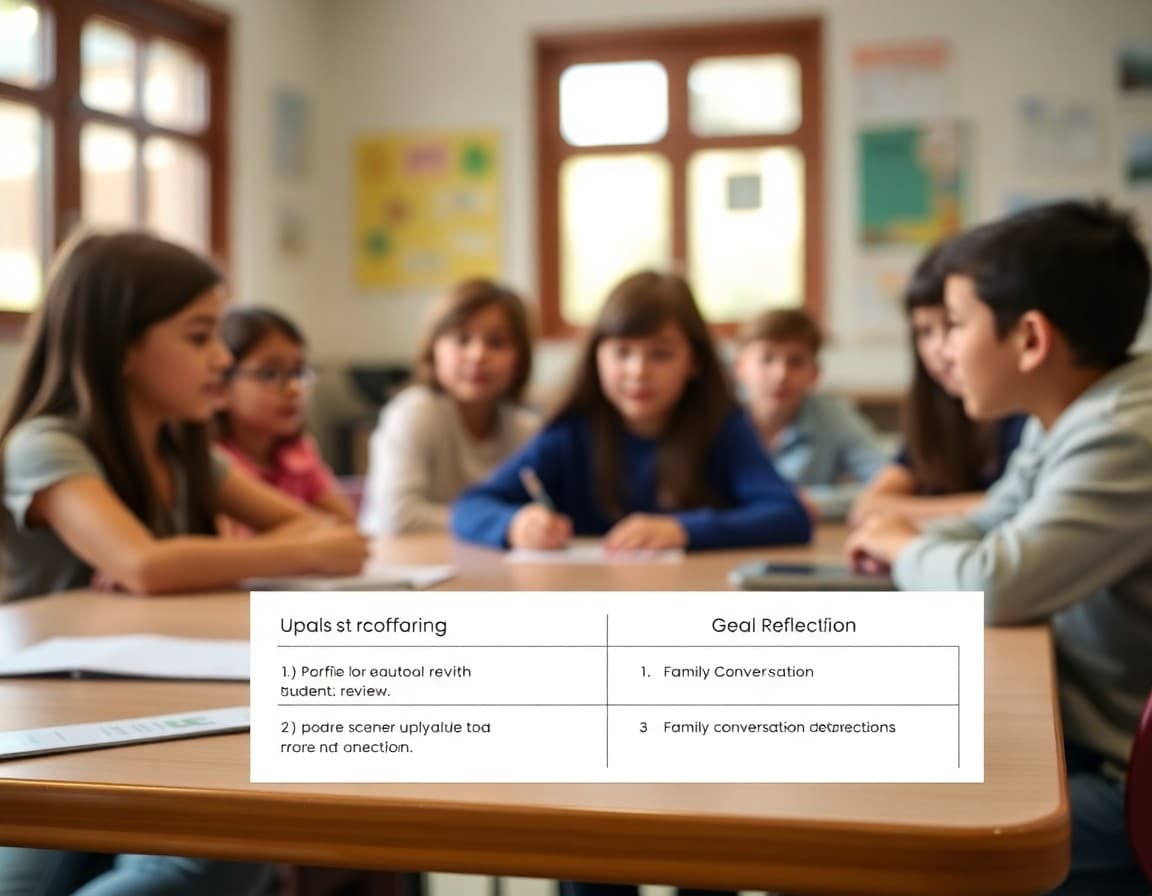
Student goals conference newsletters prepare families for an experience that often surprises them. A student who stands up and says "this is my goal for reading, here is evidence of my progress, and here is what I want to work on next" is doing something fundamentally different from a traditional parent-teacher conference. Families who understand what to expect and how to respond get far more out of the experience than those who walk in expecting the teacher to report on their child.
Explain the format clearly
Start by describing exactly what will happen. The student will lead the conference. They will present a portfolio or selection of work samples. They will share their academic goals, reflect on their progress, and identify areas they want to continue developing. You, as the teacher, will be present to support but the student is the primary speaker. Families who know this structure arrive with the right expectations and create space for their student to lead.
Explain why this format is used
Families who understand the educational reasoning behind student-led conferences approach them differently. Students who explain their own learning to an audience develop stronger metacognitive awareness than those who hear a teacher explain it for them. The act of selecting work samples and articulating what they show requires students to genuinely understand and own their progress. Research consistently shows that students who participate in their own conferences set more ambitious and more realistic goals than those who do not.
Tell families how their student has prepared
Families feel more confident about the event when they know their student has done preparation work. Describe the preparation students have done in class: selecting work samples that demonstrate growth, writing or practicing reflections on their goals, reviewing the criteria they have been assessed against, and rehearsing how they will describe their learning. A student who has practiced the conference in class is ready to lead it in person.
Coach families on how to listen
The most important thing families can do in a student-led conference is listen. Not evaluate, not correct, not compare to siblings or expectations. Listen, ask genuine questions about the work samples, and express genuine curiosity about what their student found hard, what they are proud of, and what they want to do next. Families who come in ready to receive the student's narrative rather than deliver their own assessment create the conditions where the conference actually works.
Suggest questions families can ask
Give families specific questions to have ready. What does this piece of work show about what you can do now that you could not do before? Which goal are you most focused on and why? What do you need to practice more? Is there anything about school this quarter that you want to tell me? These questions invite the student to go deeper rather than just summarizing, and they keep the family in the role of curious listener rather than judge.
Address what happens after the conference
Tell families what the next step is. A goals document the student takes home. A follow-up conversation with you if families have questions the student could not answer. A midterm check-in to review progress toward the goals the student set. Families who know the conference is one part of an ongoing cycle rather than a one-time event invest in the goals conversation with more intention.
Note the logistics
Include the practical details: date, time, location, how long each conference is, and how to sign up if scheduling is needed. Families who receive all the logistics in one place can plan without follow-up emails and arrive with attention free to focus on their student.
Daystage makes it easy to send a student goals conference newsletter with preparation guidance so families arrive ready to be the audience their student needs for one of the most meaningful academic conversations of the school year.
Get one newsletter idea every week.
Free. For teachers. No spam.
Frequently asked questions
What is a student-led goals conference?
A student-led goals conference is a meeting where the student, not the teacher, leads the conversation about their learning. The student presents their work samples, explains their academic goals, reflects on their progress, and identifies areas for growth. The teacher may be present to support but takes a back seat. This format develops student ownership of learning that traditional parent-teacher conferences cannot.
How should families prepare for a student-led goals conference?
Families should plan to listen first and let their student lead the conversation. Asking genuine questions about the work samples, the goals, and the student's own assessment of their progress is more productive than making judgments or corrections. The goal is for the student to practice articulating their own learning, and families who create space for that do the student more good than those who take over.
What if a student struggles during the conference?
Some students, especially in the first year of student-led conferences, find it difficult to speak about their own learning in front of family. This is normal and expected. Teachers prepare students in advance and often provide a structure or script. If a student struggles, the teacher can offer support. The discomfort of explaining your own work to your family is itself a developmental experience worth having.
How is a student-led goals conference different from a traditional parent-teacher conference?
A traditional parent-teacher conference is a conversation between the teacher and family about the student, often without the student present. A student-led goals conference puts the student at the center as the primary communicator. Research shows that students who participate in their own conferences have stronger academic ownership and set more ambitious goals than those who do not.
What tool helps teachers communicate about student goals conferences?
Daystage makes it easy to send a student goals conference newsletter with preparation tips so families arrive ready to be the audience their student needs for one of the most powerful learning conversations of the school year.

Adi Ackerman
Author
Adi Ackerman is a former classroom teacher and curriculum writer with 8 years in K-8 schools. She writes about school communication, parent engagement, and what actually works in real classrooms.
More for Classroom Teachers
Ready to send your first newsletter?
3 newsletters free. No credit card. First one ready in under 5 minutes.
Get started free