

How to Write a Rubric Explanation Newsletter to Families
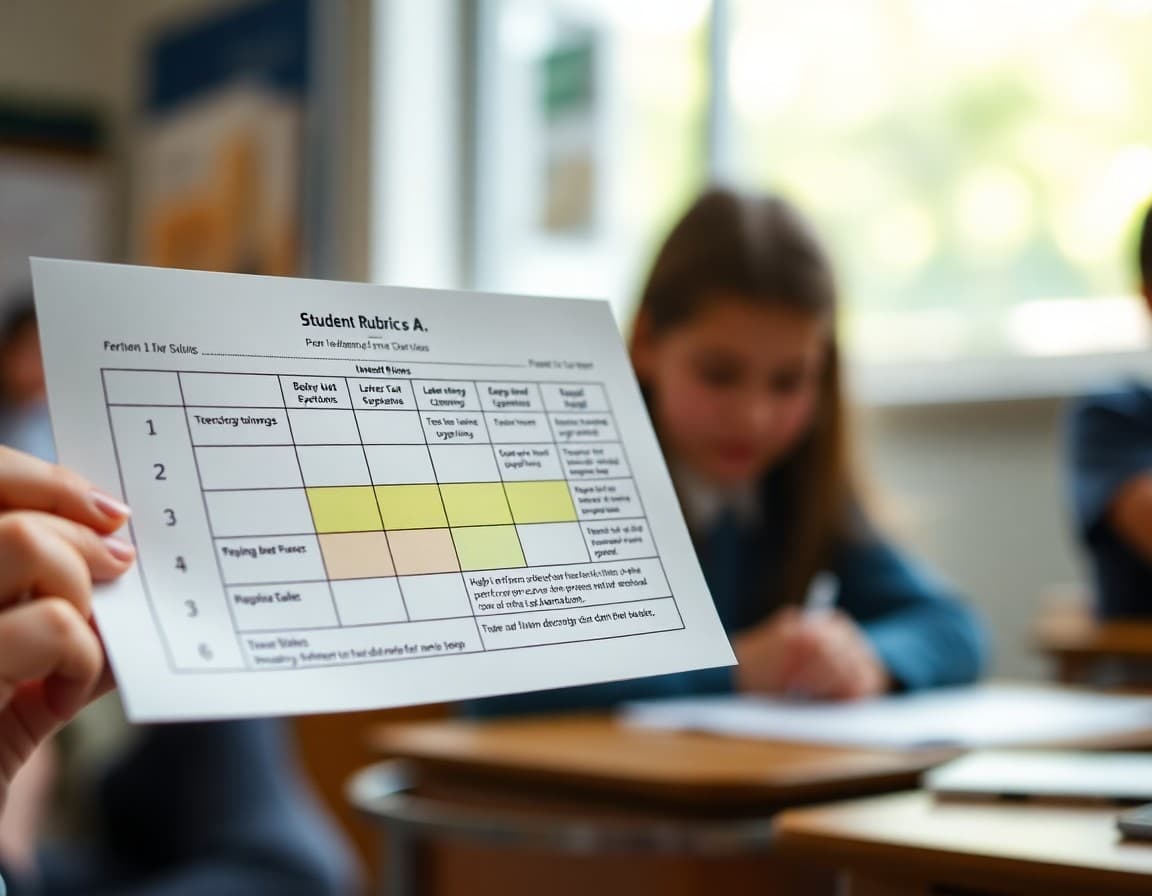
Rubric explanation newsletters solve one of the most common sources of family frustration with grading: the sense that a score is arbitrary or surprising. A student who brings home an 18 out of 24 on a project and a parent who does not know what the rubric said cannot have a productive conversation about what to do differently. A newsletter that explains how rubrics work and how to use them turns assessment from a mystery into a tool families and students can work with.
Explain what a rubric is and why it matters
Start with the basics. A rubric is a scoring guide that lists the criteria for a piece of work and describes what different levels of performance look like for each criterion. Using a rubric means that two different teachers scoring the same piece of work would arrive at the same score because they are both evaluating specific, described evidence rather than making a general impression judgment. This transparency and consistency is the point.
Walk through the specific rubric for the upcoming project
If you are sending this newsletter in anticipation of a specific assignment, share the rubric or describe its criteria. What are the three or four things students will be scored on? What does excellent work look like for each criterion? What is the difference between the top level and the second level? Students who understand the rubric before they begin produce work that is more directly responsive to the criteria, and families who understand it can give more targeted help during the drafting process.
Teach families how to help their student self-assess
One of the most powerful uses of a rubric is self-assessment. Before a student submits their work, they should read each criterion, find evidence in their work that demonstrates it, and honestly evaluate which level their work meets. Families can facilitate this by asking their student to read a criterion aloud and then find where in their work they addressed it. This process catches gaps before submission rather than after.
Address the effort versus evidence distinction
This is one of the most important conversations about rubrics to have with families. A rubric scores the evidence in the work, not the effort put in. A student who worked very hard but did not demonstrate the specific skills described in the criteria will not score at the top level. This is not unfair. It is informative: it tells the student exactly which skills to develop rather than sending the message that they just need to try harder on the next one.
Explain how to read the returned rubric
When graded work is returned, the rubric scores tell a story. A student who scored highest on content and lowest on organization received specific, actionable information: the ideas were strong, but the structure needs work. Families who read the returned rubric with their student rather than just looking at the overall score get much more information about exactly what to practice and where the student's genuine strengths are.
Name what the rubric does not measure
Rubrics measure specific described skills. They do not measure creativity, effort, personality, or general intelligence. A student who receives a mid-level score on a writing rubric may still be a highly creative thinker who is still developing the technical writing skills the rubric is designed to assess. Families who understand this separation are less likely to conflate rubric scores with judgments about their student as a person.
Invite families to contact you with rubric questions
Let families know they can ask questions about any rubric score. If a family reads the rubric comments and does not understand why a specific score was given, a direct conversation is the right next step. Teachers who invite this conversation build trust in the assessment process and give families the information they need to support their student's specific growth areas.
Daystage makes it easy to send a rubric explanation newsletter before major projects so families understand the criteria, can support their student's self-assessment process, and trust that the score they receive reflects clearly defined expectations they could see from the beginning.
Get one newsletter idea every week.
Free. For teachers. No spam.
Frequently asked questions
What is a rubric and why do teachers use them?
A rubric is a scoring guide that describes the criteria for student work and defines what different levels of performance look like for each criterion. Teachers use rubrics because they make expectations explicit before the work begins, make the scoring process more consistent and transparent, and give students concrete feedback on what to improve.
How should families help their student use a rubric?
Before the work begins, families can help their student read each criterion and discuss what excellent work in that area looks like. During the work, families can ask their student to self-evaluate their draft against the rubric before submitting. After the work is returned, families can look at the rubric scores together to understand specifically what went well and what to develop.
Why does a student sometimes get a lower score than expected?
Rubric scores reflect evidence in the work, not effort or general ability. A student who works hard but does not demonstrate the specific skill described by a criterion will not score at the top level for that criterion. This is informative, not punitive: it tells the student and family exactly where the gap is and what to practice.
What is the difference between a holistic rubric and an analytic rubric?
A holistic rubric gives one overall score for the entire piece of work. An analytic rubric scores each criterion separately, so a student might score differently on organization, evidence, and mechanics within the same assignment. Most classroom rubrics are analytic because they give more specific feedback that students can use to improve.
What tool helps teachers communicate assessment criteria to families?
Daystage makes it easy to send a rubric explanation newsletter before a major project so families understand the criteria, can help their student self-assess, and trust that the final grade reflects clearly defined expectations.

Adi Ackerman
Author
Adi Ackerman is a former classroom teacher and curriculum writer with 8 years in K-8 schools. She writes about school communication, parent engagement, and what actually works in real classrooms.
More for Classroom Teachers
Ready to send your first newsletter?
3 newsletters free. No credit card. First one ready in under 5 minutes.
Get started free