

How to Write a Reading Fluency Newsletter to Families
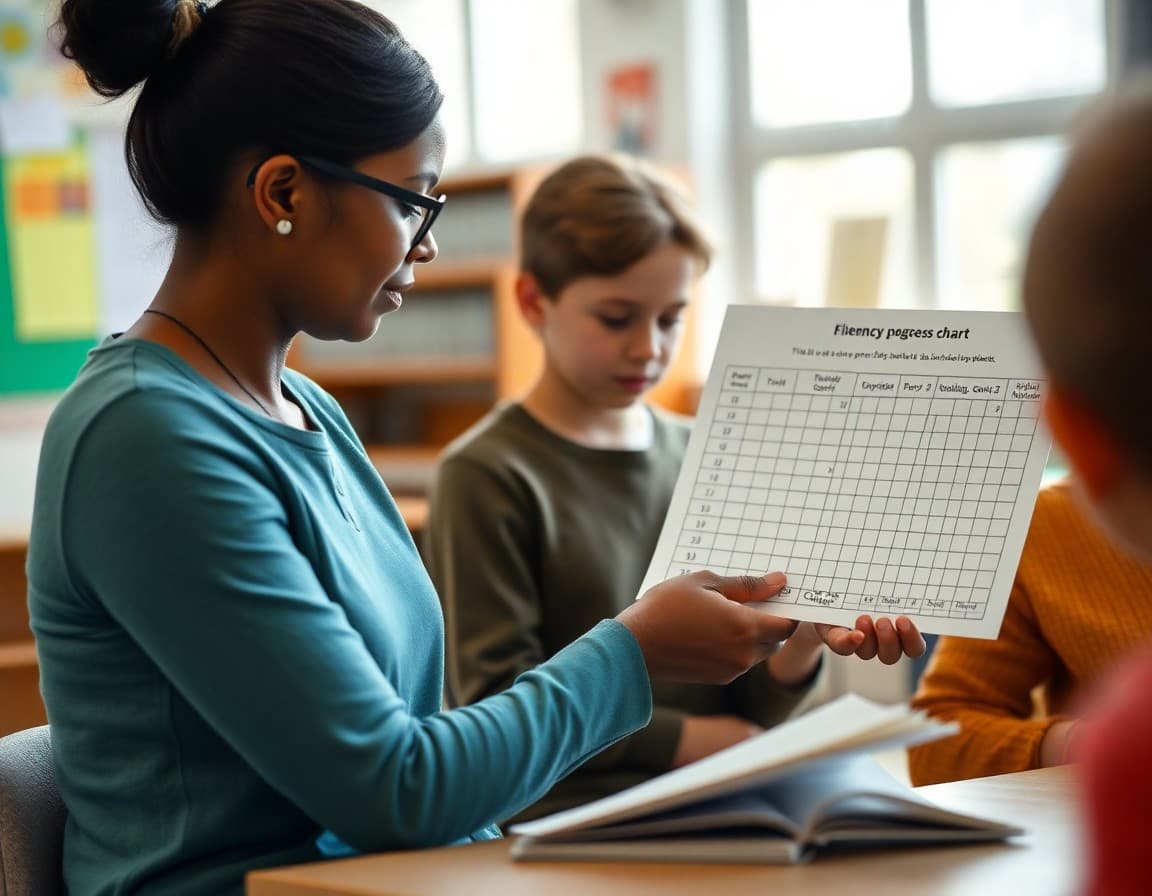
Reading fluency newsletters solve a common parent confusion: families who hear that their student needs to work on fluency often do not know what that actually means. Is their child reading too slowly? Not expression-fully enough? Making too many errors? A newsletter that defines fluency specifically, explains how it is assessed, and gives families concrete practice strategies is genuinely useful in a way that a vague request to "practice reading" is not.
Define fluency clearly
Start by explaining what reading fluency actually involves. Three components: accuracy (reading words correctly), rate (reading at an appropriate speed for the text and grade level), and prosody (reading with natural expression, phrasing, and intonation). All three matter. A student who reads accurately but like a robot is not yet fluent. Neither is a student who reads quickly but stumbles over half the words. Fluent reading sounds like natural speech.
Explain why fluency matters for comprehension
This is the most important thing families need to understand. Fluency is not a performance goal. It is a foundation for meaning-making. When a reader is still working hard to decode each word, very little cognitive capacity is left for understanding what those words mean together. Fluent readers can direct their attention toward comprehension, inference, and critical thinking rather toward decoding mechanics. This is why fluency development matters.
Describe how fluency is assessed
Walk families through what a fluency assessment looks like. A student reads a grade-level passage aloud for one minute. The assessor counts the words read correctly and notes the student's expression and phrasing. The result is expressed as words correct per minute (WCPM) and compared to grade-level benchmarks. Families who understand the assessment format can interpret results more accurately when they receive them.
Share the most effective at-home practice
The single most effective at-home fluency practice is repeated oral reading. A student who reads the same short passage or book multiple times, each time trying to read more smoothly and expressively than the last, builds fluency in measurable ways. Partner reading (student reads to a family member) and echo reading (family member reads a sentence, student repeats it with the same expression) are both highly effective and accessible.
Recommend easy texts specifically
Fluency practice is most effective with texts that are at or below a student's comfortable reading level, not at their instructional level. Easy texts allow students to focus on speed and expression rather than decoding. Familiar books, simple poetry, reader's theater scripts, and picture books all make excellent fluency practice materials even for older students.
Introduce the read-aloud as a model
Families reading aloud to their student is fluency modeling. When a parent reads with natural expression, pausing at commas, changing voice for dialogue, and using phrasing that reflects meaning, they are demonstrating what fluent reading sounds like. Students who hear fluent reading regularly develop a model for what they are working toward in their own oral reading.
Give families a simple fluency check-in
Families do not need formal assessment tools to check in on fluency at home. Listening to their student read a familiar passage once and then again a few days later and noticing whether it sounds more like natural speech is enough. Students who read with more expression and flow after repeated reading are showing measurable fluency growth. Families who notice and celebrate this reinforce the practice.
Daystage makes it easy to send a reading fluency newsletter with specific, actionable guidance and to follow up with fluency progress updates as you gather assessment data throughout the year. Families who understand what you are measuring and how to help are your most effective partners in building reader confidence.
Get one newsletter idea every week.
Free. For teachers. No spam.
Frequently asked questions
What is reading fluency and why does it matter?
Reading fluency is the ability to read with appropriate speed, accuracy, and expression. It matters because fluent reading frees up cognitive resources for comprehension. A reader who is still working hard to decode words cannot simultaneously focus on meaning. Fluency is the bridge between decoding and comprehension.
How is reading fluency assessed?
Fluency is typically assessed through oral reading assessments where a student reads a grade-level passage aloud for one minute. The teacher records words correct per minute, notes errors, and evaluates expression and phrasing. These assessments give a quick, reliable measure of fluency development over time.
What are the best ways for families to build reading fluency at home?
Repeated reading of the same passage or book builds fluency through familiar text. Reading aloud together with the family as a model helps students hear what fluent reading sounds like. Practicing with easy, below-grade-level texts where students can focus on speed and expression rather than decoding is also very effective.
Is reading too fast a fluency problem?
Yes. Fluency involves appropriate rate, not just fast rate. A student who reads rapidly but without expression or natural phrasing is not demonstrating fluency. Fluent reading sounds like natural speech: the reader pauses at punctuation, groups words into phrases, and uses intonation to convey meaning.
What tool helps teachers send reading fluency newsletters?
Daystage makes it easy to send a reading fluency newsletter with specific at-home practice suggestions and to follow up with fluency progress updates as the school year progresses.

Adi Ackerman
Author
Adi Ackerman is a former classroom teacher and curriculum writer with 8 years in K-8 schools. She writes about school communication, parent engagement, and what actually works in real classrooms.
More for Classroom Teachers
Ready to send your first newsletter?
3 newsletters free. No credit card. First one ready in under 5 minutes.
Get started free