

How to Write a Positive Reinforcement Newsletter to Parents
Positive reinforcement newsletters give families a window into one of the most powerful tools in classroom management. When families understand your reward system, what it is trying to build in students, and how they can reinforce the same values at home, the classroom culture you are working to establish has a much stronger foundation.
Start with the goal behind the rewards
Families who understand that the purpose of positive reinforcement is to build habits and self-awareness, not to create reward-dependent behavior, will have a fundamentally different relationship with your system than families who see it as bribery. Be explicit about this. Your reward system is a scaffold that makes desired behaviors visible and celebrated until they become part of each student's character.
Describe what behaviors earn recognition
Be specific about what you are recognizing. Not just "good behavior" but concrete, observable actions. Helping a classmate without being asked. Staying focused during independent work. Contributing a thoughtful idea to a class discussion. Trying again after getting something wrong. Specific recognition criteria teach students what matters in your classroom and give families the language to reinforce those same values at home.
Explain the reward structure
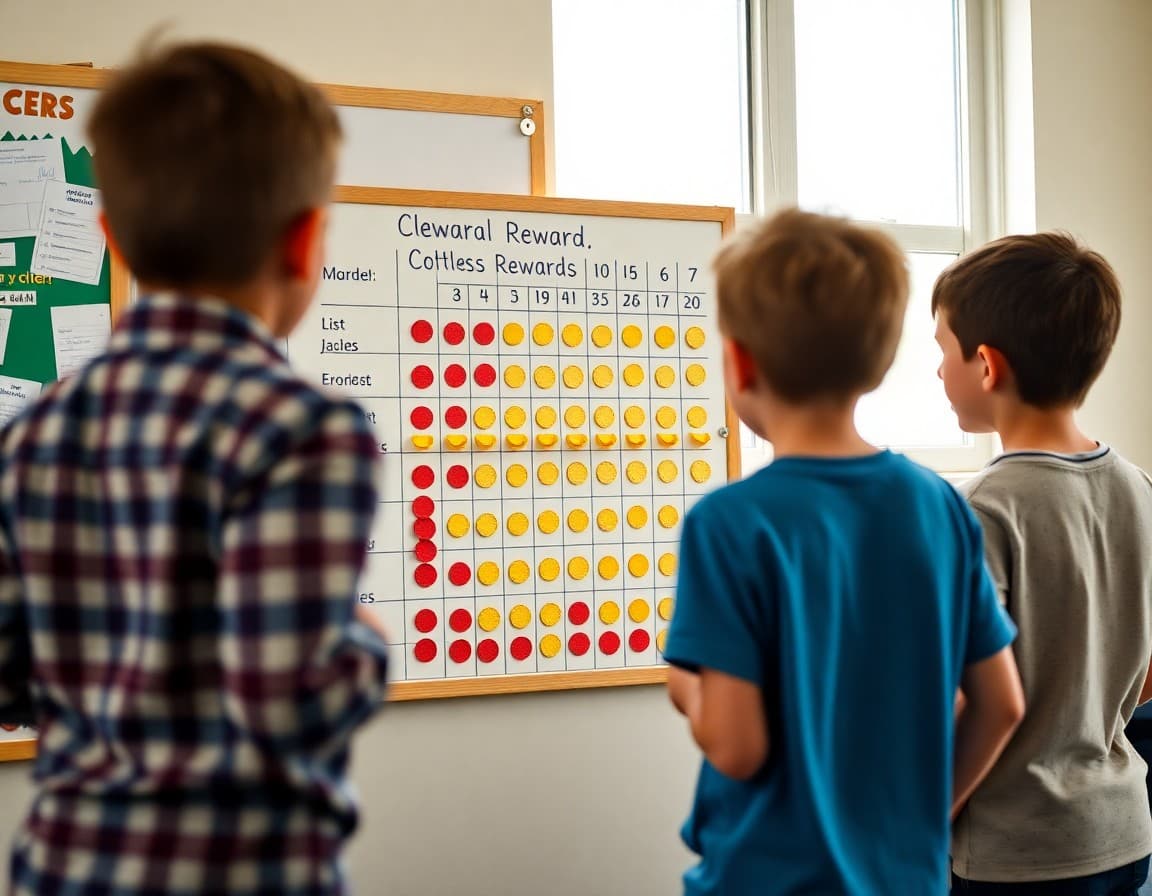
Walk families through the mechanics. Tokens, table points, class economy credits, sticker charts, celebration Fridays. What do students earn, how do they earn it, what can they exchange it for, and how often does the reward cycle complete. Families who understand the structure can talk to their student about it meaningfully and avoid inadvertently undermining it at home.
Distinguish individual and class-wide reinforcement
If your system includes both individual recognition and group rewards, explain both. Individual recognition builds personal responsibility. Group rewards build community and shared investment in each other's behavior. When a student understands that their choices affect the whole class's progress toward a shared goal, the social motivator is often more powerful than the individual one.
Show families how to extend it at home
The habits you are building in the classroom are most effective when they are reinforced at home with the same language and values. Give families specific tools. Use specific praise rather than general praise. Notice and name good choices the moment they happen rather than at the end of the day. Celebrate persistence and effort at least as often as outcomes. These are simple shifts that make a real difference.
Address the "you should not need rewards to behave" concern
Some families genuinely believe that rewards for good behavior are unnecessary and even harmful. This perspective is worth addressing calmly. Explain that your system is explicitly designed to fade as habits form. Recognition is most intense at the beginning and tapers as behaviors become automatic. The goal has always been internalization.
Share wins regularly
A positive reinforcement newsletter works even better when it is followed up regularly with brief recognition updates. The class earned their celebration day. Five students were recognized for showing leadership this week. These small updates keep families connected to the culture you are building and give students something to share at home with pride.
Daystage makes it easy to send your positive reinforcement overview newsletter and follow up with regular class recognition updates through the same platform, so families stay connected to the culture your classroom is building all year long.
Get one newsletter idea every week.
Free. For teachers. No spam.
Frequently asked questions
How do I explain positive reinforcement to parents who are skeptical about rewards in school?
Distinguish between intrinsic and extrinsic motivation and explain how your system is designed to build intrinsic motivation over time. The goal of positive reinforcement is not to bribe students into compliance. It is to make desired behaviors visible, specific, and celebrated until they become habitual. Well-designed reinforcement fades as habits form.
What behaviors should positive reinforcement target?
The most effective positive reinforcement is specific and tied to concrete behaviors: showing kindness to a classmate, persisting through a difficult problem, asking a thoughtful question, helping another student understand something. Generic praise produces less behavior change than specific recognition of observable actions.
How can families use positive reinforcement at home?
The same principles apply. Specific, immediate praise for observable behaviors is more effective than general praise. 'I noticed that you put away your materials without being asked' lands differently than 'you were so good today.' Families who use specific language reinforce the same habits being built at school.
Should class rewards be tied to individual student behavior or whole-group behavior?
Both have their place. Individual recognition builds personal accountability and self-awareness. Group rewards build shared responsibility and community. Explaining the difference in your newsletter helps families understand why sometimes their child earns a reward and sometimes the class earns one together.
What tool helps teachers communicate about their classroom reward system?
Daystage makes it easy to send a classroom newsletter explaining your positive reinforcement approach and follow up with regular recognition updates so families celebrate their student's progress in real time.

Adi Ackerman
Author
Adi Ackerman is a former classroom teacher and curriculum writer with 8 years in K-8 schools. She writes about school communication, parent engagement, and what actually works in real classrooms.
More for Classroom Teachers
Ready to send your first newsletter?
3 newsletters free. No credit card. First one ready in under 5 minutes.
Get started free