

Teacher Newsletter for Nonfiction Unit: Helping Families Support Informational Reading
Nonfiction reading is where students learn to navigate the information they will encounter for the rest of their lives. The skills built in a strong nonfiction unit, locating main ideas, evaluating sources, using text features, and reading critically, transfer directly to academic research, news literacy, and professional reading. Your newsletter gives parents the frame they need to see that this unit is foundational, not supplemental.
Clarify what nonfiction reading instruction actually involves
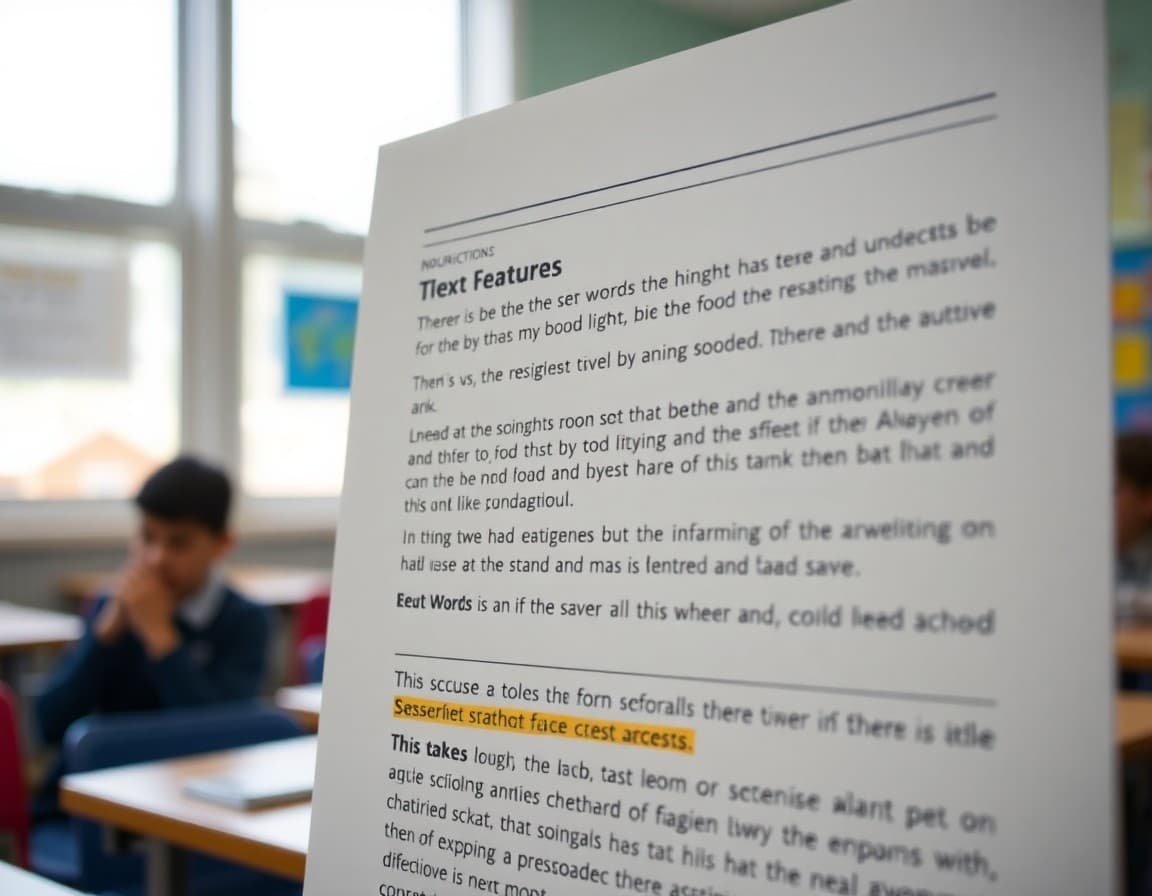
Many parents associate reading instruction with fiction. Nonfiction units can feel abstract unless you describe them concretely. "We are learning to use text features like tables of contents, indexes, glossaries, headings, and captions to navigate informational texts efficiently" is specific enough that parents immediately understand the skill being taught and can practice it at home.
Explain the topics or books in this unit
Name the texts students are working with. If the unit is topic-based, tell families what the overarching subject area is. Students who bring home enthusiasm about sharks or space or the American Revolution because of the reading you have done together in class are easy for parents to engage with, as long as parents know what the unit is actually about.
Name the comprehension strategies being practiced
Identifying main idea and key details, summarizing, determining the author's purpose, comparing two texts on the same topic: these are the strategy targets in most nonfiction units. Tell parents which strategies you are focusing on this week and give them a home version to try. "After reading an article or a page of a nonfiction book together, ask your student: what is the most important idea on this page?" is a concrete transfer.
Expand families' definition of nonfiction reading
A breakthrough moment for many parents is realizing that nonfiction reading does not require a formal book. Recipes, sports statistics, news articles, instruction manuals, science magazines, and websites all count. When parents see that nonfiction reading is everywhere, they start pointing it out and the practice becomes daily rather than limited to assigned texts.
Connect the reading unit to writing instruction
If informational writing is coming up, say so. Students who spend several weeks closely reading nonfiction texts absorb the structure of informational writing in a way that direct instruction alone cannot produce. "We are reading to write" is a phrase worth putting in the newsletter because it helps parents understand the curriculum as a coherent sequence.
Address source evaluation at an age-appropriate level
Nonfiction units are the right time to introduce source evaluation. Depending on grade level, this might be as simple as "how do we know this book is telling the truth?" At higher grades, it might involve comparing two sources on the same topic. Let parents know you are addressing this skill and give them a dinner table version: "When something sounds surprising, where would we look to check?"
End with a take-home nonfiction reading suggestion
Recommend a specific magazine, website, or short nonfiction book appropriate for the age level. Give parents a place to start rather than a vague suggestion to read nonfiction together. Ranger Rick, National Geographic Kids, or the local newspaper's weekend section are all accessible starting points depending on your grade level.
Get one newsletter idea every week.
Free. For teachers. No spam.
Frequently asked questions
What should I cover in a nonfiction unit newsletter?
Explain what text features students are learning to use, what topics or books the unit includes, how students are practicing comprehension strategies like summarizing and determining main idea, and what the connection is to any related writing work.
How do I explain nonfiction text features to parents?
List them by name and describe what each one does for the reader. 'Headings organize the text into sections and tell you what each part is about. Captions explain photographs or diagrams. Bold words signal important vocabulary.' Most parents know these features intuitively but will find it useful to see them named.
What nonfiction reading can families do together at home?
Newspaper articles, magazine features, how-to instructions, food labels, maps, and websites all count as nonfiction reading. Pointing this out to families dramatically broadens the scope of what they think of as reading practice.
How does the nonfiction unit connect to research skills?
Directly. Students who can navigate text features, identify main ideas, and distinguish facts from opinions are better prepared to conduct research. Your newsletter should make this connection visible so parents understand the long-term value of the unit.
Can Daystage help me send a multi-week nonfiction unit update to families?
Yes. Daystage is designed for exactly this: organized, recurring teacher newsletters that keep families informed throughout a unit without requiring a new format each week.

Adi Ackerman
Author
Adi Ackerman is a former classroom teacher and curriculum writer with 8 years in K-8 schools. She writes about school communication, parent engagement, and what actually works in real classrooms.
More for Classroom Teachers
Teacher Newsletter for Genre Study: What to Tell Families About Literary Genres
Classroom Teachers · 6 min read
Teacher Newsletter for Informational Writing: What Families Should Know
Classroom Teachers · 6 min read
Teacher Newsletter for Close Reading: Explaining the Strategy to Parents
Classroom Teachers · 6 min read
Ready to send your first newsletter?
3 newsletters free. No credit card. First one ready in under 5 minutes.
Get started free