

Teacher Newsletter for Mythology Unit: Connecting Families to Ancient Stories
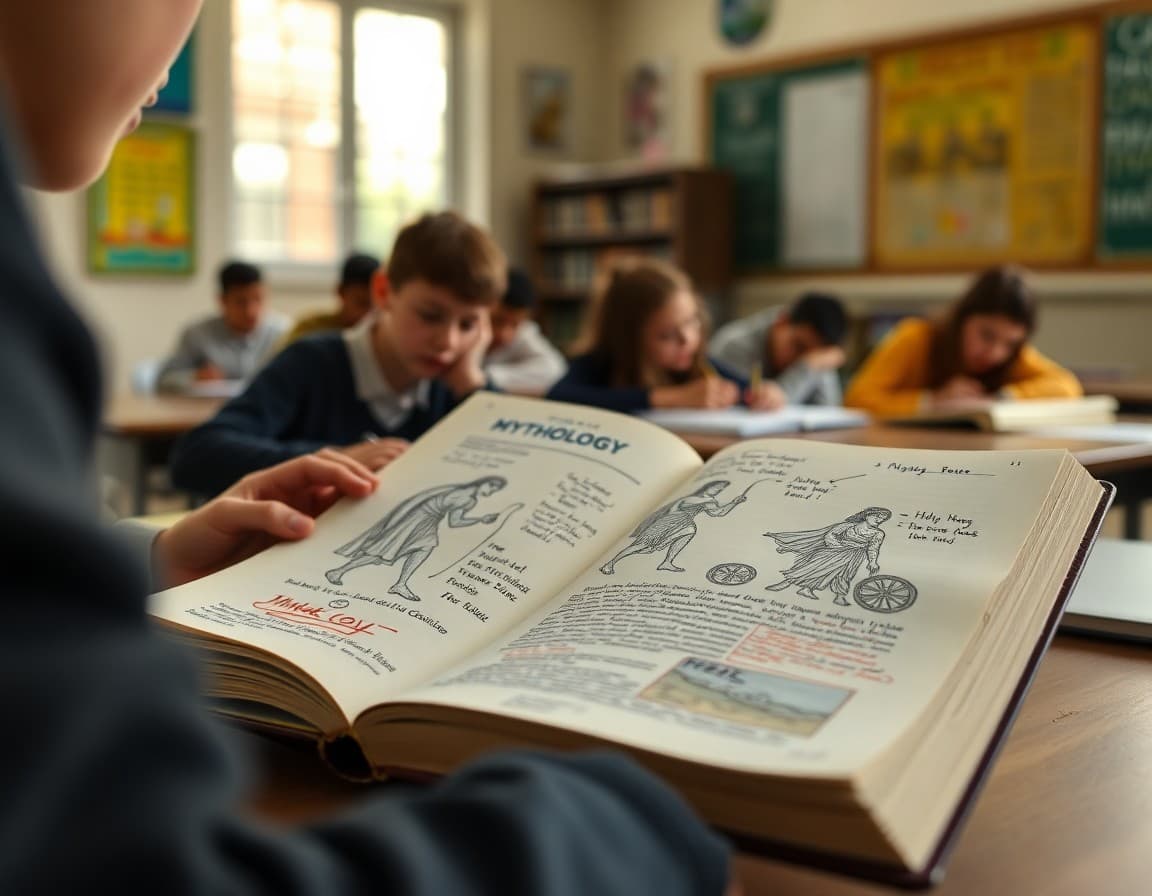
Mythology units are among the most memorable things students study in school. The stories are dramatic, the characters are larger than life, and the themes have been embedded in Western culture so deeply that most adults encounter them every day without realizing it. A newsletter that brings families into the unit creates the kind of home-school connection that has students explaining Greek gods at the dinner table and parents actually wanting to hear more.
Introduce the mythology tradition you are studying
Tell families which tradition or traditions the unit covers. Greek, Roman, Norse, Egyptian, Aztec, or a comparative unit across multiple traditions: each has a different cultural context and a different set of stories. A brief introduction to the tradition, its historical origins, and its influence on the modern world sets the stage for everything that follows.
Name the specific stories in the unit
List the myths students are reading or will read. This gives families something to discuss at home and allows interested parents to read ahead or alongside their student. Many parents studied mythology themselves and will be happy to rediscover stories they have not thought about since middle school.
Explain the literary skills the unit develops
Mythology is not just entertaining reading. Students are practicing the analysis of archetypes, the identification of theme, the understanding of cultural values embedded in narrative, and the recognition of how stories function as explanations for natural phenomena and human behavior. These are sophisticated literary skills. Name them in the newsletter so parents understand the academic substance behind the exciting content.
Connect mythology to modern culture
Families who see mythology everywhere in the culture take the unit more seriously. Give them a few examples to look for together. Months of the year, planets, shoe brands, company names, superhero characters, and literary allusions all draw from mythology. "Ask your student to explain the origin of the word 'narcissism' or 'Achilles heel'" is a conversation that earns respect for the unit from even the most skeptical family member.
Suggest home exploration with books or film
A short reading list of accessible mythology books gives families options at different reading levels. For younger students, an illustrated retelling. For older students, a more complete adaptation. You can also recommend films that draw on mythology, as a way to spark conversation about how ancient stories are adapted for modern audiences.
Address questions about mythology and religion respectfully
Some families will have questions about how mythology relates to living religious traditions. State clearly in the newsletter that mythology is studied as literature and cultural history, not as religious doctrine. The stories are sources of literary allusion, vocabulary, and narrative structure. That framing satisfies most families and prevents misunderstandings before they arise.
Close with a mythology discussion question for home
Give families one question their student can answer using what they have learned. "Which mythological hero would you want on your side in a crisis and why?" or "What do you think the myth of Prometheus says about how the ancient Greeks felt about fire?" These questions produce genuine conversations and show families that mythology develops real analytical thinking, not just story recall.
Get one newsletter idea every week.
Free. For teachers. No spam.
Frequently asked questions
What should I include in a mythology unit newsletter?
Cover which mythology tradition you are studying, the specific texts and stories included, what literary and cultural skills the unit develops, connections to modern culture and language, and how families can explore mythology together at home.
How do I connect mythology to students' everyday lives?
Modern language is full of mythological references. Nike, Amazon, Mercury, Pluto, Nike, Pandora, Atlas, Mars, Venus: all come from mythology. Movie franchises, superhero stories, and literary allusions draw on the same sources. Pointing these out makes mythology feel relevant rather than ancient.
How do I approach mythology respectfully across different family traditions?
Frame mythology as a genre of literature and a historical artifact, not as a belief system in competition with living religions. The stories are studied as cultural and literary texts. This framing generally satisfies families from any background.
What are good mythology books for home reading at different grade levels?
For younger students: D'Aulaires' Book of Greek Myths, Rick Riordan's Percy Jackson series for engagement. For older students: Edith Hamilton's Mythology, Stephen Fry's Mythos, or Ovid's Metamorphoses in an accessible translation. A short reading list in the newsletter helps families extend the unit.
Can Daystage help me share mythology unit updates with a rich, engaging format?
Yes. Daystage supports image-rich newsletters so you can include an illustration or reference image alongside your unit update, making the mythology content feel vivid and inviting.

Adi Ackerman
Author
Adi Ackerman is a former classroom teacher and curriculum writer with 8 years in K-8 schools. She writes about school communication, parent engagement, and what actually works in real classrooms.
More for Classroom Teachers
Teacher Newsletter for Folklore Unit: Celebrating Stories From Every Culture
Classroom Teachers · 6 min read
Teacher Newsletter for Genre Study: What to Tell Families About Literary Genres
Classroom Teachers · 6 min read
Teacher Newsletter for Author Study: Connecting Families to the Reading Unit
Classroom Teachers · 6 min read
Ready to send your first newsletter?
3 newsletters free. No credit card. First one ready in under 5 minutes.
Get started free