
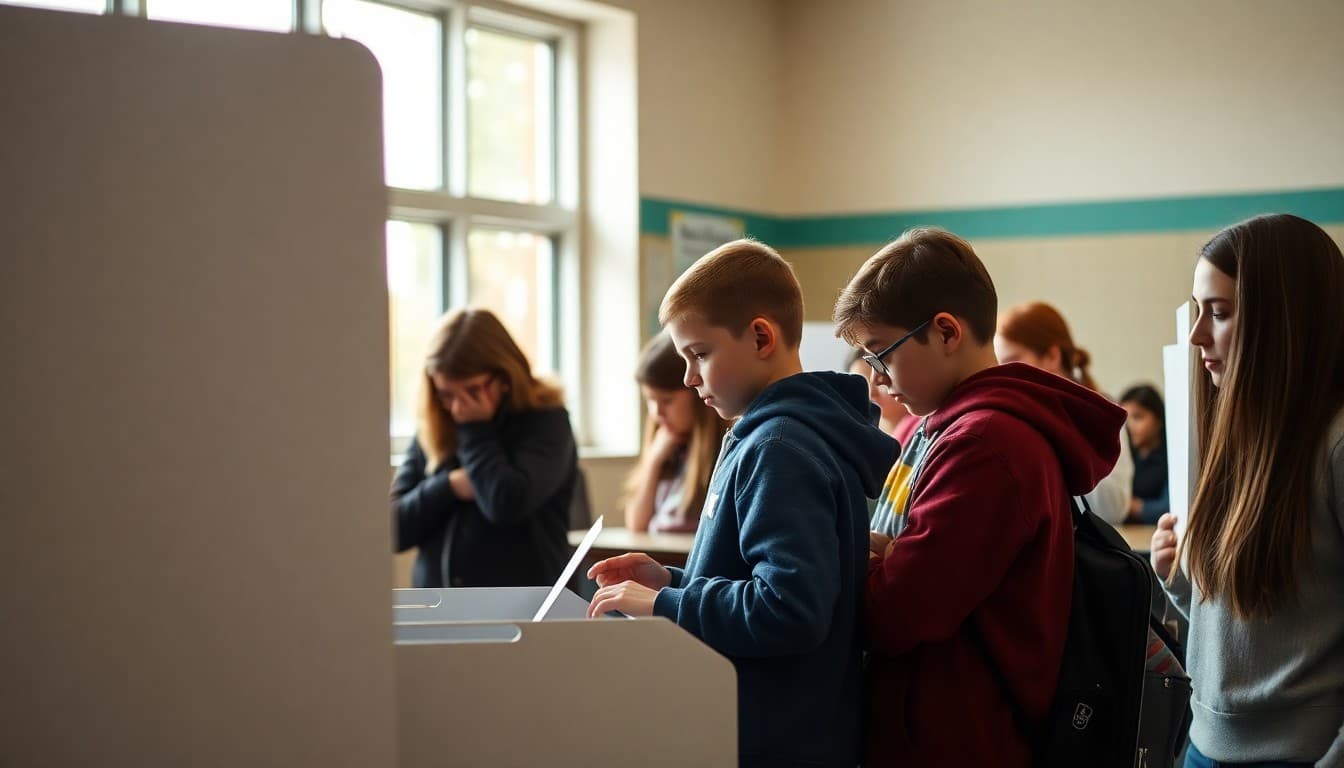
Teacher Newsletter for Mock Election: Connect Civics to Real Learning

A mock election is one of the most powerful civic education activities a classroom can run. It makes abstract processes concrete, gives students a stake in the outcome, and opens up conversations about democracy that go beyond any textbook. Your newsletter is what grounds the project in its educational purpose and prepares families for what students will bring home.
Explain the Educational Purpose Upfront
The first sentence of your newsletter should frame the project clearly. This is a civics activity designed to teach students how elections work, not to promote any political position. Getting that framing out early prevents the anxiety that can arise when families hear "election" and "classroom" in the same sentence. Your goal is civic literacy, and saying that plainly builds immediate trust.
Describe What Students Will Do
Walk families through the project phases: candidate research, campaign activities, ballot creation, voting day, and vote counting. When families understand what the week or unit looks like, they can have more informed conversations with their child at home. A student who comes home talking about polling methods and electoral tallies is demonstrating learning worth celebrating.
Address the Nonpartisan Nature of the Project
Families across the political spectrum will receive your newsletter. A brief statement that the project studies the mechanics of democratic elections, not political ideology, is worth including even if you do not anticipate conflict. It is a good-faith signal that you are aware of the sensitivity and are handling it thoughtfully.
Prepare Families for Student Enthusiasm
Mock elections produce strong engagement. Students who have been debating issues, writing campaign materials, and following poll results in the classroom will arrive home with opinions and energy. Your newsletter can give families a heads-up that this is coming and frame it as a positive sign of civic engagement rather than a disruption to dinner conversation.
Share the Results After Voting Day
A follow-up newsletter that shares the classroom election results, how votes were counted, and what students observed about the process closes the loop beautifully. Include a photo of voting day if you have one. Students who see their participation documented in a newsletter experience the lesson as something that mattered, which deepens its impact.
Connect to Broader Civic Participation
Your mock election newsletter is an opportunity to encourage families to talk about voting at home. If there is a real election coming up, mention it. Students who understand how elections work and see their families participate in them are more likely to become engaged citizens themselves. Using Daystage, you can design that message to feel like an invitation rather than a lecture.
Get one newsletter idea every week.
Free. For teachers. No spam.
Frequently asked questions
What should a mock election newsletter explain about the project's purpose?
Explain that the mock election is a civics learning experience designed to teach students how elections work, including voter registration, campaigning, ballot design, and vote counting. Emphasize that the goal is civic understanding, not political persuasion. Students practice the process regardless of which candidate or issue they study.
How do I address partisan concerns from families?
Be direct and brief: the project is nonpartisan and focuses on civic processes, not political outcomes. If you are using a real election for the simulation, note that the classroom activity studies how elections work, not which side is correct. Acknowledge that families may be having different political conversations at home and that you respect those.
Should I share the results of the mock election with families?
Yes, with appropriate framing. Sharing results emphasizes the process, not the political outcome. A sentence like our class voted and here is what the tally looked like is appropriate. It closes the loop on the lesson without making it about winners and losers in any politically loaded sense.
How do I prepare families for the conversations students will bring home?
Let families know their child may come home with strong opinions about candidates or issues studied in class. Note that this is a sign the civics lesson worked. Encourage families to listen to their child's reasoning and ask questions rather than redirecting to the family's own views.
What tool helps teachers send newsletters efficiently?
Daystage is a great choice for civics project newsletters. You can share the mock election timeline, explain the learning goals, and invite families to follow up at home, all in one polished message sent directly to your parent list.

Adi Ackerman
Author
Adi Ackerman is a former classroom teacher and curriculum writer with 8 years in K-8 schools. She writes about school communication, parent engagement, and what actually works in real classrooms.
More for Classroom Teachers
How to Write About Social Studies Projects in Your Classroom Newsletter
Classroom Teachers · 5 min read
Teacher Newsletter for History Presentations: Showcase Student Research
Classroom Teachers · 6 min read
Teacher Newsletter for Biography Presentation Projects and Events
Classroom Teachers · 6 min read
Ready to send your first newsletter?
3 newsletters free. No credit card. First one ready in under 5 minutes.
Get started free