
How to Share Visible Learning Goals With Families in Your Teacher Newsletter

One of the clearest findings in learning research is that students who know what they are supposed to learn outperform students who only know what they are supposed to do. Posting learning goals in student-friendly language is one of the simplest high-leverage practices in instruction. Sharing those goals with families in your newsletter extends that clarity beyond the classroom and gives families a specific lens for conversations about what their student is learning.
Explain what visible learning goals are
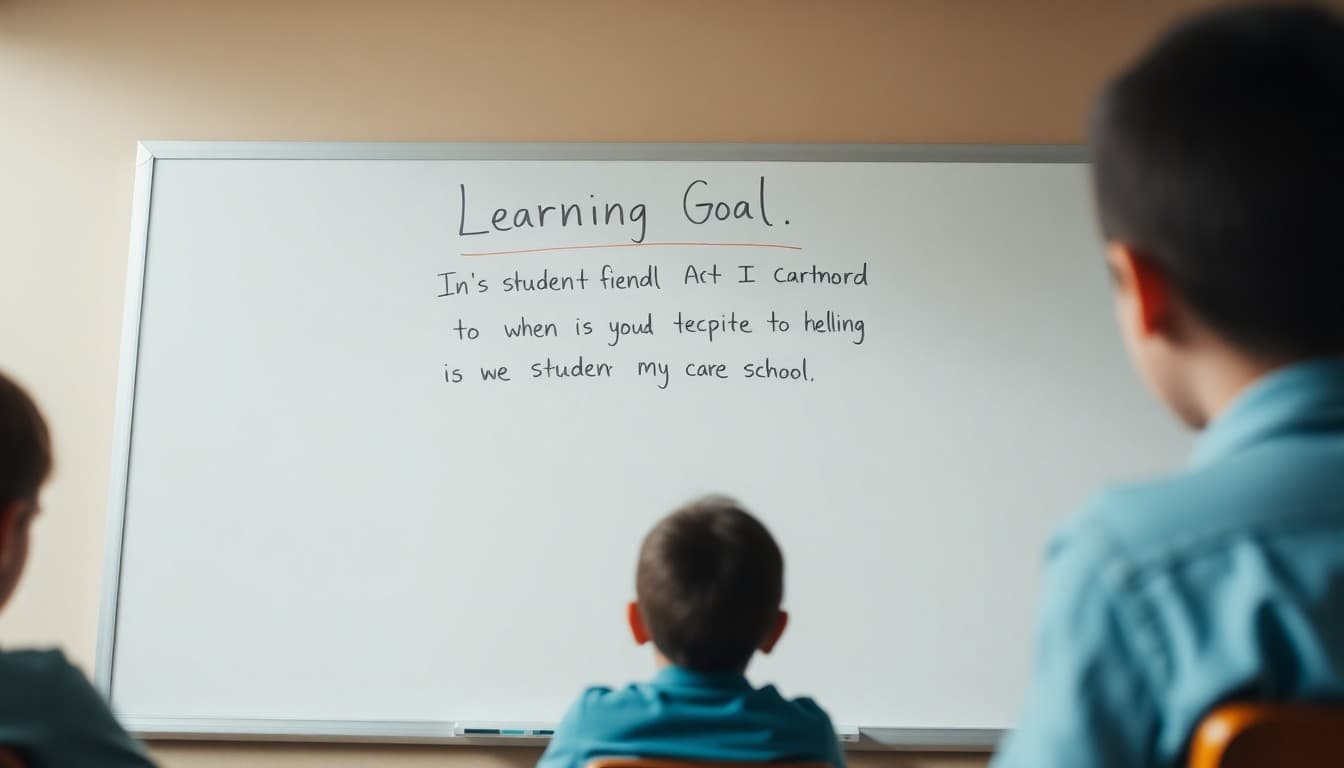
"In our classroom, every lesson begins with a learning goal posted on the board written in student-friendly language. The goal tells students what they will be able to understand or do by the end of the lesson, not just what we will be doing during it. Students read the goal at the start, and we return to it at the end to check whether we got there. The goal is always visible during the lesson so students can orient themselves to it while they are working."
Share the current unit's learning goals
"Our current unit is fractions. The main learning goals for this unit are: I can explain what a fraction represents using a number line and an area model. I can compare fractions with different denominators and explain my reasoning. I can add and subtract fractions with unlike denominators and check whether my answer is reasonable. These goals are posted in the classroom. They are also the basis for every quiz and the unit test."
Explain the difference between a goal and an activity
"Your student might come home and say 'we did fractions on number lines.' That is an activity. The learning goal behind it is 'I can explain what a fraction represents using a number line.' The difference matters because activities vary , some days we use manipulatives, some days we draw, some days we solve problems. The goal stays constant. When your student knows the goal, they can evaluate whether any activity is helping them reach it."
Tell families how to use learning goals at home
"Use the learning goal as a homework conversation prompt. Instead of asking 'did you finish your homework,' try 'can you show me how to use a number line to explain a fraction?' or 'what does it mean when two fractions have different denominators?' Questions built from the goal require students to demonstrate understanding rather than just confirm task completion."
Explain how goals connect to success criteria
"Learning goals describe the destination. Success criteria describe what it looks like to arrive. For the goal 'I can compare fractions with different denominators,' the success criteria are: I can find a common denominator, I can convert both fractions correctly, and I can explain which is larger and why. Success criteria give students a checklist for self-checking their own understanding before they ask for help."
Note how goals help students track their own progress
"Students in our classroom rate themselves on each learning goal at the end of the unit using a simple scale: not yet, almost there, or got it. I use those ratings to form review groups before the test. Students who rate themselves 'not yet' on a goal know exactly what to review. Students who rate themselves 'got it' can use that time to extend their understanding. The goal makes the self-assessment possible because students have something specific to evaluate against."
Sharing current learning goals in a Daystage newsletter takes less than two minutes to add and changes the quality of family conversations about school. When families know what their student is supposed to learn, they can ask better questions and give better support.
Get one newsletter idea every week.
Free. For teachers. No spam.
Frequently asked questions
What are visible learning goals and why do teachers post them?
Visible learning goals are the specific learning targets for a lesson or unit, written in student-friendly language and displayed where students can see them throughout instruction. Teachers post them so students know exactly what they are supposed to learn, not just what they are supposed to do. Research on learning clarity consistently shows that students who understand the goal outperform students who do not.
What is the difference between a learning goal and an activity?
A learning goal describes what the student will understand or be able to do. An activity describes what the student will do to get there. 'We are going to read chapter 4' is an activity. 'I can identify the theme of a text and explain how the characters' actions develop it' is a learning goal. The distinction matters because it keeps students focused on the learning, not just the task.
How can families use learning goals at home?
When you know the current learning goal, you can ask better questions. Instead of 'what did you do in school today,' try 'can you explain the theme of what you read and how the characters showed it?' That question is built directly from the goal and prompts the kind of recall and explanation that strengthens learning.
Do learning goals change every lesson?
Sometimes yes, sometimes no. A multi-day unit might have one major goal that persists across several lessons. Within a lesson there might be a smaller daily goal nested inside the larger unit goal. Teachers typically share both so students can see both where they are and where they are going.
Can Daystage help teachers share current learning goals with families in newsletters?
Yes. Including the current unit's learning goals in a Daystage newsletter gives families the same reference point students have in the classroom, which makes home conversations about school more focused and more useful.

Adi Ackerman
Author
Adi Ackerman is a former classroom teacher and curriculum writer with 8 years in K-8 schools. She writes about school communication, parent engagement, and what actually works in real classrooms.
More for Classroom Teachers
How to Share Success Criteria With Families in Your Teacher Newsletter
Classroom Teachers · 6 min read
How to Explain Student Self-Assessment to Families in Your Teacher Newsletter
Classroom Teachers · 6 min read
How to Explain Formative Assessment to Families in Your Teacher Newsletter
Classroom Teachers · 6 min read
Ready to send your first newsletter?
3 newsletters free. No credit card. First one ready in under 5 minutes.
Get started free