

How to Write a Growth Mindset Newsletter to Parents
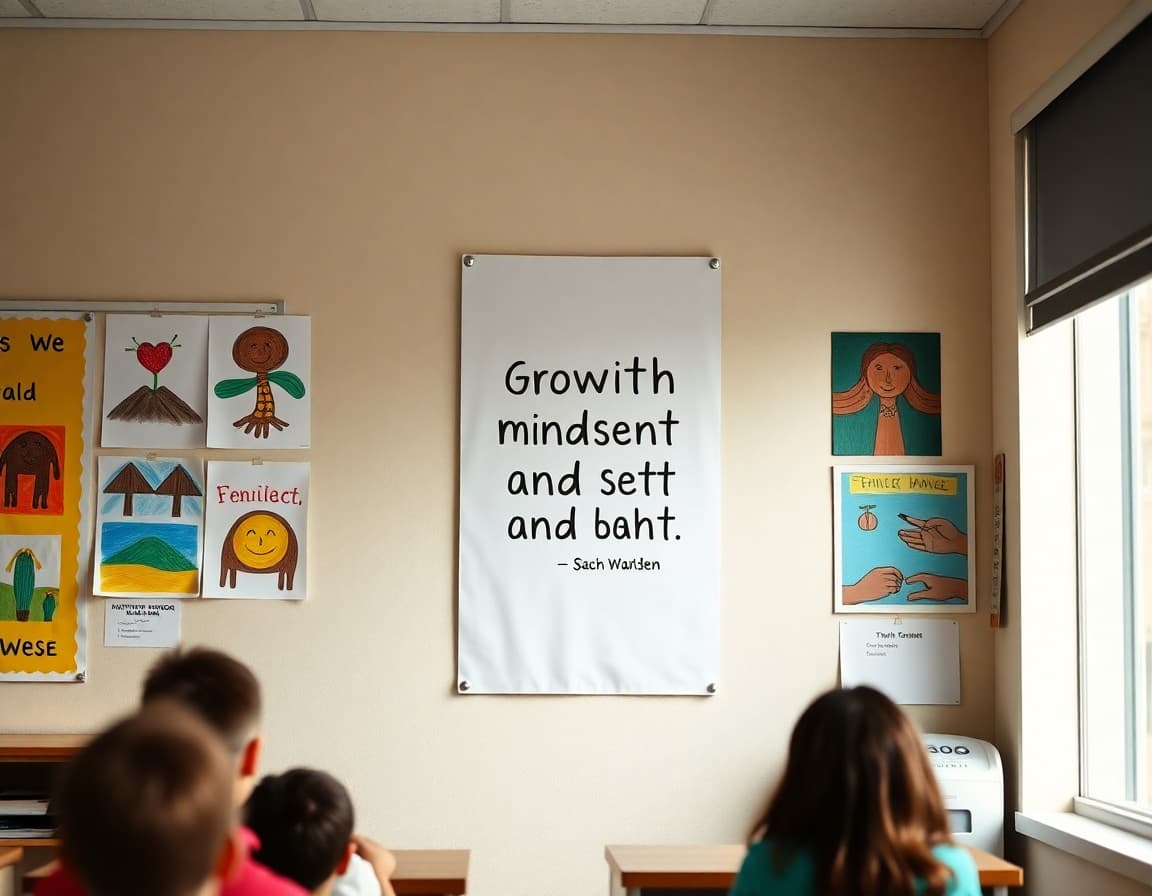
You teach growth mindset in your classroom. Students hear the language and practice the habits. Then they go home and a family member says "you are just not a math person" and undoes months of work in a single sentence. A growth mindset newsletter to parents is not about lecturing families. It is about giving them language they can actually use so the work you are doing in school gets reinforced rather than contradicted at home.
Explain the concept in plain terms
Do not assume parents have encountered growth mindset before. A brief explanation sets up everything that follows. "Growth mindset is the understanding that ability is not fixed and that effort, strategy, and persistence develop skills over time. We spend time in class building this understanding because students who believe they can improve are measurably more willing to take on challenges."
Give families specific language to use
The most useful paragraph in your newsletter is a list of phrases families can swap out. "Instead of 'you are so smart,' try 'I can tell you worked hard on that.' Instead of 'this subject is just hard for you,' try 'this is challenging right now. What strategy are you using?' Instead of 'you failed,' try 'what did you learn from this attempt?'" These replacements are specific enough to use tonight.
Explain what the classroom language sounds like
Help families recognize the language their student is learning so they can echo it. "In class, when students say 'I can't do this,' we practice adding the word yet. 'I can't do this yet.' It is a small change and it signals that the skill is in progress rather than out of reach." When families hear their student use this language, they can reinforce it rather than dismiss it as something the teacher made up.
Address fixed mindset traps at home
Some of the most damaging fixed mindset messages come from well-meaning comments. "You are a natural at this" sounds like a compliment but attributes success to innate ability rather than effort. "You just do not have a reading brain" is an identity statement with long-lasting effects. Naming these traps, gently, helps families understand what to avoid without making them feel criticized for things they have already said.
Normalize failure as part of learning
Families who rush to protect their student from failure deprive them of the most important growth opportunities. Your newsletter can help reframe this. "When your student comes home frustrated or says a test went badly, the most growth-oriented response is curiosity rather than reassurance. What did you try? What would you do differently? This is more useful than 'I am sure you did great.'"
Connect it to what you are doing in class
Ground the newsletter in current classroom context. If you just started a difficult unit, say so. "We are beginning our fractions unit, which many students find challenging. I am framing this as exactly the kind of hard work where growth mindset practice is most useful. If your student says fractions are impossible, this is a good moment to practice the growth mindset language together."
Share one concrete follow-through step
Close with a single action families can take. "Tonight, ask your student about something that was hard today and what they tried when they got stuck. The answer tells you a lot about where their mindset is right now." One question, one conversation, one step. That is the goal of this newsletter.
Daystage lets you include a downloadable parent tip sheet alongside your growth mindset newsletter so families have something to keep on their fridge or reference later in the year when they need the language again.
Get one newsletter idea every week.
Free. For teachers. No spam.
Frequently asked questions
What should I include in a growth mindset newsletter to parents?
A brief, plain explanation of what growth mindset means, specific ways families can reinforce it at home through their language and reactions, and examples of what it sounds like in conversation with their student. Practical language beats theoretical overview every time.
How do I explain growth mindset without making it sound like pseudoscience?
Ground it in observable behavior rather than abstract claims. 'When students believe that difficulty is part of learning, they persist longer and try different strategies. When they believe ability is fixed, they give up faster.' This is something families can observe directly in their own student.
What language should I suggest parents use at home?
Instead of 'you are so smart,' try 'I can see how hard you worked on that.' Instead of 'this looks hard for you,' try 'this is challenging. What have you tried so far?' These small shifts in phrasing change what students internalize about their own capabilities.
How do I connect growth mindset to grades without dismissing struggles?
Acknowledge that difficulty is real while separating it from identity. 'This was a hard quarter for you in math. Hard does not mean incapable. What did you learn about how you work best?' This honors the struggle while keeping the focus on growth rather than fixed outcomes.
Can Daystage help me include growth mindset resources in my newsletter?
Yes. You can embed links to videos, attach a parent tip sheet, and include conversation starters all inside a single Daystage newsletter send.

Adi Ackerman
Author
Adi Ackerman is a former classroom teacher and curriculum writer with 8 years in K-8 schools. She writes about school communication, parent engagement, and what actually works in real classrooms.
More for Classroom Teachers
Ready to send your first newsletter?
3 newsletters free. No credit card. First one ready in under 5 minutes.
Get started free