

Explaining Graphic Organizers to Families in Your Teacher Newsletter
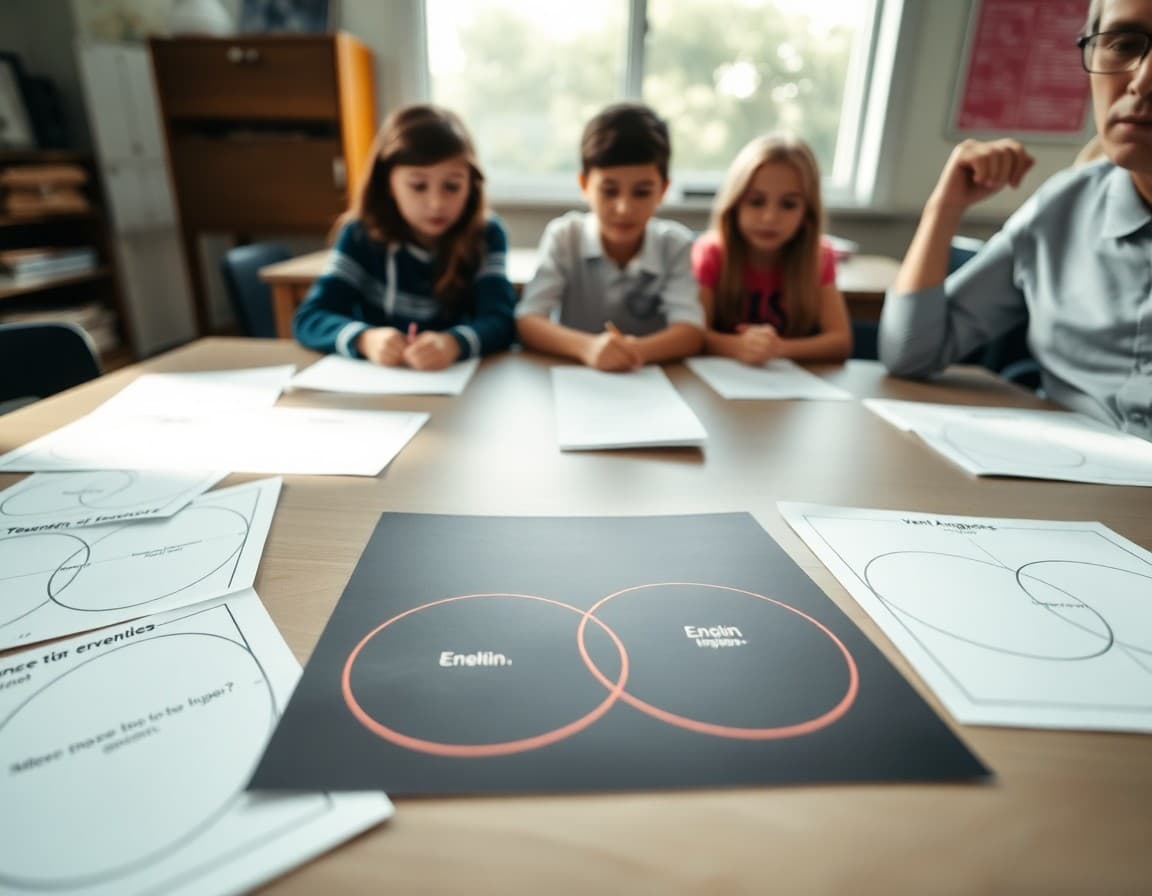
Graphic organizers are among the most practical tools in a student's academic toolkit and among the least transferred to the home environment. Most families have seen Venn diagrams and T-charts but do not think to use them when their student is stuck on a writing assignment or struggling to study for a test. A newsletter that introduces the specific organizers your class uses and explains how to use them at home turns classroom tools into family study resources.
Name the specific organizers you use and when
"In our classroom we use several graphic organizers depending on the thinking task. For compare-and-contrast work we use the T-chart and Venn diagram. For narrative writing we use the story arc organizer: hook, rising action, climax, falling action, resolution. For research notes we use the source-and-evidence organizer with columns for main idea, supporting details, and source. Knowing which organizer to use when is itself a thinking skill we practice all year."
Explain why organizing before writing matters
"Writing without an organizer requires students to simultaneously think about content, structure, and language. That is three cognitive tasks at once. An organizer separates the content thinking from the writing. Students who plan with an organizer before they write produce more organized, more complete work than students who start with a blank page and no plan. The organizer does not do the thinking for the student. It gives the thinking a structure."
Tell families when to suggest an organizer at home
"If your student is staring at a writing prompt with no idea how to start, ask them: do you want to use an organizer first? For a compare-contrast prompt: fold a page in half and put the two things being compared at the top of each column. For any essay prompt: write the claim in the center, draw three lines out from it, and write a piece of evidence at the end of each line. That is all an organizer is. It does not need to be a formal template."
Share the graphic organizer that is currently in use for a specific unit
"This week students are using a cause-and-effect organizer for the Revolutionary War unit. Each student fills in a chain of causes leading to the war and the effects that followed. If your student needs to study for the upcoming assessment, working through the organizer together is more effective than rereading the chapter. I have attached the template below."
Include a digital and print option
"Graphic organizer templates are available in printable form in the classroom resources folder on the class website. Free digital versions are also available at [link]. For most homework contexts, a hand-drawn version works just as well as a formatted template."
Connect organizers to assessments
"Students are permitted to use graphic organizers during writing assessments in our class. I provide them. Families who practice with organizers at home will find that their student is faster and more comfortable using them during a test than students who only see organizers in class."
Daystage newsletters with a linked graphic organizer template in the resources section are among the most downloaded newsletter components of the year because the practical value is immediately obvious and the barrier to use is low.
Get one newsletter idea every week.
Free. For teachers. No spam.
Frequently asked questions
What are the most common graphic organizers used in elementary and middle school?
Venn diagrams for comparing and contrasting, KWL charts for activating prior knowledge, story maps for narrative structure, T-charts for pros and cons or cause and effect, concept webs for brainstorming, and flow charts for sequential processes. Different organizers serve different thinking tasks and subject areas.
How do graphic organizers support student writing?
Graphic organizers externalize the planning process that many students skip when writing under pressure. A student who fills in a T-chart before a compare-contrast essay already has the content organized. The writing becomes a translation of the chart rather than a simultaneous act of thinking and producing text.
Should families use graphic organizers at home when helping with writing?
Yes. When a student is stuck on a writing assignment, asking them to fill in a simple organizer before writing is more effective than asking them to 'just start.' A blank piece of paper divided into two columns or a simple web of circles is all that is needed.
Are graphic organizers appropriate for all learning styles or just visual learners?
Graphic organizers benefit all learners because they externalize cognitive organization that every student must do internally before producing organized work. They are not only for visual learners. They make the thinking visible regardless of how the student ultimately processes information.
Can Daystage help teachers share graphic organizer templates with families?
Yes. A Daystage newsletter can link to printable graphic organizer templates families can use at home. Including a template with the newsletter is one of the most actionable additions to a study strategies section.

Adi Ackerman
Author
Adi Ackerman is a former classroom teacher and curriculum writer with 8 years in K-8 schools. She writes about school communication, parent engagement, and what actually works in real classrooms.
More for Classroom Teachers
Ready to send your first newsletter?
3 newsletters free. No credit card. First one ready in under 5 minutes.
Get started free