

How to Write an Economics Unit Newsletter to Families
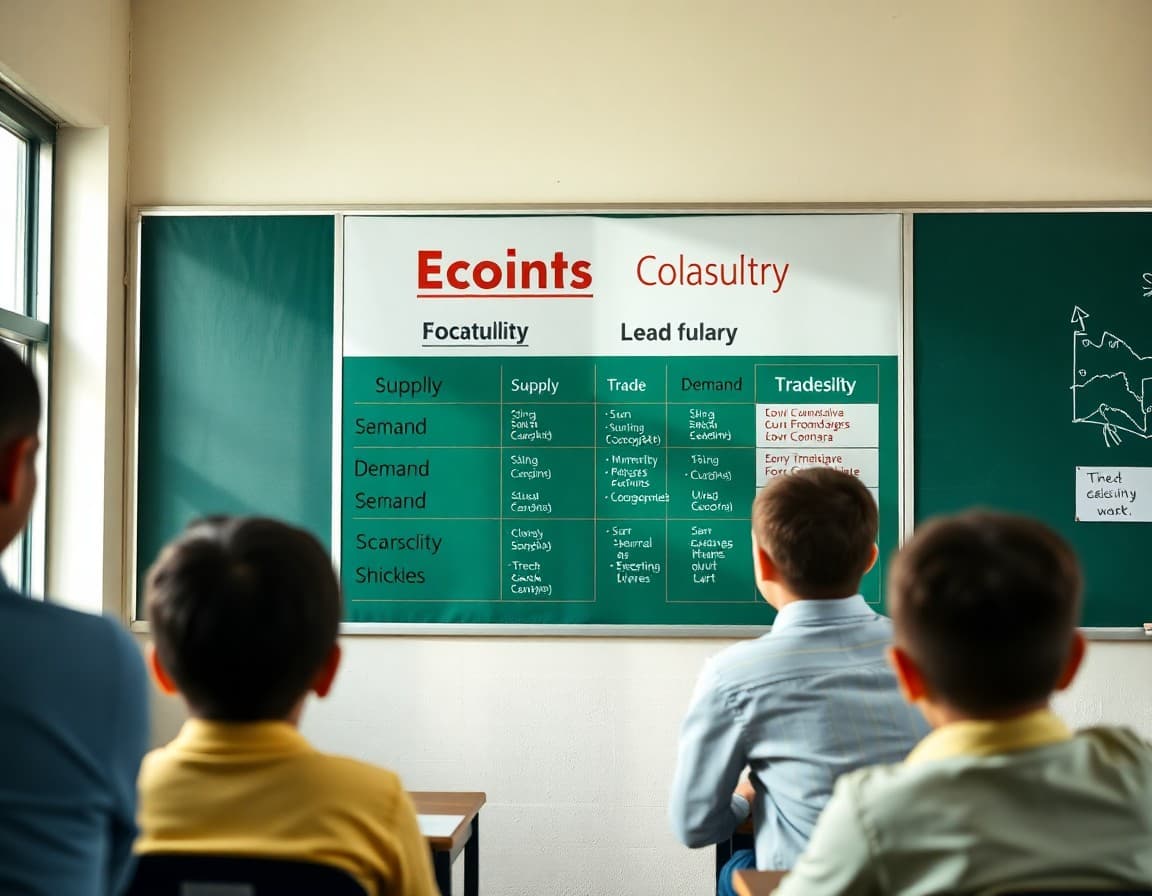
Economics unit newsletters have a distinct advantage over most content area launches: every family practices economics every day without calling it that. Shopping, budgeting, making purchase decisions, talking about prices, saving for something, trading or sharing resources. A newsletter that surfaces this reality turns the economics unit into one of the most immediately relevant things students study all year.
Open by connecting economics to everyday family life
Start by naming what economics is in practical terms. The study of how people make decisions when resources are limited. Every family makes economic decisions constantly. Deciding what to buy, what to save, what to give up to afford something else. A student who understands economic concepts has a framework for thinking about decisions that affects their real life immediately, not eventually after they graduate. This is one of the most directly applicable units of the school year.
Name the core concepts students will study
Be specific about what the unit covers. Scarcity (why everything cannot be had in unlimited supply), supply and demand (why prices change), the roles of producers and consumers, trade and exchange, opportunity cost (what you give up when you choose one thing over another), markets and competition, and how economic decisions affect communities. Naming these explicitly gives families a vocabulary for conversations their student will want to have at home.
Explain opportunity cost clearly
Opportunity cost is one of the most powerful economic concepts and one of the most immediately applicable to student life. When you choose to spend your allowance on one thing, you cannot spend it on something else. That is the opportunity cost. When you choose to watch television for an hour, the opportunity cost is what you could have done with that hour instead. Include a brief, plain-language explanation in your newsletter so families can reinforce this concept in daily decision-making conversations.
Connect to the grocery store or market
A grocery store trip with an economics lens is one of the best at-home economics activities available. Comparing prices involves supply, demand, and choice. Noticing when something is more expensive than usual introduces inflation and scarcity. Choosing between two products involves opportunity cost. Making a list and sticking to a budget involves resource allocation. A brief guide on how to make a shopping trip an economics conversation is genuinely useful.
Describe any classroom simulations
Many economics units involve market simulations, classroom economies, trading games, or production activities. Tell families what your class will experience. These activities are often the most memorable parts of an economics unit and students talk about them at home. Families who know about the simulation in advance can ask specific questions that deepen their student's learning.
Connect to the classroom economy if you have one
If your classroom uses an economy system with currency and jobs, the economics unit is a natural moment to make the connection explicit. Your student has been practicing economics in this classroom all year. The vocabulary they learn in this unit gives them a framework for understanding what they have been experiencing since September.
Share the culminating project or assessment
What does the unit build toward? A market simulation, a business plan, a country trade analysis, a community economics investigation, an essay connecting a current event to economic concepts. Knowing the endpoint helps families understand the unit's scope and what kind of support their student might need.
Daystage makes it easy to send an economics unit newsletter that connects classroom concepts to the real-world economic conversations families can have every day. Units with strong home connections produce significantly better retention and application of the content.
Get one newsletter idea every week.
Free. For teachers. No spam.
Frequently asked questions
What economics concepts do students typically learn in elementary and middle school?
Scarcity and choice, supply and demand, the role of producers and consumers, trade and exchange, opportunity cost, basic market concepts, the role of government in economics, saving and spending, and how economic decisions affect communities. Many units also introduce global trade and the interconnected nature of economies.
How can families extend economics learning at home?
Almost every family financial decision is an economics lesson in action. Comparing prices at the grocery store involves supply, demand, and choice. Discussing why something costs more than it used to involves inflation and scarcity. Deciding whether to save or spend involves opportunity cost. These conversations do not require a textbook.
How do I connect economics to real family experiences without prying into family finances?
Focus on observable everyday economics rather than personal financial situations. The price of something at the store, the concept of saving toward a goal, why some goods are harder to find than others. These are universally relatable without requiring families to share anything about their personal financial circumstances.
What is opportunity cost and how do I explain it to families?
Opportunity cost is what you give up when you choose one option over another. When a student spends an hour playing instead of reading, the opportunity cost is the reading time. When a family buys new furniture, the opportunity cost might be the vacation they did not take. It is the trade-off inherent in every choice.
What tool helps teachers send economics unit newsletters?
Daystage makes it easy to send an economics unit newsletter with real-world connection suggestions that turn family everyday life into economics learning extensions.

Adi Ackerman
Author
Adi Ackerman is a former classroom teacher and curriculum writer with 8 years in K-8 schools. She writes about school communication, parent engagement, and what actually works in real classrooms.
More for Classroom Teachers
Ready to send your first newsletter?
3 newsletters free. No credit card. First one ready in under 5 minutes.
Get started free