
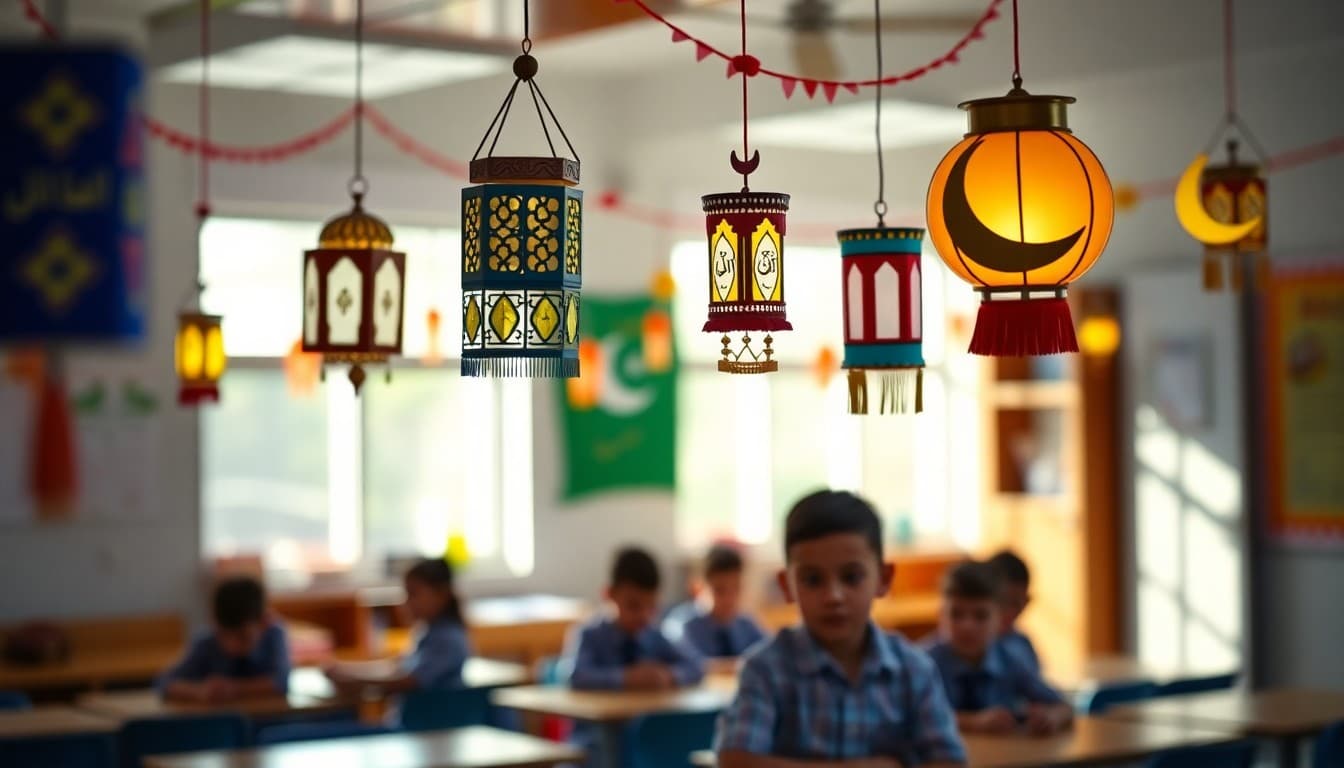
Teacher Newsletter for Eid in the Classroom: Celebrate with Respect

Eid is one of the most significant celebrations in the Islamic calendar, and for Muslim students in your classroom, it is a major family and community event. A newsletter that introduces Eid to the broader class community, supports Muslim families through any absence logistics, and invites genuine learning makes the holiday a moment of community building rather than a note about upcoming absences.
Introduce Eid Accurately
There are two Eids on the Islamic calendar. Eid al-Fitr follows Ramadan, the month of fasting, and is celebrated with communal prayer, family gatherings, gift-giving, and shared meals. Eid al-Adha marks the end of the annual Hajj pilgrimage and honors Ibrahim's faith. Both are observed with communal prayer, time with family, and expressions of gratitude. A brief description that distinguishes the two helps the whole classroom community understand what their Muslim classmates are celebrating.
Note That Students May Be Absent
Muslim students who observe Eid typically miss school on the holiday. Let all families know that Eid absences are treated as excused religious holiday absences and that make-up work is available. Families of Muslim students benefit from seeing this stated plainly in the newsletter rather than having to ask whether their child's absence will be penalized.
Communicate Make-Up Procedures
Name the make-up work process: students returning from Eid have the standard make-up window, can access any missed materials through the method you use for other absences, and should speak with you upon returning if they have questions. If a major assessment falls on Eid, note that you are willing to schedule it at an alternative time with advance notice.
Plan Classroom Learning About Eid
A brief lesson about Eid, a read-aloud about how families celebrate, or a discussion of how Eid is observed in different countries builds cultural awareness for the whole class. Invite Muslim families in advance to contribute a book, a photo, or a brief classroom visit if they are comfortable. Community-contributed learning is more accurate and more meaningful than learning from an outside source alone.
Invite Muslim Families to Share
Some families will want to share their Eid celebration with the classroom; others will prefer privacy. Both are fine. If your family celebrates Eid and you would like to contribute anything to our class learning, I would be glad to hear from you. If you prefer to keep your observance private, that is completely respected. The open invitation is what matters.
Extend Eid Greetings on Behalf of the Classroom
Close the newsletter with a genuine Eid greeting to observing families: Eid Mubarak, or Blessed Eid, is the standard greeting for both holidays. Using Daystage, you can send this newsletter before Eid arrives so Muslim families receive the acknowledgment at the right time and the whole classroom community enters the holiday with awareness and goodwill.
Get one newsletter idea every week.
Free. For teachers. No spam.
Frequently asked questions
What should an Eid classroom newsletter include?
Briefly explain both Eid al-Fitr and Eid al-Adha, note that students who observe Eid may be absent on the holiday, describe any classroom learning about Eid, explain how absences and make-up work are handled, and invite Muslim families to share if they choose.
What is the difference between Eid al-Fitr and Eid al-Adha?
Eid al-Fitr marks the end of Ramadan, the month of fasting, and is celebrated with communal prayers, family gatherings, and feasting. Eid al-Adha marks the conclusion of the Hajj pilgrimage and commemorates Ibrahim's willingness to sacrifice his son. Both are among the most important celebrations in Islam, observed by Muslims worldwide with prayer, community, and gratitude.
How do I introduce Eid to non-Muslim classmates appropriately?
A brief factual introduction covering what Eid is, why it is celebrated, and how families typically observe it is appropriate and valuable for the whole class. Invite Muslim families to contribute books, photos, or a brief classroom visit if they are comfortable. Learning from the community is more accurate and meaningful than learning from an outside source alone.
What if Eid falls on a school day?
Muslim students who observe Eid typically miss school for the holiday. Treat Eid as an excused religious holiday absence, communicate make-up work procedures clearly, and avoid scheduling major assessments or events on or immediately after Eid when possible.
What tool helps teachers send newsletters efficiently?
Daystage makes culturally respectful newsletters like this one easy to produce and delivers them to every family before the holiday, so the classroom community is informed and welcoming when students return from Eid.

Adi Ackerman
Author
Adi Ackerman is a former classroom teacher and curriculum writer with 8 years in K-8 schools. She writes about school communication, parent engagement, and what actually works in real classrooms.
More for Classroom Teachers
Teacher Newsletter for Ramadan in the Classroom: Build Respect and Awareness
Classroom Teachers · 6 min read
Teacher Newsletter for Religious Holidays: Communicate Absence Policies Respectfully
Classroom Teachers · 6 min read
Teacher Newsletter for Cultural Holidays: Celebrate Diversity in the Classroom
Classroom Teachers · 6 min read
Ready to send your first newsletter?
3 newsletters free. No credit card. First one ready in under 5 minutes.
Get started free