
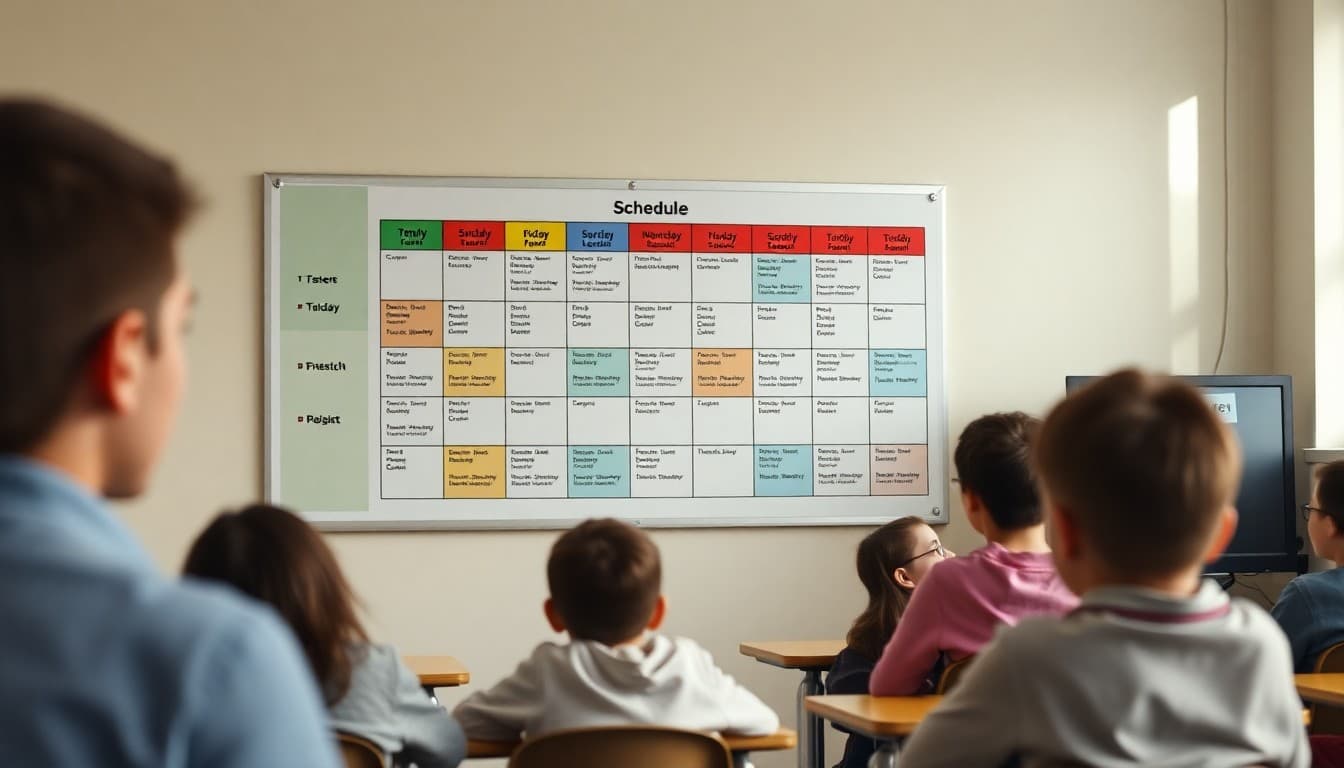
How to Write a Classroom Schedule Newsletter to Families
A classroom schedule newsletter is one of the most practical things you can send home in the first weeks of school. Families who understand the daily structure can plan after-school activities, manage morning routines more intentionally, and have more specific conversations with their student at pickup. The schedule is the operating system of your classroom and families who understand it are better partners.
Share the daily schedule in a clear format
A simple time-block breakdown is more useful than a paragraph describing the day. Arrival and morning routine, morning learning blocks, specials, lunch and recess, afternoon learning blocks, dismissal. Use actual times rather than relative descriptions. Families who can see "reading block: 8:45 to 10:00" have something concrete to work with when planning their day.
Explain the scheduling rationale
Tell families why the schedule is structured the way it is. Core academic subjects in the morning when most students are at peak focus. Lunch timed to match the school kitchen schedule. PE and music at specific days because of facility availability. A brief explanation demonstrates intentional planning and helps families understand that the schedule is designed to serve their student's learning.
Note the specials rotation
If your school uses a rotating specials schedule, explain how it works. Which day students have art versus music versus PE. Whether the rotation follows a set weekly pattern or a day-cycle that can shift. Students who forget to bring PE shoes often do so because neither they nor their family had a clear picture of the rotation. Clarity here prevents a small problem every other week.
Identify early release or schedule variation days
Any days when the regular schedule does not apply deserve specific mention. Early release days, assembly days that shift subject times, testing days where the morning routine looks different. Families who know these variations in advance can plan transportation and after-school activities without last-minute scrambles.
Explain the morning routine expectations
A section on what students should do when they arrive, where to put belongings, what the morning routine looks like in the first fifteen minutes, and what happens if students arrive late, helps families support a smooth start to the day at home. A student who leaves the house knowing exactly what to do when they get to school transitions better than one who does not.
Describe the dismissal process
Dismissal is a high-friction time for schools and it benefits from specific newsletter coverage. What time does dismissal begin, what is the pickup procedure, where do students wait for walkers versus bus versus car riders, what happens if a pickup arrangement changes. Families who understand the dismissal logistics from day one are the ones who make the process work smoothly for everyone.
Tell families how you communicate schedule changes
Establish a clear channel for schedule deviation notices. When there is a fire drill, a school assembly, or an unexpected schedule shift, how will families find out? Consistency in how you communicate changes means families check the right channel rather than finding out after the fact. This is especially important for families managing pickups around a specific schedule block.
Daystage makes it easy to send a formatted classroom schedule newsletter that families can refer back to throughout the year, and to send quick schedule update notes when the routine changes. Informed families navigate the school calendar with far less friction than uninformed ones.
Get one newsletter idea every week.
Free. For teachers. No spam.
Frequently asked questions
What should a classroom schedule newsletter include?
A breakdown of the daily schedule by subject or activity block, the times for specials like art, music, and PE, lunch and recess times, any days when the schedule differs from the regular routine, and a brief explanation of why certain subjects are scheduled at specific times.
How detailed should I be about the daily schedule in my newsletter?
Enough for families to answer their student's basic schedule questions, plan pickups and after-school activities, and understand when high-focus learning happens versus transition or break times. You do not need to include every minute, but a clear picture of the daily arc is useful.
How do I explain why subjects are scheduled at particular times?
A brief explanation of your scheduling logic builds family confidence in your planning. If reading and math happen in the morning because that is when research shows most students have peak focus, say so. Families who understand the reasoning behind the schedule are more likely to support morning routines that get students to school on time and ready.
How should I communicate schedule changes?
Establish a clear pattern for communicating schedule deviations. Whether it is a Monday newsletter reminder, a same-day notification for unexpected changes, or a regular note about specialty schedule rotations. Families who know when to expect schedule information do not miss important logistics.
What tool helps teachers send classroom schedule newsletters?
Daystage makes it easy to send a formatted classroom schedule newsletter with the daily and weekly breakdown clearly organized so families can refer back to it throughout the year without having to ask basic scheduling questions.

Adi Ackerman
Author
Adi Ackerman is a former classroom teacher and curriculum writer with 8 years in K-8 schools. She writes about school communication, parent engagement, and what actually works in real classrooms.
More for Classroom Teachers
Ready to send your first newsletter?
3 newsletters free. No credit card. First one ready in under 5 minutes.
Get started free