
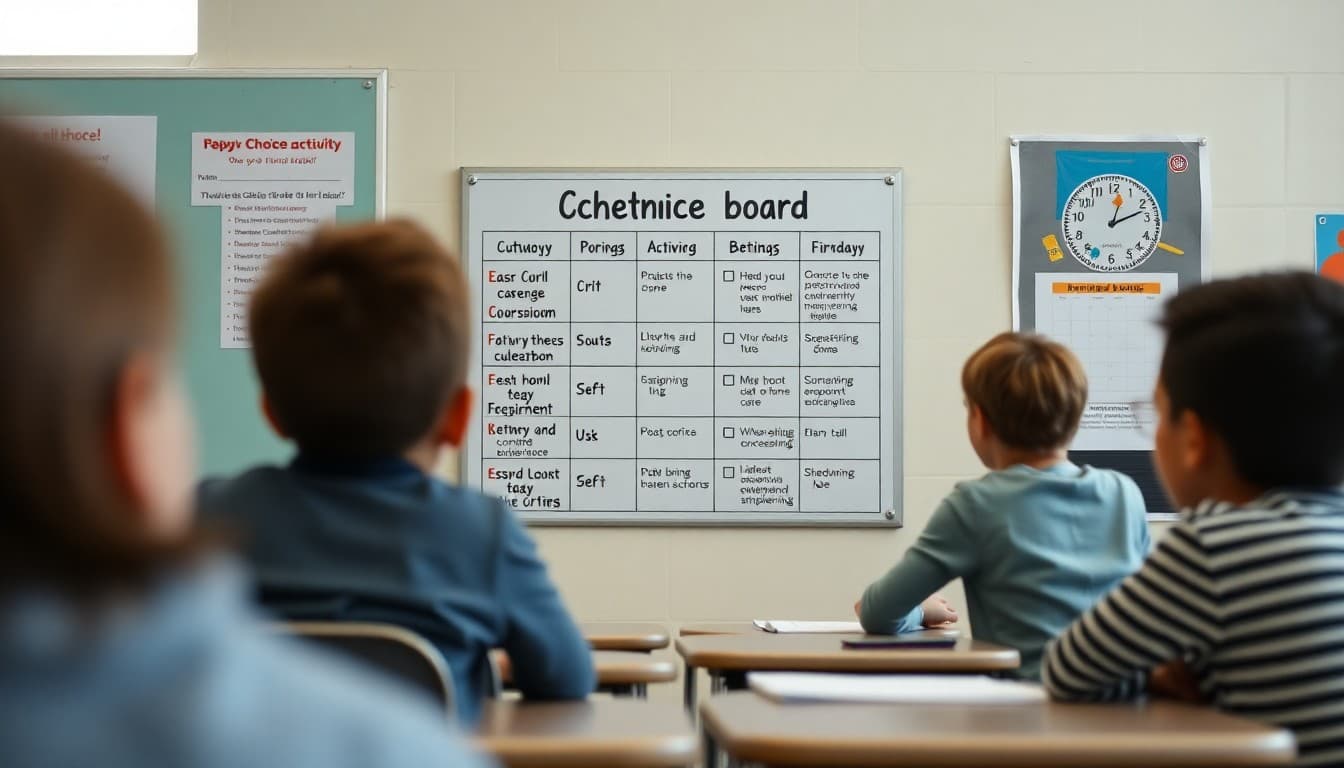
Teacher Newsletter for Choice Boards: Explaining Student Agency to Parents

Choice boards are one of the most effective differentiation tools in the classroom, and one of the most misunderstood by parents. Without context, "your student gets to choose their activity today" sounds like free time. With a clear newsletter, it becomes a sophisticated pedagogical strategy that parents can support at home. The explanation is worth taking the time to write well.
Define what a choice board is and why it matters
Start with the basics. A choice board is a menu of activities, all aligned to the same learning objective, that gives students multiple pathways to demonstrate understanding. The choices typically vary by learning style, complexity level, or product type. Every option on the board is meaningful. There is no shortcut option. When parents understand this, they stop worrying that their student is avoiding real work.
Explain the current unit's choice board options
Do not stay abstract. Tell families specifically what this week's or this unit's board looks like. "Students can write a paragraph, create a labeled diagram, build a model, record a short explanation video, or design a poster, all demonstrating the same understanding of the photosynthesis process." Specific options make the approach feel concrete rather than experimental.
Connect choice to engagement and ownership
Research on student motivation consistently shows that choice increases engagement. When students decide how to demonstrate their learning, they invest more energy in the process and produce better work. This is not just a nice-to-have. For many students, choice is the difference between going through the motions and actually thinking. Say that in your newsletter.
Address the standards question directly
Every parent who reads a choice board newsletter is quietly wondering whether their student can opt out of hard content. Answer that question without being asked. Every option targets the same standard. The assessment after the choice board is the same for everyone. Choice is in the process, not the expectations.
Tell parents how to talk about choices at home
When students come home with a choice assignment, parents sometimes override the choice with their own preference. Coach families on how to ask about it instead. "Which option did you pick and why? What did you want to try that felt different from what you usually do?" These questions reinforce the decision-making process rather than bypassing it.
Share examples of student choice work when possible
A newsletter that includes a photo of a student's model or a sentence from a student's creative response makes the approach visible. Parents who see what choice board work actually looks like develop much faster appreciation for the depth it can produce.
Explain how you handle students who avoid challenge
Some parents will wonder if their student is always picking the easiest path. Let them know how you monitor that. You observe patterns, you conference with students who consistently avoid certain types of tasks, and you sometimes assign a required option after a student has had free choice for a cycle. Transparency about your oversight builds confidence in the system.
Get one newsletter idea every week.
Free. For teachers. No spam.
Frequently asked questions
What should I explain about choice boards in a parent newsletter?
Explain what a choice board is, why you use them, how students choose activities, whether all options meet the same learning standard, and what happens when a student consistently avoids certain types of tasks. Parents want to know that choice does not mean any student can skip the hard work.
How do I reassure parents that choice boards meet learning standards?
Be explicit. State that all options on the board address the same learning target from different angles. 'Whether a student writes a poem or creates a diagram or builds a model, all three options require demonstrating understanding of the water cycle.' Standards are the destination. The choice is only the route.
Should I send home the choice board for parents to see?
If students have choice assignments that can be completed at home, yes. Send a digital copy or photograph of the board so parents know what the options are. This prevents confusion when a student says 'I get to pick what I work on' and a parent assumes that means no real work.
How do I handle students who always pick the easiest option?
You can address this without outing specific students in your newsletter. 'I encourage students to stretch themselves by trying at least one option outside their comfort zone each week' communicates your expectation without pointing at anyone.
How does Daystage help me share choice board updates with families?
Daystage lets you attach images or link to digital documents in your newsletter, so you can share a photograph of the current choice board alongside your written explanation.

Adi Ackerman
Author
Adi Ackerman is a former classroom teacher and curriculum writer with 8 years in K-8 schools. She writes about school communication, parent engagement, and what actually works in real classrooms.
More for Classroom Teachers
How to Explain Student Choice Menus to Families in Your Teacher Newsletter
Classroom Teachers · 6 min read
Tic Tac Toe Grid Newsletter: Explaining This Differentiation Tool to Parents
Classroom Teachers · 6 min read
How to Introduce Interactive Notebooks to Families in Your Teacher Newsletter
Classroom Teachers · 6 min read
Ready to send your first newsletter?
3 newsletters free. No credit card. First one ready in under 5 minutes.
Get started free