
How to Recommend Audiobooks to Families in Your Teacher Newsletter
Audiobooks expand the total time students spend with books beyond what independent reading time allows. Car rides, bedtime routines, after-school downtime, and household chores are all moments when listening to a well-narrated book builds vocabulary, comprehension, and a relationship with stories. A teacher newsletter that introduces families to audiobook resources gives them a practical tool they may not have considered and often converts hesitant readers into enthusiastic listeners.
Start with the free library option
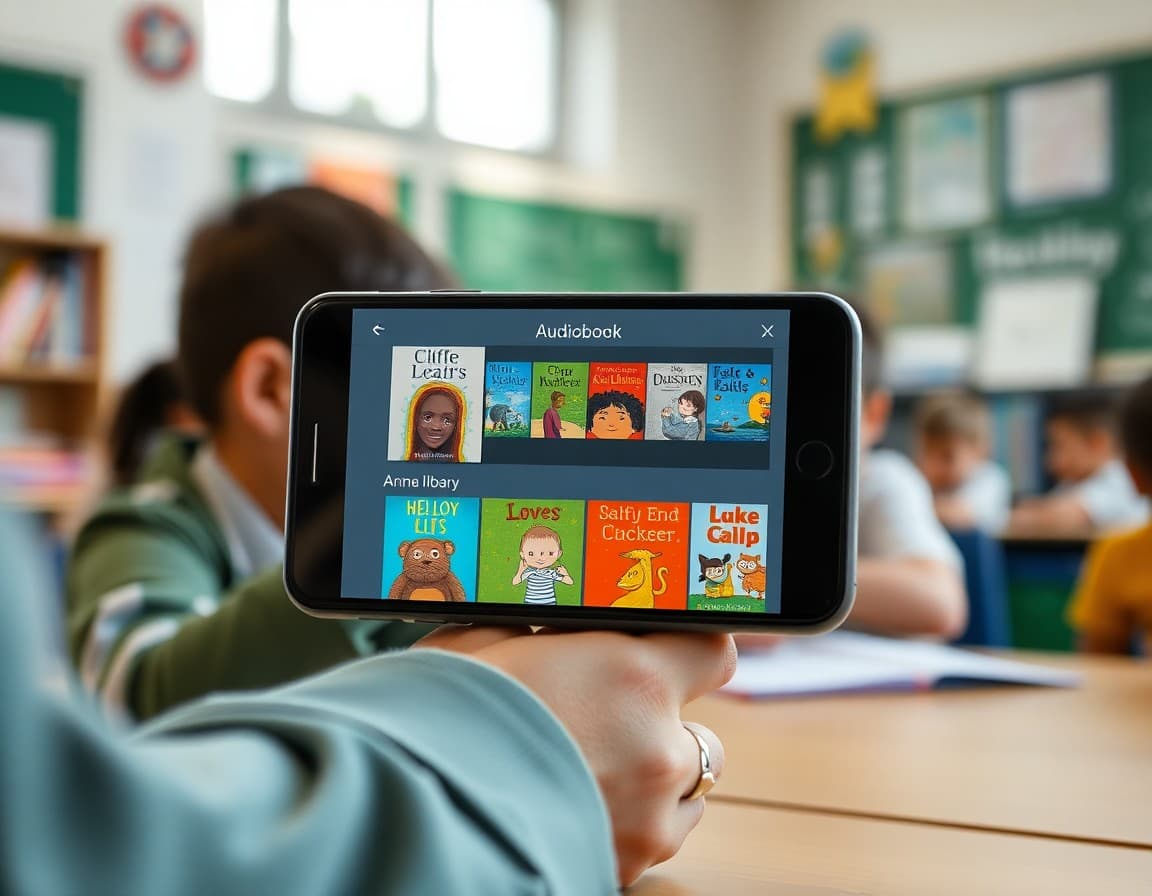
Before recommending any paid service, mention the public library. Libby and Overdrive give families with a library card access to thousands of audiobooks at no cost. "If your family uses the public library, the Libby app gives you free access to audiobooks with your library card. No fees, no subscription. Search by title, author, or your student's age range. If the title you want is checked out, you can place a hold and get notified when it is available." That single recommendation has immediate practical value for most families.
Recommend a specific title tied to classroom reading
A specific audiobook recommendation connected to what students are reading in class has more immediate relevance than a general list. "We are reading Charlotte's Web as a class. The audio version narrated by E.B. White himself is available on Libby and is worth hearing alongside the book. White's voice adds something to the story that a print-only reading misses." Specific recommendations tied to class work have a higher uptake because they extend something families already know is important.
Identify the best contexts for audiobook listening
Families who are not already audiobook users often do not know where listening fits naturally. Give them specific suggestions. "Car rides are the most natural audiobook moment. Morning drop-off, afternoon pickup, weekend trips. A thirty-minute commute is two chapters of a middle-grade novel. Evening chores are another good window." Concrete contexts make adoption easier than an open-ended recommendation.
Address the concern that audiobooks are not real reading
Some families worry that listening does not offer the same benefit as reading. Address this directly. "Audiobooks are not a replacement for independent reading practice, which builds decoding and fluency skills. They are a complementary tool that builds vocabulary, comprehension, and a love of stories. The research on listening and reading comprehension supports both as valuable literacy activities."
Include a family listening recommendation
Audiobooks that families can listen to together in the car are a different kind of recommendation than individual student audiobooks. "If your family does long drives, a shared audiobook is a genuinely good way to pass the time. Wonder by R.J. Palacio has a multi-narrator version that is excellent for family listening for grades 4 and up." Family audiobooks open a conversation channel between parents and students that other screen time does not.
Follow up with a listener spotlight
If students share audiobook experiences in class, mention it in the newsletter. "Several students told me this week that they started listening to the audiobook I recommended during their commute. One student said they were five chapters ahead of the class by Wednesday." Social proof from peers and classmates is often more motivating for other families than the original recommendation.
Daystage newsletters work well for audiobook recommendations. Include the cover, the narrator, and a direct Libby or app store link and the recommendation is completely actionable from a phone.
Get one newsletter idea every week.
Free. For teachers. No spam.
Frequently asked questions
Are audiobooks as valuable as reading for students?
Audiobooks build listening comprehension, vocabulary, and exposure to complex language. They are not a replacement for independent reading practice but they are a genuine literacy tool. Research supports audiobooks for building background knowledge, supporting struggling readers, and modeling fluent reading. Recommending them alongside print reading is appropriate and educationally sound.
What are the best free audiobook sources for school-age students?
Libby through the public library is the best free source. It offers a large collection of audiobooks available with a library card and no cost. Overdrive is the same platform. Audible for Kids has a free tier with hundreds of titles. StorylineOnline offers free celebrity-read picture books online. Loyal Books has free public domain titles.
When is the best time to recommend an audiobook in a newsletter?
Before long car trips or school breaks, at the start of summer, when the class is reading a particular book and an audio version is available, or when you are working on a read-aloud in class and want families to extend the experience at home. Tied to context, audiobook recommendations get used. Standalone recommendations are easy to ignore.
How do I recommend an audiobook without implying that regular reading is optional?
Frame audiobooks as an addition to print reading rather than a replacement. 'Audiobooks during car rides or chores are a great way to add more reading time without competing with the daily independent reading habit.' That framing makes the recommendation additive rather than substitutive.
Can Daystage newsletters include audiobook recommendations with links?
Yes. You can include audiobook links, cover images, and narrator notes in a Daystage newsletter. The formatting keeps the recommendation clean and tappable on mobile.

Adi Ackerman
Author
Adi Ackerman is a former classroom teacher and curriculum writer with 8 years in K-8 schools. She writes about school communication, parent engagement, and what actually works in real classrooms.
More for Classroom Teachers
Ready to send your first newsletter?
3 newsletters free. No credit card. First one ready in under 5 minutes.
Get started free