
Teacher Newsletter for Arts Integration: Connect Creativity to Every Subject

Arts integration turns every subject into a richer learning experience. When students draw a diagram to explain a scientific concept, choreograph a movement that represents a mathematical property, or write a song that captures a historical event, they are doing something cognitively powerful: they are using expression to deepen comprehension. Your newsletter is what makes that process legible to families and invites them to ask the right questions at home.
Define Arts Integration for Families
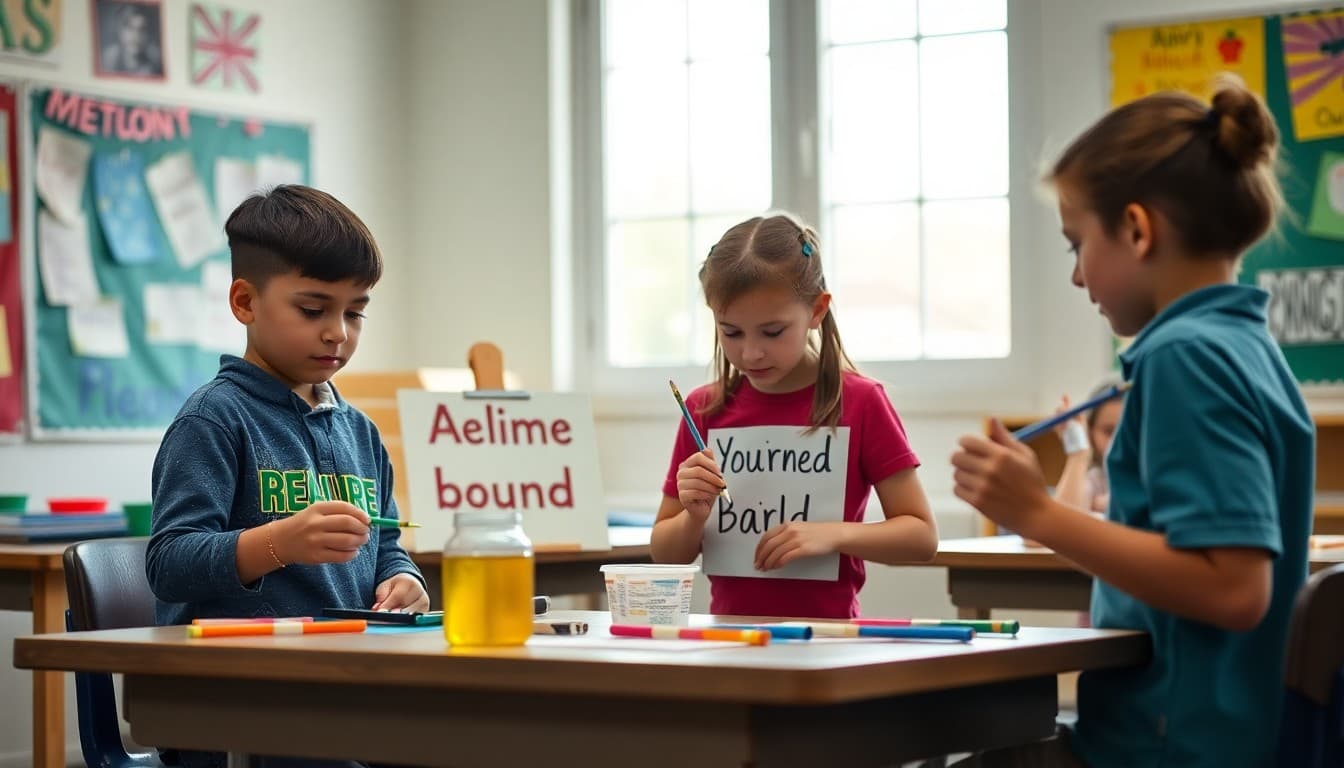
Some families will hear arts integration and assume it means their child's math time has been replaced with painting. Your newsletter should correct that assumption in the first paragraph. Arts integration uses creative modalities as tools for teaching and understanding academic content. Students draw what they know about photosynthesis to consolidate their science understanding. They create a timeline as a visual art piece to internalize history. The art is the cognitive tool, not the destination.
Describe the Current Integration Project
Name the academic subject, the concept being studied, and how the artistic modality connects to it. "Students illustrated their understanding of the water cycle by creating layered watercolor panels that show each stage." "Students composed a short melody that captures the emotional arc of the story we read." "Students designed an abstract sculpture that represents the structure of a cell." The specificity shows that the integration was intentional and academically grounded.
Explain the Cognitive Benefit
When students represent knowledge through a different modality, they are required to translate their understanding rather than simply reproduce it. Translation deepens comprehension in ways that re-reading or re-copying does not. A brief explanation of this cognitive mechanism helps families understand why the activity is worth the time it takes rather than questioning whether the class should be doing math instead.
Address Students with Different Creative Comfort Levels
Some students are enthusiastic about creative work. Others resist it, especially if they feel self-conscious about their artistic ability. Your newsletter can note that arts integration focuses on expression and representation, not artistic polish. The goal is accuracy and creativity of thinking, not beauty of execution. That framing gives reluctant students permission to engage without the pressure of a performance standard.
Connect to Home Conversations
Ask families to invite their child to show them the arts integration project and explain what the academic concept was. Ask what choices the student made and why. A student who can explain why they chose that color, that symbol, or that layout is demonstrating deeper understanding than one who merely labeled the parts correctly. Using Daystage, you can include that conversation prompt as a home extension section in the newsletter.
Share Student Work
Arts integration produces some of the most visually interesting academic work of the school year. A newsletter that includes a student work photo alongside the academic concept it expresses is one of the most compelling combinations in classroom communication. Families see both the creativity and the learning simultaneously, which is exactly the message arts integration is designed to send.
Get one newsletter idea every week.
Free. For teachers. No spam.
Frequently asked questions
What is arts integration and how does it differ from art class?
Arts integration uses visual art, music, movement, drama, or other creative modalities as a vehicle for teaching and assessing academic content. Students are not making art as an end in itself. They are using art to deepen understanding of a math concept, a historical event, a scientific process, or a literary theme. The newsletter should make this distinction clear.
What does arts integration look like in a math lesson?
Students might represent geometric transformations through dance, illustrate fraction concepts through visual patterns, or use music rhythm to practice multiplication tables. The key is that the artistic activity reinforces the mathematical understanding rather than simply decorating it. Your newsletter should describe the specific integration your class used.
How does arts integration benefit students who are not traditionally artistic?
Arts integration is not about artistic skill. It is about using a different cognitive pathway to access and express understanding. Students who struggle with written explanations sometimes demonstrate deep understanding through a visual or physical representation. This multimodal approach benefits a wider range of learners than text-only instruction.
How can families support arts integration learning at home?
Ask your child to explain a concept from school using a drawing, a song, or a movement rather than just words. Notice when artistic choices reflect ideas: why did you pick that color for that part of the drawing? What does that shape represent? These conversations deepen the connection between expression and understanding.
What tool helps teachers send newsletters efficiently?
Daystage makes arts integration newsletters visually rich. You can include photos of student work alongside explanations of the academic concept being expressed, all in one polished message that shows families both the creative and the academic dimensions of the project.

Adi Ackerman
Author
Adi Ackerman is a former classroom teacher and curriculum writer with 8 years in K-8 schools. She writes about school communication, parent engagement, and what actually works in real classrooms.
More for Classroom Teachers
Teacher Newsletter for STEAM Unit: When Art Joins Science and Engineering
Classroom Teachers · 6 min read
Teacher Newsletter for School Art Show: Invite Families and Celebrate Student Work
Classroom Teachers · 6 min read
Teacher Newsletter for Interdisciplinary Unit: Connect Learning Across Subjects
Classroom Teachers · 6 min read
Ready to send your first newsletter?
3 newsletters free. No credit card. First one ready in under 5 minutes.
Get started free