
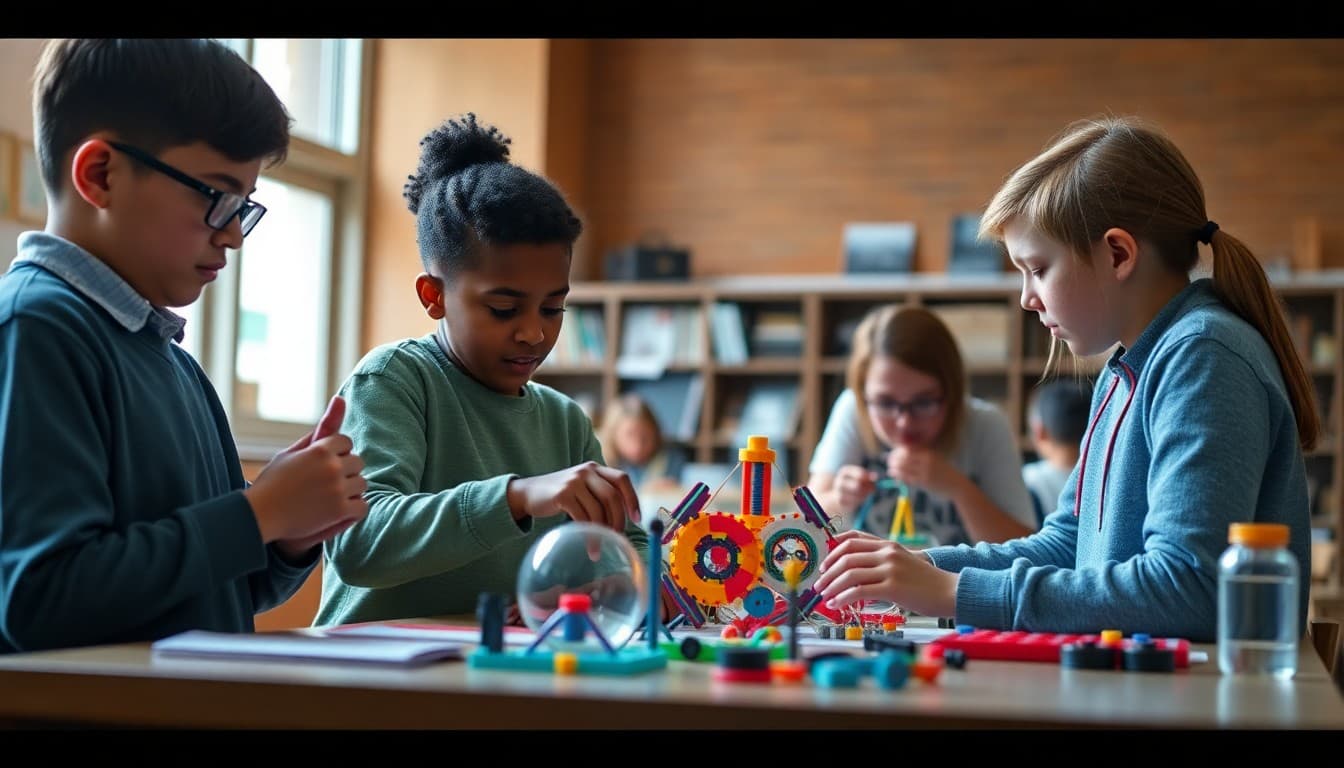
Teacher Newsletter for STEAM Unit: When Art Joins Science and Engineering

STEAM takes the STEM framework and adds the dimension that many students find most meaningful: creative expression. When art becomes part of engineering, students who might have felt excluded from purely technical work find an entry point. And students who thrive in STEM discover that design thinking is not decoration. It is a core part of solving problems well. Your newsletter is what makes that case to families and shows them the projects that emerged from it.
Explain Why Art Belongs Alongside Science and Engineering
The most compelling reason to add art to a STEM curriculum is not that it makes the work more colorful. It is that creative problem-solving, visual communication, and aesthetic judgment are genuinely useful skills that transfer to technical work. Architects, product designers, software interface developers, data visualization specialists: all of them use artistic thinking in technical contexts. Your newsletter can make this case in two sentences and reframe the arts integration as an intellectual choice rather than a softening of the academic rigor.
Describe the Specific STEAM Project
What did students build or create? A geometric tessellation pattern that also demonstrates mathematical symmetry? A scientific model that communicates data through visual storytelling? An engineered device designed with specific aesthetic constraints? Name the project and explain both its technical and artistic dimensions. Families who see both aspects appreciate the full scope of the work.
Walk Through the Creative-Analytical Process
STEAM projects typically involve a design phase before a build phase. Students sketched ideas, made aesthetic and functional choices simultaneously, and revised based on both how the design worked and how it looked. Describing this process in the newsletter gives families insight into the kind of thinking students practiced and gives students language for explaining their choices.
Connect to Standards in Both Arts and STEM
A strong STEAM unit addresses standards in both domains. The engineering challenge may map to NGSS practices. The visual communication may address arts standards. Naming both in the newsletter demonstrates that neither domain was subordinated to the other and that the integration was genuinely intentional.
Share the Visual Outcomes
STEAM projects produce work that is worth displaying. A newsletter with a photo of the finished projects shows families the aesthetic quality of what students made alongside the functional achievement. That dual display is exactly the point of STEAM and communicates the lesson better than any paragraph of explanation.
Encourage Creative-Technical Exploration at Home
Suggest that families notice examples of design and function coming together in everyday objects: the shape of a chair, the layout of a park, the structure of a bridge. Ask their child to find one example and explain both why it works and why it looks the way it does. Using Daystage, that home reflection prompt is easy to include as a section at the end of the STEAM unit newsletter.
Get one newsletter idea every week.
Free. For teachers. No spam.
Frequently asked questions
How does the A in STEAM change the learning experience?
Adding arts to STEM means students use design thinking, visual communication, creative problem-solving, and aesthetic judgment alongside scientific and mathematical methods. It broadens who connects to the curriculum and develops a kind of thinking that is increasingly valued alongside technical skills.
What does a STEAM project look like in practice?
Examples include designing a bridge that is also visually beautiful, creating a data visualization that is also an artwork, using geometric art to explore mathematical patterns, or building a science model that also tells a story through its visual design. Your newsletter should describe the specific STEAM project your class completed.
How do I explain the value of arts in a STEM-focused world?
Research shows that creative and analytical thinking are not separate abilities. Many of the most successful engineers, programmers, and scientists describe design and creative thinking as central to their work. A brief mention of this connection in the newsletter helps families who may be skeptical of arts integration understand its practical value.
How can families support STEAM thinking at home?
Encourage their child to make something beautiful that also works. Look for examples of design and engineering in everyday objects: the shape of a bridge, the design of a building, the layout of a game board. Notice when art and function come together and name that connection.
What tool helps teachers send newsletters efficiently?
Daystage makes STEAM unit newsletters visually engaging with photos of student work, project descriptions, and the dual art-engineering nature of the projects displayed in a clean, professional layout that families appreciate.

Adi Ackerman
Author
Adi Ackerman is a former classroom teacher and curriculum writer with 8 years in K-8 schools. She writes about school communication, parent engagement, and what actually works in real classrooms.
More for Classroom Teachers
Teacher Newsletter for STEM Integration: Connect Science, Tech, and Math
Classroom Teachers · 6 min read
Teacher Newsletter for Arts Integration: Connect Creativity to Every Subject
Classroom Teachers · 6 min read
Teacher Newsletter for Design Thinking Projects in Your Classroom
Classroom Teachers · 6 min read
Ready to send your first newsletter?
3 newsletters free. No credit card. First one ready in under 5 minutes.
Get started free