

Teacher Newsletter for School Art Show: Invite Families and Celebrate Student Work
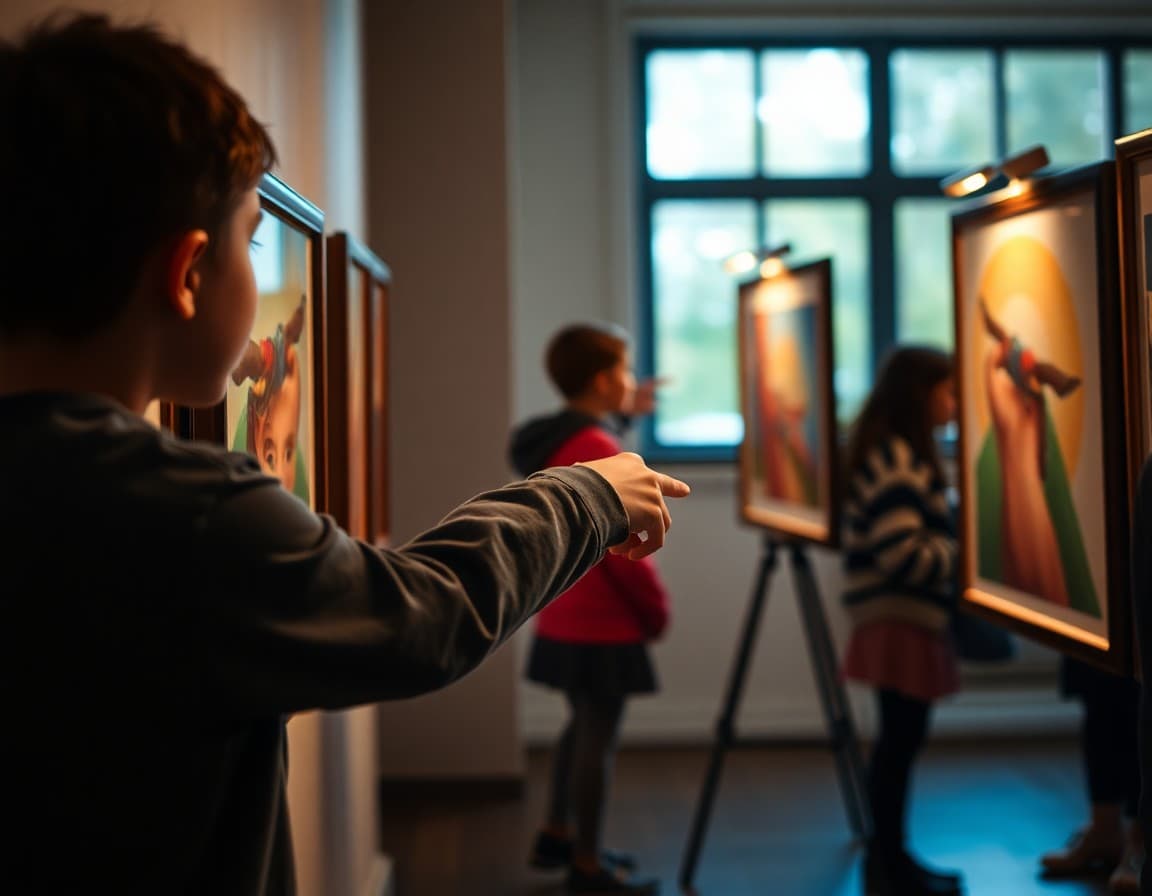
A school art show gives students something most other academic activities do not: their work displayed publicly for the people who matter most to them. Your newsletter is what makes families understand that their child's art will be there, that the evening is worth prioritizing, and that showing up is a form of recognition their child will feel.
Lead with the Personal Invitation
Every family in your class needs to know their child has work in the show. The newsletter should make this explicit: every student in our class has a piece displayed. Your child worked on this and it is ready to be seen. Families who feel personally invited are far more likely to attend than families who receive what reads like a general school announcement.
Describe What Students Created
Name the project, the medium, and the technique students used. Our class spent three weeks creating watercolor self-portraits while studying proportion and facial symmetry. The show includes a three-dimensional clay animal built using coil technique. When families understand what their child made and what skills it required, they look at the piece differently and ask better questions.
Connect the Work to the Curriculum
Art is not separate from learning. Your newsletter can make the academic connection explicit. Students who created maps as part of a geography unit used design principles to communicate information. Students who illustrated their own poems in language arts applied composition choices to visual storytelling. A sentence of context elevates the work beyond decoration.
Cover the Event Details Completely
Date, start and end time, building entrance, whether it is open house style or has a reception, whether refreshments will be served, and what happens to the artwork after the show. Families who have the full picture can make attendance decisions and can invite extended family who want to see the work.
Include a Preview Image
If you have a photo of a student working on their piece or a partial view of the finished work, include it in the newsletter. A visual teaser creates anticipation that no amount of description can match. With appropriate photo permissions in place, even a single in-progress image makes the newsletter feel different from a text invitation.
Follow Up After the Show
A brief post-show newsletter with a photo of the gallery and a thank-you closes the event with warmth. Using Daystage, you can include a gallery photo and a message that honors what students created in one message sent while families are still talking about the evening.
Get one newsletter idea every week.
Free. For teachers. No spam.
Frequently asked questions
What should an art show newsletter cover?
Include the date, time, location, whether all students have work displayed, the medium or theme of the work, whether families can purchase or take home pieces, and any reception details. Families who know their child's work is specifically included show up at much higher rates than families who receive a generic event invitation.
Should I mention specific art projects in the newsletter?
Yes. Naming what students created, whether it is watercolor self-portraits, clay sculptures, mixed media collages, or digital prints, builds anticipation. A brief description of the unit gives the work artistic context that families appreciate and that helps them ask their child meaningful questions when they see the piece.
How do I describe the art show as educational, not just decorative?
Connect each medium or technique to specific art skills students learned: color theory, perspective, line quality, texture, composition. One sentence per project that names the skill being demonstrated positions the show as a display of learning, not just a decoration.
Can families purchase student artwork after the show?
Some schools sell student work as an additional fundraiser. If this is an option, describe the process in the newsletter: pricing, how to purchase, when art can be collected. If art goes home with students regardless, note when and how.
What tool helps teachers send newsletters efficiently?
Daystage is ideal for art show newsletters. You can include preview photos of student work in progress, the event details, and an RSVP option in one polished message. A visual newsletter that hints at what is on display is more compelling than a plain text invite.

Adi Ackerman
Author
Adi Ackerman is a former classroom teacher and curriculum writer with 8 years in K-8 schools. She writes about school communication, parent engagement, and what actually works in real classrooms.
More for Classroom Teachers
Ready to send your first newsletter?
3 newsletters free. No credit card. First one ready in under 5 minutes.
Get started free