
How to Share Anchor Charts With Families in Your Teacher Newsletter

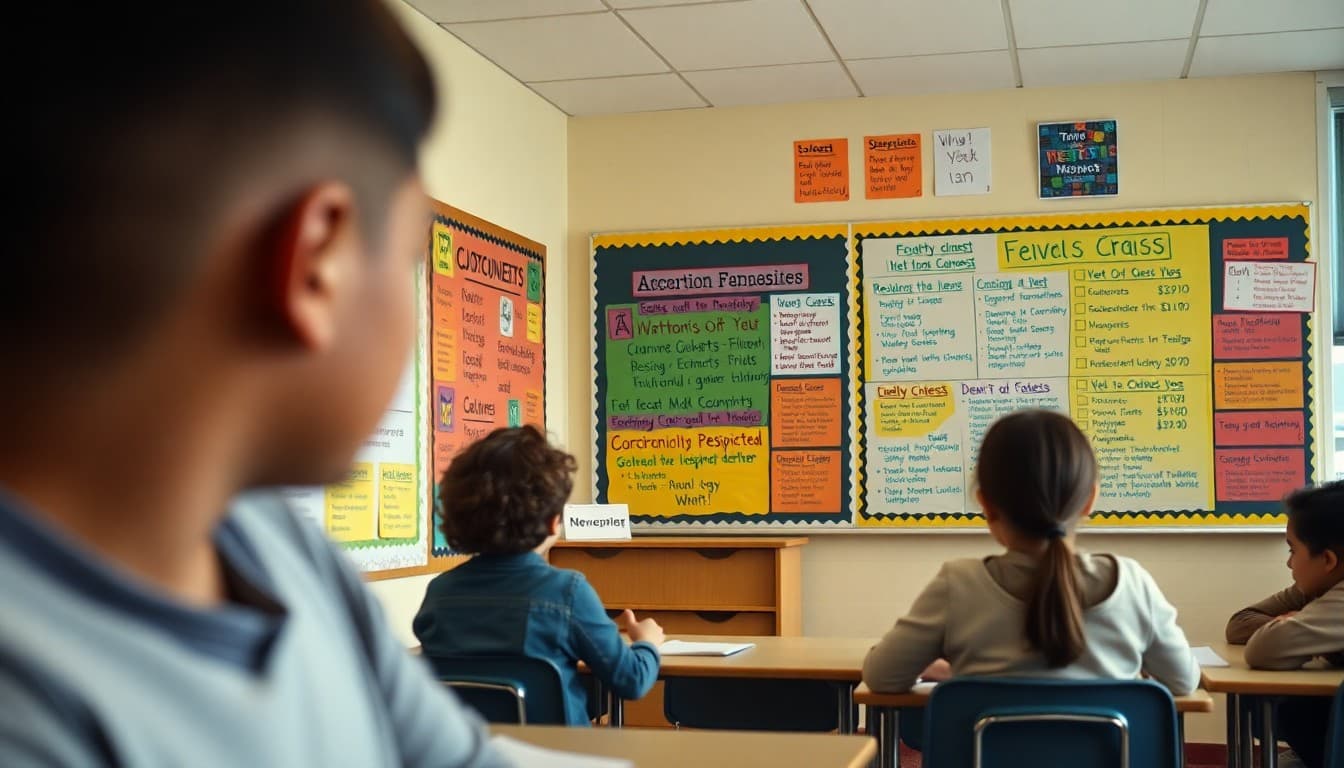
Anchor charts are one of the most visible elements of a well-resourced classroom. They appear on every wall: reading strategies, math steps, writing process reminders, grammar rules, vocabulary banks. Students who use the classroom anchor charts during independent work have a visible scaffold that students working at home do not have. A newsletter that shares anchor chart photos closes that gap and gives families a reference tool that connects home work to classroom instruction.
Explain what anchor charts are and how students use them
"Anchor charts are large reference posters we create in class and post on the classroom walls. Students are encouraged to look at them during independent work, not as a shortcut but as a tool. An anchor chart that shows the steps in the writing process does not do the writing. It reminds students what comes next. A vocabulary chart does not eliminate the need to understand the words. It provides a visual reminder of how terms connect to each other."
Share a photo of a current anchor chart that applies to homework
"The chart below is our current long division anchor chart. Students use it during practice work in class. If your student is working on long division homework and gets stuck on the steps, this chart shows the same process we use in class. Printing it or keeping this newsletter open on your phone while your student works gives them the same reference tool they have in the classroom."
Tell families how to use the chart at home
"When your student gets stuck on a process at home, direct them to the chart rather than explaining it yourself. 'Look at step two on the chart and tell me what it says to do next.' This reinforces the chart as a learning tool and keeps the students as the active problem-solver rather than making them a passive receiver of parental instruction."
Note when charts change or are retired
"Anchor charts in our classroom are swapped as we move between units. The long division chart will stay up through the multiplication unit. After that we move to fractions and the classroom charts will change accordingly. I will share the relevant chart in the newsletter when we transition."
Explain the role of student-created charts
"Some of our anchor charts are created by the class together rather than by me alone. Students who contributed to building a chart remember its content more reliably than students who only saw it. When your student mentions a chart their class made together, ask them what their contribution was. Those charts often carry the most meaning."
Share charts that connect to upcoming assessments
"Before the writing assessment next Friday, I will send home a photo of our writing process anchor chart in the newsletter. Students who review it before the test are more likely to use the full process rather than rushing straight to drafting."
Teachers who use Daystage to share anchor chart photos with families see the charts become a genuine shared reference between school and home, which strengthens the consistency of support students receive across both environments.
Get one newsletter idea every week.
Free. For teachers. No spam.
Frequently asked questions
What is an anchor chart and how is it used in the classroom?
An anchor chart is a large, visually organized reference poster created during class instruction that captures key concepts, strategies, or processes students can refer back to during independent work. It is typically created with student input and posted in a visible location in the classroom. The 'anchor' in the name refers to anchoring the concept in the classroom environment so students have a reference point during work.
Should families have copies of anchor charts at home?
It can be helpful, especially for anchor charts that capture key processes or vocabulary students refer to regularly. A newsletter that includes a photo of a relevant anchor chart gives families the same reference tool the classroom provides. Students who can see the same visual reference at homework time and in the classroom build stronger memory associations.
What types of anchor charts are most useful to share with families?
Writing process charts, math strategy charts, vocabulary reference charts, reading comprehension strategy charts, and any chart that captures a multi-step process students need to apply in homework or studying. Decorative or community-building charts are less useful to share.
How often should teachers share anchor charts in newsletters?
When a new anchor chart is created that families could use for home support, include a photo in the next newsletter. This might be monthly or more frequently during intensive instruction periods. It does not need to be a regular section unless the classroom generates new charts frequently.
Can Daystage help teachers share anchor chart photos with families in newsletters?
Yes. Daystage supports embedded photos in newsletters. An anchor chart photo with a brief explanation of how to use it at home is one of the most practical homework support resources a teacher can send.

Adi Ackerman
Author
Adi Ackerman is a former classroom teacher and curriculum writer with 8 years in K-8 schools. She writes about school communication, parent engagement, and what actually works in real classrooms.
More for Classroom Teachers
How to Introduce Interactive Notebooks to Families in Your Teacher Newsletter
Classroom Teachers · 6 min read
Explaining Graphic Organizers to Families in Your Teacher Newsletter
Classroom Teachers · 6 min read
How to Share Visible Learning Goals With Families in Your Teacher Newsletter
Classroom Teachers · 6 min read
Ready to send your first newsletter?
3 newsletters free. No credit card. First one ready in under 5 minutes.
Get started free