

Statistics: How Parents Can Help With Data at Home (5th Grade)
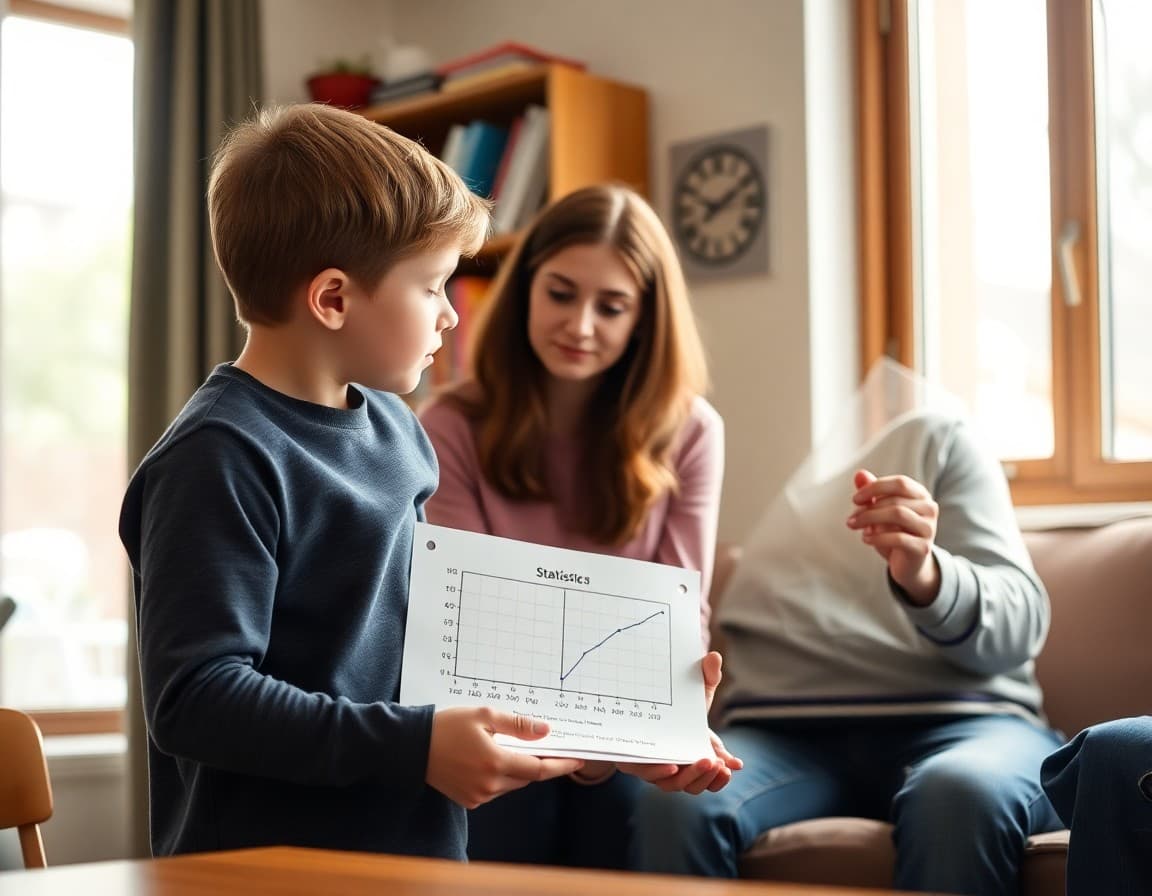
Fifth grade statistics is more analytical than the data work students did in earlier grades, and some parents are not sure how to help at home. A parent help newsletter that gives families specific activities, real questions to ask, and clear explanations of what students are learning turns home time into genuine reinforcement of classroom skills.
What We Are Learning This Unit
Start by telling parents the specific skills being developed. "We are studying line plots with fractional data, and calculating mean, median, and mode from data sets. Students are learning to create line plots from a given set of values, read existing line plots to answer questions, and use the three measures of center to describe what is typical in a data set." That description gives parents the vocabulary they need to have useful conversations with their student.
Why This Matters Beyond 5th Grade
A brief note about the relevance of 5th grade statistics helps parents see it as worthy of their attention. "The skills your student builds this unit, reading data displays, calculating averages, and comparing values, are used in every subject that involves numbers throughout middle and high school. Science class data labs, social studies population charts, and the standardized tests in later grades all draw on these skills. Building them now with solid understanding pays off for years."
An Activity to Try This Week
Give parents one specific, achievable activity. "Collect a data set from your daily life this week. Track something that changes each day for five days, like the outdoor temperature at noon, the number of minutes your student reads, or how many minutes you spend in the car. Write down the five values. Have your student find the mean, median, and mode. Then ask: which number best represents a typical day and why?"
That activity covers mean, median, and mode in a context that is personal and meaningful. The "which is better?" question introduces the kind of data reasoning that distinguishes strong 5th grade statistics students from those who only know how to calculate.
How to Check Understanding at Home
Parents do not need to know statistics to check whether their student understands it. Ask your student to explain the process, not just give the answer. "Walk me through how you find the median of these numbers" is more revealing than "what is the median?" A student who can explain the steps in order, including putting the numbers in order first, has learned the concept. A student who gives the right answer but cannot explain the steps may have memorized without understanding.
Reading Line Plots Together
Line plots with fractions are one of the most distinctive 5th grade statistics skills. If your student's homework or class materials include a line plot, spend two minutes looking at it together. Ask: "What does each x mark represent?" "How do you read the value 1/4 on this number line?" "What is the most common value in this data set? How do you know?"
Those questions directly target the skills students are developing. You do not need to know the answers. Your student does, and explaining them reinforces the learning.
When Your Student Is Stuck
If your student is confused about a specific concept, start with something physical. For median confusion: write the data values on separate sticky notes and arrange them in order. For mean confusion: try the equal distribution model with coins or small objects. For line plot reading: use a ruler to measure the intervals carefully before reading any value.
Physical models work because they make the abstract concrete. Once the physical model makes sense, the paper version usually follows quickly.
Free Resources Worth Bookmarking
Khan Academy's 5th grade statistics section is free and has video lessons on every skill we are studying. IXL Math has grade-leveled practice problems with immediate feedback. Both are accessible on a phone or tablet. If your student is working on a class assignment and gets stuck, these resources explain the concepts in a different way than I do in class, which sometimes makes the difference.
How to Reach Me
If your student is struggling with a specific statistics skill or if you have questions about the unit, email me at [EMAIL]. I respond within one school day. I also hold help sessions for students on [DAYS] from [TIME] and welcome any student who wants extra practice or explanation.
Get one newsletter idea every week.
Free. For teachers. No spam.
Frequently asked questions
What can 5th grade parents do at home to support statistics learning?
The most effective support is data collection from daily life. Tracking something meaningful for a few days, like daily steps, outdoor temperature, or minutes of reading, gives students a personal data set to analyze using exactly the skills they are learning in class. Finding the mean, median, and mode of data they collected themselves is more engaging than working with abstract numbers on a worksheet.
How do I explain mean, median, and mode to my 5th grader at home?
Use physical objects first. For median, write five numbers on separate sticky notes, put them in a row from smallest to largest, and point to the middle one. That is the median. For mean, use 15 pennies distributed into five cups as equally as possible. The number in each cup when they are equal is the mean. Physical models make abstract calculations concrete and memorable for 5th grade students.
What if my 5th grader says statistics is their least favorite math topic?
Connect the data to something they care about. A student who loves soccer can calculate the mean goals per game for their favorite team. A student who likes baking can analyze which recipe ingredient changes most across five attempts. A student who collects anything at all has a natural data set. The topic is more engaging when the numbers belong to something the student already values.
Are there apps or websites that help 5th graders practice statistics at home?
Khan Academy's 5th grade math section includes free statistics content with video lessons and interactive practice on line plots, mean, median, and mode. IXL Math has grade-leveled statistics practice with immediate feedback. Prodigy Math incorporates statistics topics in a game-based format that many 5th graders find engaging. All three are accessible on a phone or tablet.
How does Daystage help teachers send parent support newsletters for math topics like statistics?
Daystage makes it practical to send a parent help newsletter for every unit, not just around test time. Teachers who send unit-specific support newsletters throughout the year report that parents feel more connected to classroom learning and are more likely to reinforce skills at home. A Daystage template for 5th grade math parent help newsletters can be updated for each unit in about 10 minutes.

Adi Ackerman
Author
Adi Ackerman is a former classroom teacher and curriculum writer with 8 years in K-8 schools. She writes about school communication, parent engagement, and what actually works in real classrooms.
More for Classroom Teachers
Ready to send your first newsletter?
3 newsletters free. No credit card. First one ready in under 5 minutes.
Get started free