
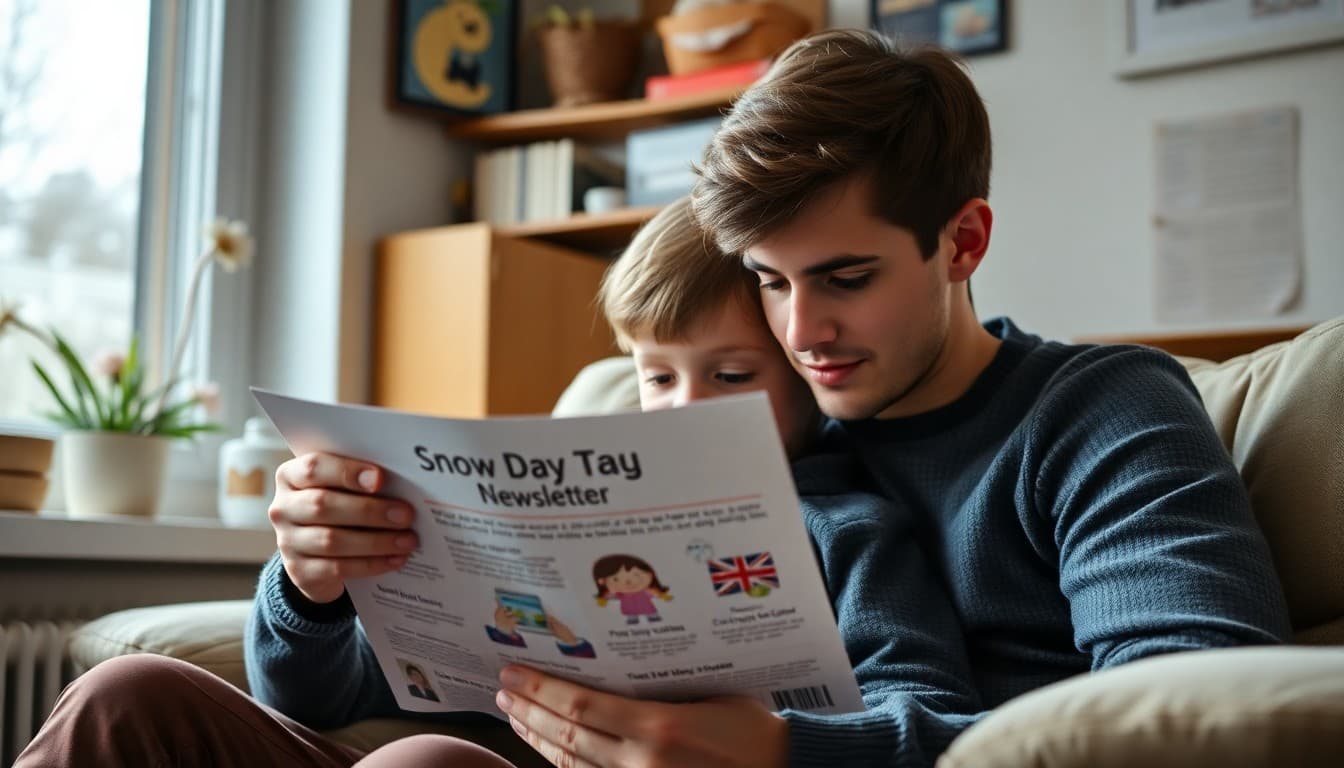
Snow Day Learning Newsletter: Activities to Do at Home
School is cancelled. Families are scrambling to arrange childcare or settle in for an unexpected day at home. A snow day newsletter that arrives within an hour of the cancellation announcement gives families a structure they can choose to use or ignore, and it signals that the classroom is still connected even when the building is closed.
The Snow Day Newsletter Philosophy
This is not the day to send a packet of make-up work. Families on snow days are managing unexpected disruptions to their own schedules. A newsletter that says "here are some optional activities your child might enjoy today" is helpful. A newsletter that says "please complete pages 34 through 38 by tomorrow" will create resentment. The goal is to offer structure and connection, not to extend the school day into the living room.
The Pre-Built Snow Day Draft
Every teacher should have a snow day newsletter ready to go before winter begins. Build it in October and keep it as a draft. When school is cancelled, review it quickly to make sure it's still current, swap out any dated references, and send. Here is the core structure for that draft:
Opening: Brief, warm, acknowledging the unexpected day. "Snow day! Hope your morning is cozy and calm."
Section 1: Reading activity appropriate to your grade level.
Section 2: One math activity using household materials or a card deck.
Section 3: One writing or art activity.
Section 4: Something physical (indoor movement ideas or outdoor snow activities).
Optional: a science connection to the snow itself.
Template Excerpt: Snow Day Newsletter
Subject: Snow Day in Room 14! Optional activities inside.
Good morning, Room 14 families! School is closed today. Here are some optional ideas if your child wants to keep their brain active while enjoying the snow day.
Reading (20 minutes): Any book of their choice counts. If they're stuck, revisit a favorite from the classroom library. Ask them to tell you one thing that surprised them about what they read.
Math (10 minutes): Get a deck of cards. Remove the face cards. Turn over two cards and multiply the numbers. Race to call out the answer. This is the exact multiplication practice we did in class this week.
Writing (15 minutes): Write a snow day journal entry. What did you do today? What did you eat? What did you see outside? No rules about length or format.
Snow Science: If you go outside, bring a dark piece of fabric and catch some snowflakes. Look closely. Can you see the shape? All snowflakes have six sides. We'll talk about this in class tomorrow.
Grade-Level Learning Ideas
For kindergarten and first grade: practicing writing their full name and address, counting household objects, drawing and labeling a scene from outside the window. For second and third grade: a journal entry about the snow day, multiplication practice with a card game, measuring the snow depth with a ruler and recording the number. For fourth and fifth grade: reading a chapter of a current book and writing a summary, working on a long division review page, sketching the view from a window with labels and written observations.
Including a Science Connection
Snow days are a ready-made science lesson. Include a brief science prompt in every snow day newsletter regardless of what unit you're currently teaching. A few examples: Measure how much snow fell in your yard using a ruler. What does that tell you about how long the storm lasted? If you have a thermometer, check the temperature outside every hour. Record your measurements. Why does snow look white when water is clear? (Light refraction is the answer, and it's worth explaining in a sentence or two for families who want to discuss it.)
What to Do With Snow Day Activity Results
If you want to bring snow day learning back into the classroom without making it feel like assigned work, start the day after a snow day with five minutes of sharing. "Did anyone measure the snowfall? What did the snowflakes look like up close? What did you read?" This brief conversation validates the optional learning without grading it and creates a natural bridge from the unexpected day back to the regular classroom routine.
Get one newsletter idea every week.
Free. For teachers. No spam.
Frequently asked questions
Should teachers send a newsletter on a snow day?
A brief snow day newsletter with optional learning activities is generally appreciated by families, especially for elementary school. Keep it optional and low-pressure. The goal is to provide structure for families who want it, not to assign work on a day off. Frame it as 'here are some ideas if you want to keep learning' rather than required assignments.
What types of activities work best for a snow day learning newsletter?
Activities that don't require special materials or internet access work best. Reading for 20 minutes, writing a journal entry about the snow day, building something with household materials, cooking or baking a simple recipe, or playing math card games with a standard deck of cards. Avoid activities that require a printer or specific supplies families may not have.
How do I prepare a snow day newsletter in advance?
Prepare a generic snow day newsletter template at the beginning of the school year and keep it ready. Include grade-appropriate learning ideas, a few book recommendations from your classroom library, and a simple writing prompt. When a snow day is called, you can send it within 10 minutes of the school cancellation announcement.
What should a snow day newsletter NOT include?
Don't include assignments with specific due dates since snow days are unpredictable and families shouldn't feel penalized for not completing optional work. Don't assume families have internet access for online-only activities. Don't require families to photograph or document any activities for the teacher. The newsletter should reduce family stress on a chaotic morning, not add to it.
Can I pre-schedule a snow day newsletter to send automatically?
Daystage lets you draft newsletters in advance and send them when you're ready with one click. Many teachers keep a snow day newsletter as a saved draft they can review and send in minutes when school is called off. The platform also sends to your email list directly so you don't have to use a separate email tool on a hectic snow day morning.

Adi Ackerman
Author
Adi Ackerman is a former classroom teacher and curriculum writer with 8 years in K-8 schools. She writes about school communication, parent engagement, and what actually works in real classrooms.
More for Classroom Teachers
Ready to send your first newsletter?
3 newsletters free. No credit card. First one ready in under 5 minutes.
Get started free