
2nd Grade Math Progress Newsletter: How to Communicate Addition, Subtraction, and Place Value Progress to Parents
Second grade math is where the foundation gets tested. Students move from counting and basic addition to multi-digit computation, place value to 1000, measurement, and money. The concepts are more abstract than first grade, the vocabulary is unfamiliar to many parents, and the homework looks different from what many adults remember learning.
A math progress newsletter bridges that gap. It tells parents where the class is, explains the concepts in plain language, and gives them something concrete to do at home.
What Second Graders Study in Math
A quick overview of 2nd grade math content helps parents understand the full picture rather than just responding to whatever comes home on a worksheet:
- Addition and subtraction within 100 (and up to 1000 by year end)
- Place value: understanding ones, tens, and hundreds; reading and writing 3-digit numbers
- Measurement: measuring length with standard tools, comparing measurements
- Time: telling time to the nearest 5 minutes, elapsed time
- Money: counting coins and bills, making change
- Data and graphs: reading and creating simple bar graphs and picture graphs
- Geometry: identifying and describing 2D and 3D shapes
- Early multiplication concepts: arrays, equal groups, repeated addition
Not every unit gets a full newsletter. But when you are entering a unit that parents are likely to find confusing or that connects directly to homework, a dedicated math newsletter is worth the effort.
How to Explain Regrouping to Parents
Regrouping is one of the concepts most likely to create friction at homework time. Many parents learned addition and subtraction with borrowing, and they teach their child using that word. Then the child comes home and says "that's not how we do it."
Address this directly: "You may know this as borrowing. We use the word regrouping because it describes more accurately what is happening with the numbers: a group of ten is being moved between place values. The math is the same. If you learned to borrow and it works for you, great. Ask your child to show you how we talk about it in class so you can use the same vocabulary when you help."
This is respectful of what parents know and still invites the child to be the expert, which is a confidence builder.
Place Value to 1000: What Parents Need to Understand
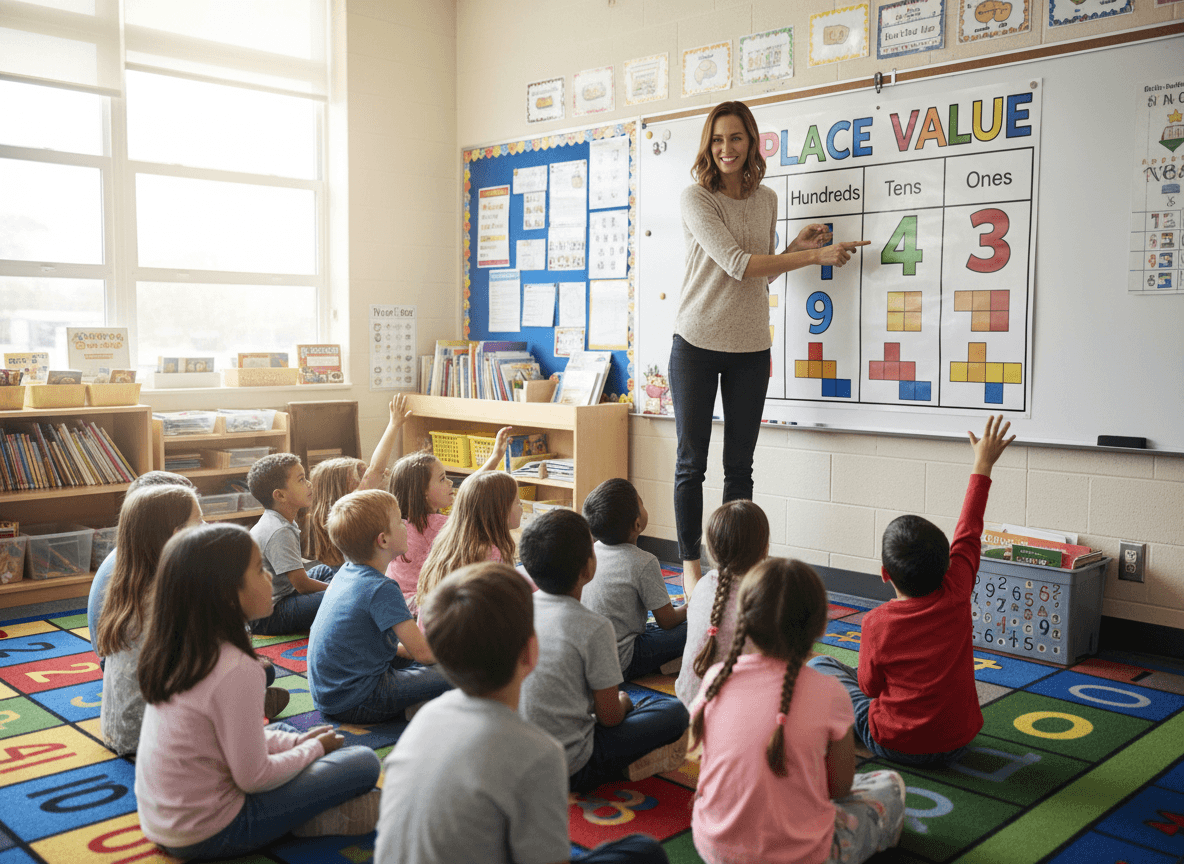
Second grade place value extends to three digits. Students learn that 347 means 3 hundreds, 4 tens, and 7 ones, and that this can also be written as 300 + 40 + 7 (expanded form). They work with base ten blocks, number lines, and place value charts.
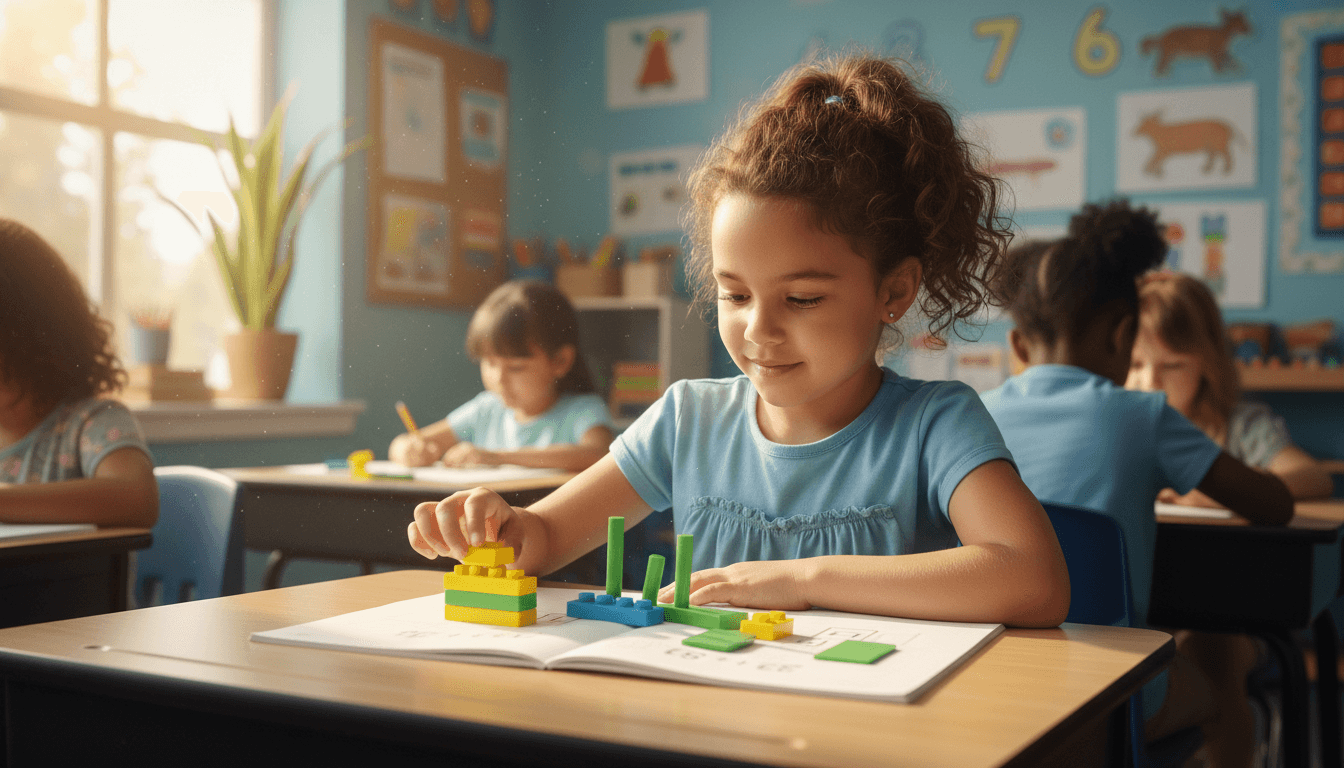
In your newsletter, explain what manipulatives look like if students are using them. Show a quick visual example if possible. And give parents an at-home practice idea: "Whenever you see a three-digit number on a sign or a price tag, ask your child to tell you how many hundreds, tens, and ones are in that number. It takes 30 seconds and reinforces place value in a real context."
Math Fact Fluency: What the Benchmark Is
By the end of second grade, most standards expect students to recall addition and subtraction facts within 20 automatically, meaning within about 3 seconds without counting on fingers. This is not about speed drills. It is about freeing up working memory for larger problem solving.
Tell parents the benchmark and where the class currently is. Not individually, but as a whole: "Most students are working on automatic recall of facts within 10. By spring, we are aiming for fluency within 20. Nightly fact practice of even 5 minutes makes a meaningful difference."
Parents who understand why fluency matters are far more consistent about doing the practice.
At-Home Practice Ideas That Actually Work
Give parents a short, specific list rather than a vague suggestion to "practice math at home":
- 5 minutes of flashcards or a fact fluency app before homework or at bedtime
- War with a deck of cards: each player flips two cards and adds them; higher sum wins
- Counting money together: empty a change jar and sort coins, count the total
- Reading 3-digit numbers on packaging, signs, and menus and saying what each digit means
- Asking elapsed time questions: "We left at 2:00 and it is 2:30 now. How long have we been driving?"
These activities take no prep time and no special materials. They also make math feel like a natural part of daily life rather than something that only happens at a desk.
What Math Assessments Look Like in Second Grade
Parents often encounter unfamiliar-looking assessments and do not know how to interpret them. A brief explanation in your newsletter helps: "We use a mix of unit tests, quick checks, and observation to track math progress. The goal is not a score on a single test but a picture of whether students understand the concept and can apply it."
If your school uses a standards-based report card where students are rated on specific math skills rather than given a letter grade, explain how to read it. Many parents do not know that a 3 on a standards-based scale means "meets grade level expectations" and is the target, not a mediocre outcome.
Connecting Second Grade Math to Third Grade
Third grade is when multiplication is introduced, and it is where many students who struggled with second grade fluency start to fall behind. You do not need to alarm parents. A forward-looking sentence is enough: "The math fluency and place value work we do this year is directly building the skills your child needs for third grade multiplication. Staying consistent with at-home practice now pays off significantly next year."
That connection gives parents a reason to stay engaged, not just a report of where things stand today.
Get one newsletter idea every week.
Free. For teachers. No spam.
Frequently asked questions
What math content do second graders cover?
Second grade math typically includes addition and subtraction within 100 (and sometimes 1000), place value to 1000, basic measurement (length, weight, liquid volume), telling time to the nearest 5 minutes, counting money, and introduction to arrays and equal groups as a foundation for multiplication. Most curricula also include data and graphing and basic geometry (shapes and their attributes). The depth of each topic varies by curriculum and pacing guide.
How do I explain regrouping to parents who learned to borrow?
Regrouping is the same process as borrowing, just described more accurately. When you borrow from the tens place to the ones place, you are regrouping ten ones from one ten. The math is identical. In your newsletter, acknowledge that the word may be new: 'You may know this as borrowing. We call it regrouping because the digits are being reorganized, not borrowed. The steps are the same and your child can show you how it works.' This prevents the frustration that comes when a parent tries to help using a different vocabulary word.
What are the math fact fluency benchmarks for second grade?
By the end of second grade, most standards (including Common Core) expect students to fluently add and subtract within 20 using mental strategies, and to know from memory all sums of two one-digit numbers. Fluency means accuracy AND speed: roughly 3 seconds per fact. Students who are not yet fluent at this level will struggle with multi-digit computation in third grade because working memory gets used up on basic facts instead of the larger problem.
What at-home practice actually helps second grade math?
Daily fact practice of 5 to 10 minutes has strong research support. Flashcards, apps like Math Fact Fluency or Prodigy, and simple games like War (comparing two cards and adding them) all work. Place value practice can happen with everyday objects: sorting coins, reading three-digit numbers on signs and menus, or asking your child to tell you what the digit in the tens place means in a number you see together. The key is short sessions done consistently rather than long sessions done occasionally.
What newsletter tool works best for second grade math communication?
Daystage lets you build a clean, organized math newsletter that parents can revisit throughout the unit. You can include a photo of students using manipulatives, a vocabulary section with key terms, and a link to a practice resource all in one place. The shareable link format means parents can easily pull it up when helping with homework, rather than hunting through email for an attachment. For complex content like place value and regrouping, a well-organized newsletter makes a real difference.

Adi Ackerman
Author
Adi Ackerman is a former classroom teacher and curriculum writer with 8 years in K-8 schools. She writes about school communication, parent engagement, and what actually works in real classrooms.
More for Classroom Teachers
2nd Grade Classroom Newsletter Ideas: What to Send Parents All Year Long
Classroom Teachers · 7 min read
1st Grade Homework Policy Newsletter: Setting Expectations Parents Can Actually Follow
Classroom Teachers · 5 min read
1st Grade Science Unit Newsletter: How to Bring Parents Into Hands-On Learning
Classroom Teachers · 5 min read
Ready to send your first newsletter?
3 newsletters free. No credit card. First one ready in under 5 minutes.
Get started free