
1st Grade Science Unit Newsletter: How to Bring Parents Into Hands-On Learning
First grade science is some of the most engaging teaching you will do all year. Students at this age are naturally curious. They want to touch things, test things, and ask why. The job of a science unit newsletter is not to explain every lesson in detail. It is to bring parents into the excitement and give them language to continue the conversation at home.
What First Graders Study in Science
First grade science typically covers four or five big topics across the year. Depending on your curriculum, these may include:
- Plants and animals: structures, needs, and life cycles
- Weather and seasons: patterns, observation, and measurement
- The five senses: how we gather information about the world
- Properties of matter: sorting objects by weight, texture, shape, and size
- Light and sound: how they travel and how we can change them
Your unit newsletter should open with a brief description of the topic so parents know what is coming before their child starts talking about it at dinner.
How to Explain Hands-On Science Inquiry
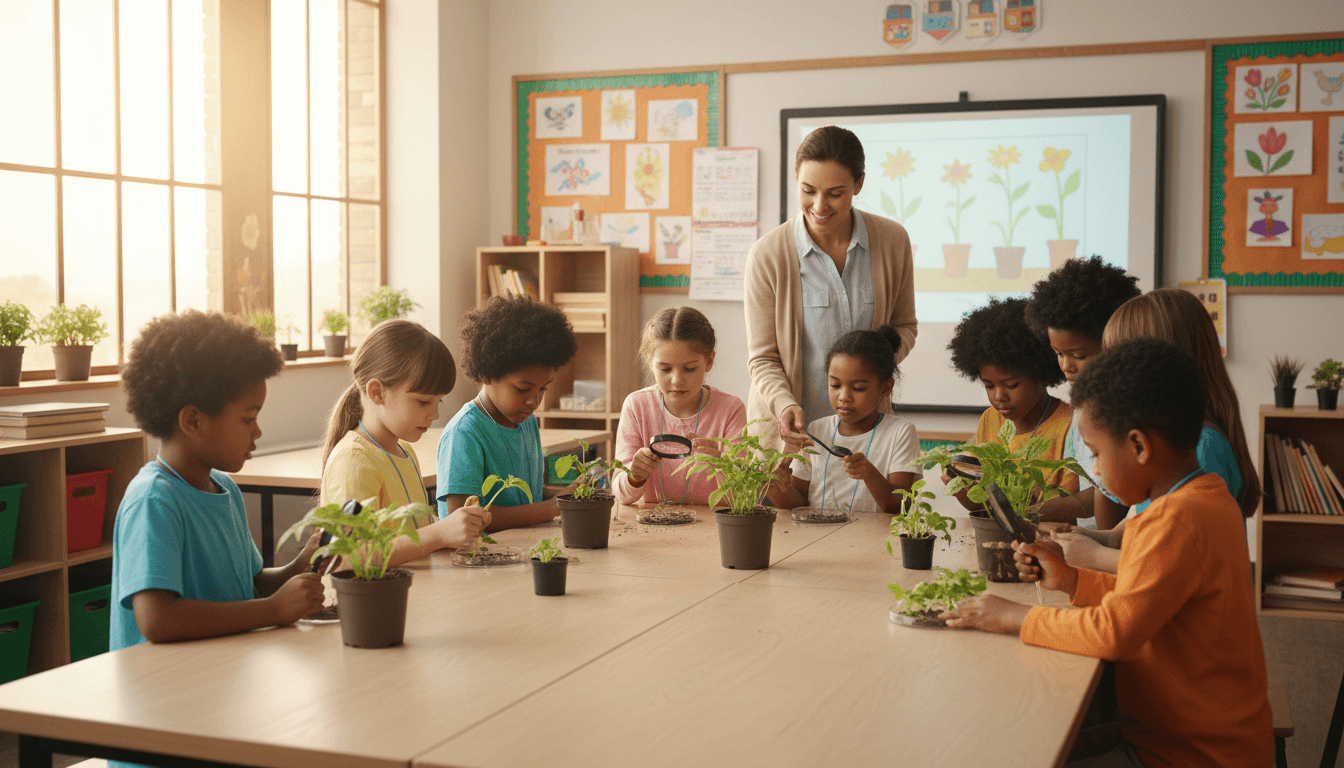
Many parents grew up with science class that meant reading a chapter and filling in blanks. First grade science today looks completely different. Students are doing science: observing, predicting, testing, recording, and discussing.
Explain this in your newsletter. A sentence like, "This unit uses hands-on experiments and observation activities rather than textbook readings, because research shows that young children learn science concepts more deeply when they can touch and test ideas themselves," gives parents the context they need to value what they see their child bringing home or talking about.
Previewing Upcoming Experiments
Parents love knowing what is coming. Give them a brief preview of one or two activities for the unit without spoiling the inquiry. You might write, "Next week, students will investigate what plants need to grow by setting up their own mini-experiments. We will track results over two weeks."
This preview does two things: it generates excitement from the child when the parent mentions it, and it signals to parents that there is a real learning arc happening, not just random activities.
If students need to bring anything from home for an experiment, the unit newsletter is the right place to ask. Keep requests simple: a clean plastic bag, a handful of soil, an item from nature found on a walk.
Connecting Science to Observations at Home
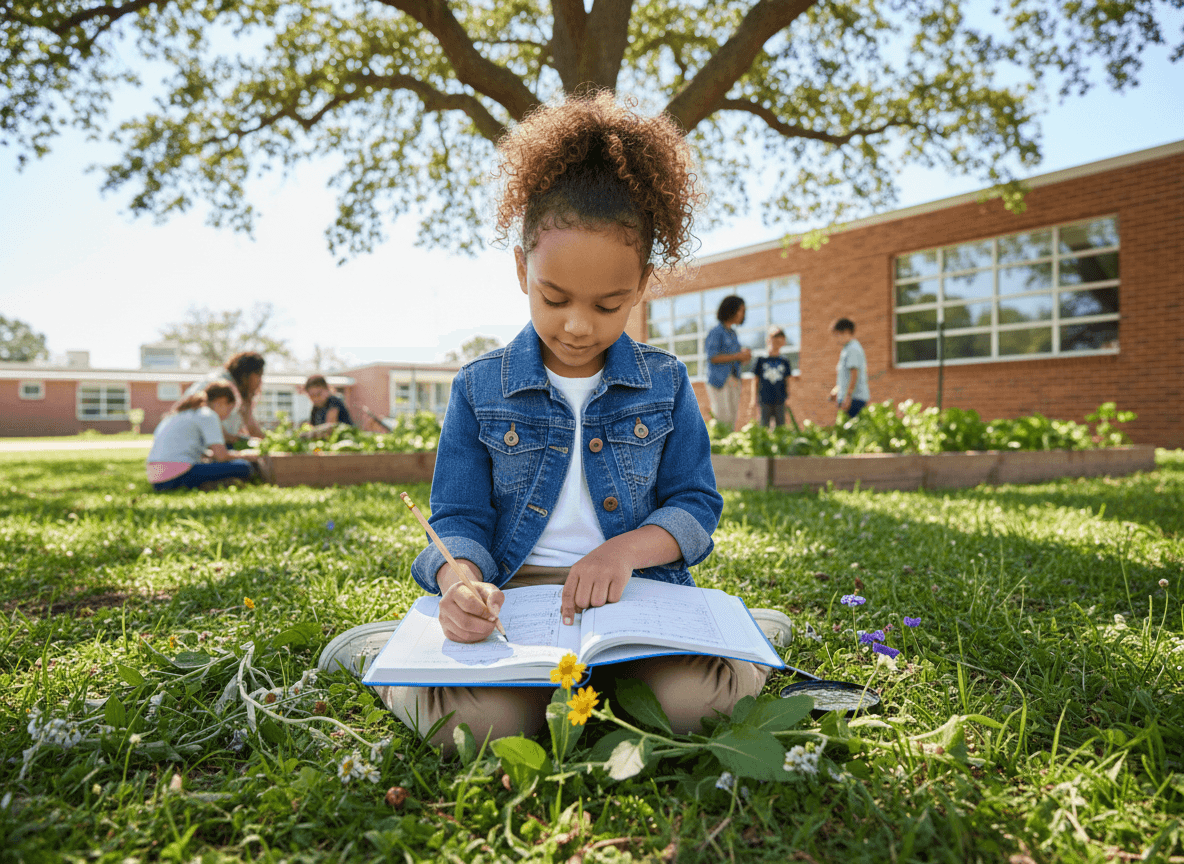
One of the best ways to reinforce first grade science is to point it outside the classroom. Include two or three at-home observation prompts in your newsletter. These should be free, low-prep, and directly connected to what students are studying.
Examples for a weather unit: "This week, ask your child to describe the sky each morning. Is it cloudy or clear? Does the temperature feel different from yesterday? Encourage them to use words like warm, cool, windy, or calm."
Examples for a plants unit: "See if you can find a seed together outside or at a grocery store. Ask your child what they think the seed needs to grow into a plant."
Connecting to NGSS Without Overwhelming Parents
You do not need to teach parents the NGSS framework. A brief mention is enough: "Our science program follows the Next Generation Science Standards, which focus on building real scientific thinking skills, asking questions, designing tests, and explaining results using evidence."
This tells parents the work is standards-aligned and academically serious without burying them in educational jargon. If some parents want more detail, offer a link to a parent-friendly overview.
Vocabulary Worth Sharing
List three to five key vocabulary words for the unit in your newsletter. This is one of the most practical things you can do for at-home conversation. When a parent knows that "life cycle," "observe," and "prediction" are words their child is using in science, they can ask about them naturally. The child feels proud to explain them.
Keep the definitions simple. Write them the way you would explain them to a six-year-old. Parents can use those exact words when talking with their child.
What to Do With Science Journals and Take-Home Work
If students bring home science journals or recording sheets, tell parents what to do with them. Should they look through it together? Sign it? Leave it alone? Some families will quiz their child on every entry if you do not give guidance. Others will ignore it entirely. A sentence of direction makes a big difference.
End the newsletter by inviting questions. First grade science gets kids asking big questions at home ("Why does ice melt?", "How do birds know where to fly?"), and parents who feel connected to the unit are more likely to help their child find answers rather than just changing the subject.
Get one newsletter idea every week.
Free. For teachers. No spam.
Frequently asked questions
What science topics do first graders typically study?
First grade science commonly covers plants and animals (structures and functions), weather and seasons, the five senses, properties of matter, and light and sound. The exact sequence depends on your curriculum and state standards, but most 1st grade programs follow the Next Generation Science Standards (NGSS), which emphasize hands-on inquiry, observation, and asking questions rather than memorizing facts.
How do I explain hands-on science inquiry to parents who expect worksheets?
Connect the activity to the skill it builds. Instead of saying 'We played with water today,' write 'Students tested which materials sink or float and recorded their predictions and results. This builds the observation and reasoning skills that are the foundation of scientific thinking.' When parents see the purpose behind the activity, they value it more. You can also share a photo of the class working if your school permits it.
What at-home science activities can I suggest to first grade parents?
Simple observation activities work best: watching the weather each morning and noting changes, growing a bean in a cup, looking for insects in the backyard, or noticing how ice melts in a glass. These do not require supplies and connect directly to 1st grade science standards. A short list in your newsletter gives parents something concrete to do without overwhelming them.
Should I explain NGSS to parents in my newsletter?
A light touch is enough. You do not need to go into the three dimensions of NGSS or cite specific performance expectations. A sentence like 'Our science program follows the Next Generation Science Standards, which focus on asking questions, testing ideas, and building explanations from evidence rather than memorizing terms' gives parents enough context to understand the approach. Link to a parent-friendly NGSS resource if you want to offer more.
What newsletter tool works best for science unit communication in first grade?
Daystage is a strong choice because it lets you combine text and photos in a clean layout. You can show a picture of students working in science alongside a brief explanation of what they were doing and why. Parents who see the classroom in action are far more engaged than those who only read a text description. The shareable link format also means parents can show the newsletter to grandparents or other family members who are interested.

Adi Ackerman
Author
Adi Ackerman is a former classroom teacher and curriculum writer with 8 years in K-8 schools. She writes about school communication, parent engagement, and what actually works in real classrooms.
More for Classroom Teachers
1st Grade Social Studies Newsletter: Connecting Classroom Learning to Family and Community
Classroom Teachers · 5 min read
1st Grade Homework Policy Newsletter: Setting Expectations Parents Can Actually Follow
Classroom Teachers · 5 min read
1st Grade Classroom Rules Newsletter: How to Communicate Expectations to Parents
Classroom Teachers · 5 min read
Ready to send your first newsletter?
3 newsletters free. No credit card. First one ready in under 5 minutes.
Get started free