
1st Grade Classroom Rules Newsletter: How to Communicate Expectations to Parents

Six and seven year olds are working hard to understand what is expected of them in school. They are learning to sit, listen, take turns, and manage their own feelings in a room full of twenty other kids doing the same thing. The rules you set in the first weeks of school shape how the rest of the year goes.
Parents can reinforce or accidentally undermine that work depending on what they know about your expectations. A well-written classroom rules newsletter closes the gap between school and home.
Why First Grade Rules Need Their Own Newsletter
First grade is a developmental leap. Students are moving from the more flexible, play-based environment of kindergarten into a setting with more structured expectations. Rules that worked in kindergarten may look different now: staying in their seat during instruction, raising a hand before speaking, walking in a line quietly. These are learned behaviors, not innate ones.
When parents understand why these rules exist and how they are taught, they become partners in reinforcing them. Without that context, they sometimes tell their child the rules are silly or that the teacher is too strict, which makes your job harder.
Writing Age-Appropriate Rules for 6-7 Year Olds
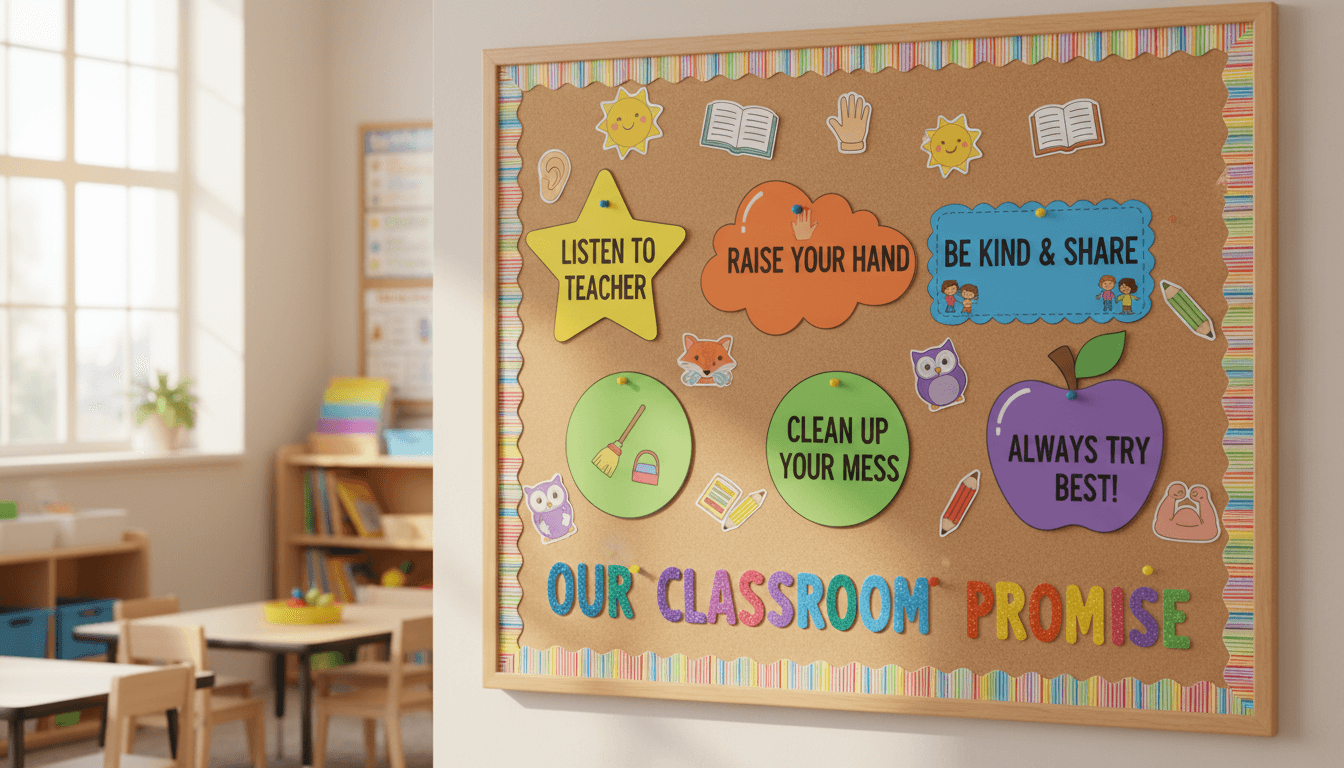
Good first grade classroom rules are short, positive, and specific. "Be kind" is too vague for a six-year-old. "Use kind words and gentle hands with everyone" is concrete enough to act on. Share the actual rules in your newsletter, word for word, so parents hear them the same way their child does.
Five rules or fewer is the right number. Children this age cannot reliably remember a list of eight to ten items. Simple, memorable rules get followed. Complex lists get ignored.
Explaining Consequences in a Positive Frame
Parents want to know what happens when a rule is broken. The way you explain this matters. Describing consequences as reset steps or learning opportunities lands differently than describing them as punishments. Both are technically accurate. One creates fear; the other builds understanding.
For example: "When a student is having a hard time following our class agreements, they take a short quiet break at the calm-down corner, then rejoin the group when they are ready." That tells parents what happens, explains the purpose, and signals that no one is in trouble, they are just learning.
How to Explain the Behavior Chart
If you use a color chart, clip chart, or number system to track behavior, describe it clearly in the newsletter. Include what each level means and what parents should do when their child reports their color at the end of the day.
Avoid language that shames lower colors. Instead of "red means a bad day," write "yellow or red means your child needed extra support today. That is okay. Ask them what happened and what they will do differently tomorrow." This gives parents a script and keeps the conversation constructive.
Also explain the top of the chart. Parents who only hear about the chart when something goes wrong miss out on celebrating the good days.
Phone and Device Policy: What Parents Need to Know
First graders do not have phones, but their parents do, and they sometimes send them to school with the child for emergencies. Your newsletter should address this directly. If devices need to stay off and in the backpack, say so. If parents need to reach their child during the day, explain the right way to do it (through the front office, not a text to the child's watch).
Smartwatches with calling and messaging features are increasingly common even in first grade. If your school has a policy on these, include it. If it is left up to the teacher, state your position clearly so parents know what to expect.
What to Do If Your Child Says a Rule Was Unfair
Include a short section addressing this directly. Something like: "First graders are still developing their understanding of fairness. If your child comes home upset about a rule or a consequence, please hear them out and then reach out to me. I am happy to explain what happened and talk through it together. One side of the story from a six-year-old is rarely the whole picture."
This normalizes the situation, validates the child's experience, and redirects parents toward communication rather than assuming the worst.
How to Close the Newsletter
End with an invitation. Tell parents you are available by email for questions, and remind them that you and they are on the same team. A classroom that runs well benefits everyone, including their child. Parents who feel included in the process are far more likely to support it at home.
Get one newsletter idea every week.
Free. For teachers. No spam.
Frequently asked questions
When should I send the classroom rules newsletter in first grade?
Send it the first week of school, ideally within the first three days. Students will have heard the rules by then, so parents can ask their child about them and the information will match. Sending it before school starts can feel overwhelming, and sending it too late means weeks of inconsistency at home. First week is the sweet spot.
How do I explain consequences to parents without sounding punitive?
Focus on the purpose of each consequence rather than the action itself. Instead of writing 'If your child breaks a rule, they will lose recess,' write 'When students need a reset, they take a short quiet break to regroup before rejoining the class.' Frame consequences as teaching moments, not punishments. Parents are more likely to support a system they see as fair and instructional.
What is a behavior chart and should I explain it in the newsletter?
Yes, definitely explain it. A behavior chart tracks a student's day using colors, numbers, or clips that move up or down based on choices. Parents often hear about it secondhand from their child, usually in a way that sounds worse than it was. A clear explanation in the newsletter gives parents the full picture, tells them what to do when their child comes home on a lower color, and prevents misunderstandings.
What do I do if a parent says my rule is unfair?
Acknowledge their concern and explain the reasoning. Most parents are not trying to undermine your classroom. They heard one side of a story from a six-year-old and are advocating for their child. A brief email or phone call where you explain the why behind the rule usually resolves it. If a rule genuinely is not working, adjust it and communicate the change. Rules that cannot be explained confidently are worth revisiting.
What newsletter tool works best for sharing classroom rules with first grade parents?
Daystage makes this kind of newsletter easy to put together. You can add a photo of your rules chart, break the content into clear sections, and send it as a link parents can save and refer back to. It works on any device, so parents who open it on their phone get the same clean layout as those reading on a computer. No PDFs, no formatting headaches.

Adi Ackerman
Author
Adi Ackerman is a former classroom teacher and curriculum writer with 8 years in K-8 schools. She writes about school communication, parent engagement, and what actually works in real classrooms.
More for Classroom Teachers
1st Grade Supply List Newsletter: What to Tell Parents Before the First Day
Classroom Teachers · 5 min read
1st Grade Homework Policy Newsletter: Setting Expectations Parents Can Actually Follow
Classroom Teachers · 5 min read
How to Explain Your Classroom Behavior Policy in a Newsletter
Classroom Teachers · 6 min read
Ready to send your first newsletter?
3 newsletters free. No credit card. First one ready in under 5 minutes.
Get started free