

Financial Literacy: How Parents Can Help at Home 5th Grade Guide
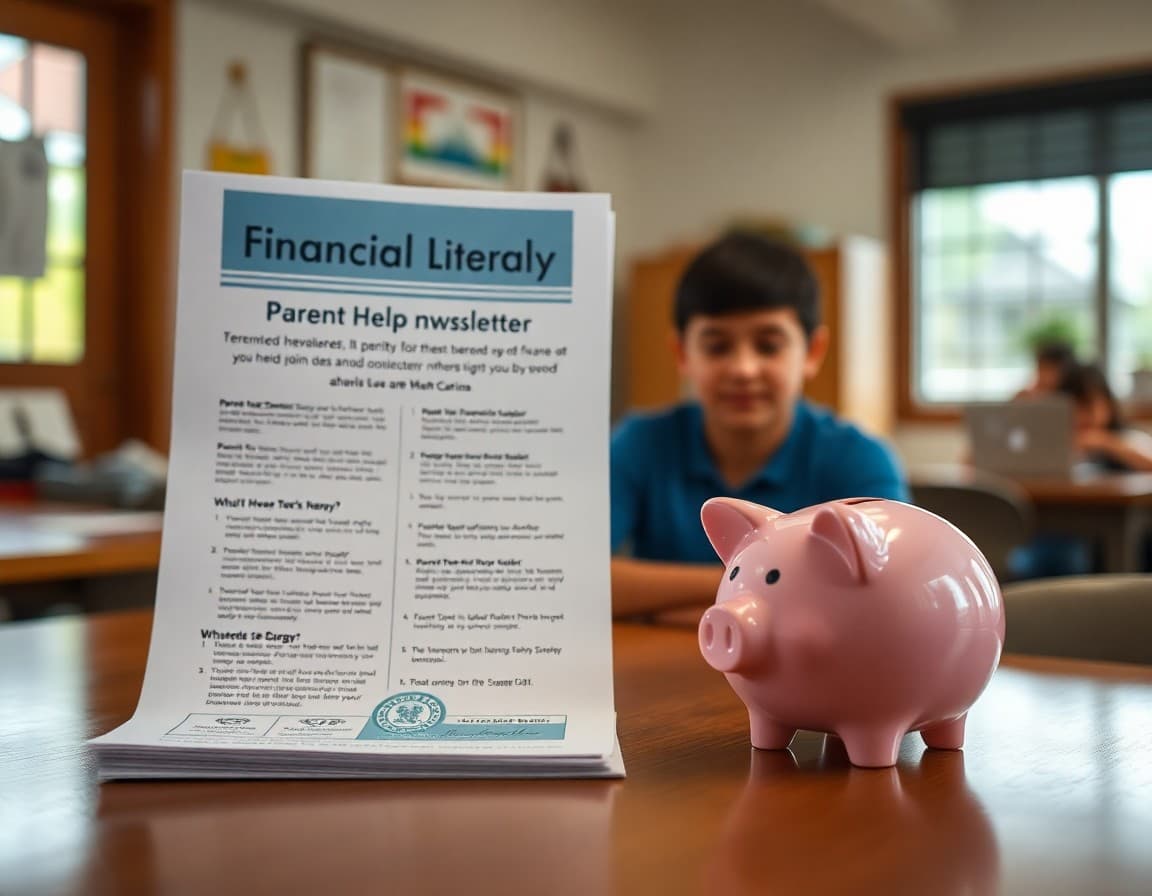
Fifth graders are at a perfect age for financial literacy reinforcement at home. They're old enough to understand concepts like budgeting and saving, young enough that habits formed now have decades to compound, and usually enthusiastic about the idea of managing money. A newsletter that gives parents specific, fun activities turns that enthusiasm into real skill-building.
Why Home Reinforcement Matters This Much
Classroom financial literacy instruction covers the concepts. Home reinforcement makes them real. A student who learns about needs and wants on Tuesday and then helps sort groceries into those categories on Saturday understands the concept in a different, more durable way than a student who only encounters it in classroom exercises.
At the 5th grade level, parents are still in a position to naturally include their student in everyday decisions. That window doesn't stay open indefinitely, which is part of why this age is particularly valuable for building financial habits.
What to Include in the Parent Help Newsletter
Structure the newsletter around three things: the current unit topic in plain language, why parent involvement makes a difference for this specific concept, and two to three specific activities with enough detail to actually do them. The activities are the most important part. Vague suggestions ("talk about money at home") don't get done. Specific prompts ("ask your student to help you find the best deal between two cereal brands by calculating cost per ounce") do.
Template Excerpt: Savings and Goals
"This week we're working on saving and goal-setting. Students are learning how to identify a savings goal, figure out how long it would take to reach it at a given rate, and track their progress over time.
At home, try one of these: (1) Help your student pick a real savings goal, even a small one. Write it down with a target amount and a date. Check in on their progress once a week. (2) Ask them: 'If you save $5 a week, how many weeks until you have $40?' Let them do the math. (3) If your student already has some savings, review it together. Ask: 'How much do you have? What are you saving for? How many more weeks until you get there?'"
Everyday Opportunities for Financial Practice
Parents don't need to create special activities. Everyday situations are full of financial literacy moments. At the grocery store: ask your student to find the cheaper option between two similar items. Before a purchase: ask them "Is this something you need or something you want?" When they receive money for a birthday or holiday: ask them what portion they want to save and what they want to spend.
These aren't formal lessons. They're 30-second conversations that practice exactly the kind of thinking the financial literacy curriculum is building.
Using Allowance and Chore Money as a Teaching Tool
If parents give their student an allowance or pay them for chores, this is a natural place to apply classroom concepts. Suggest a simple system: save a portion, spend a portion. The amounts don't matter. What matters is the practice of deciding how to allocate a limited amount of money toward competing priorities. That decision-making habit is the foundation of every more complex financial skill they'll develop later.
Making It Low-Pressure
Some parents worry that financial conversations will stress their student or expose uncomfortable family financial realities. Your newsletter can address this proactively. The activities you're suggesting are low-stakes and hypothetical where needed. They reinforce classroom concepts; they don't require parents to share family income or financial struggles. A brief note in the newsletter that says "these activities are designed to be fun and low-pressure, not financial planning for your family" removes a lot of hesitation.
Celebrating Progress
One of the most powerful things parents can do is celebrate when their student demonstrates a financial literacy habit. When their 5th grader says "that's a want, not a need" at the store, that's worth acknowledging. When they check their savings progress on their own, that's worth noticing. Positive reinforcement at home accelerates what you're building in the classroom more than any additional instruction can.
Get one newsletter idea every week.
Free. For teachers. No spam.
Frequently asked questions
How can parents reinforce financial literacy at home with a 5th grader?
The most effective reinforcement is through real or realistic money situations. Involve your student in small purchase decisions, ask them to categorize household items as needs or wants, give them a small budget for one item at the grocery store, or help them track a savings goal. These activities take 5 to 15 minutes and directly connect to what's being taught in class.
What if parents don't feel confident talking about money with their child?
Reassure parents in the newsletter that confidence in financial subjects is not required. The goal is to ask questions and think through decisions together, not to deliver financial expertise. A parent who says 'I'm not sure, let's think about it together' is modeling exactly the kind of reflective financial thinking the curriculum aims to build.
What are the most valuable financial habits to reinforce in 5th grade?
Three habits stand out at this age: the habit of pausing before spending (is this a need or a want?), the habit of tracking money over time (do I have enough for my goal?), and the habit of comparing options before choosing (is this the best use of my money right now?). These habits, practiced at 10 and 11, compound into much better financial decision-making by young adulthood.
How do I encourage parents to involve their student in real financial decisions?
Suggest low-stakes, age-appropriate involvement. Let your student help compare two products by price per unit at the grocery store. Let them help plan the budget for a birthday party or a small household purchase. These aren't big financial decisions, but they practice the skills that matter. Frame it as 'letting your student be your assistant,' not 'making your child responsible for family finances.'
Does Daystage make it easy to send this type of newsletter to all families?
Yes. Daystage is designed for classroom newsletters. You can write a parent help newsletter, format it cleanly with activity suggestions, and send it to all families in minutes. Teachers who use Daystage report spending significantly less time on communication because the formatting is handled for them.

Adi Ackerman
Author
Adi Ackerman is a former classroom teacher and curriculum writer with 8 years in K-8 schools. She writes about school communication, parent engagement, and what actually works in real classrooms.
More for Classroom Teachers
First Newsletter of Fifth Grade: Setting the Tone for a Big Year
Classroom Teachers · 7 min read
April Newsletter Ideas for Fifth Grade Teachers: What to Send This Month
Classroom Teachers · 6 min read
Elementary Teacher Back-to-School Newsletter: What to Send Before and During Week One
Elementary · 7 min read
Ready to send your first newsletter?
3 newsletters free. No credit card. First one ready in under 5 minutes.
Get started free