
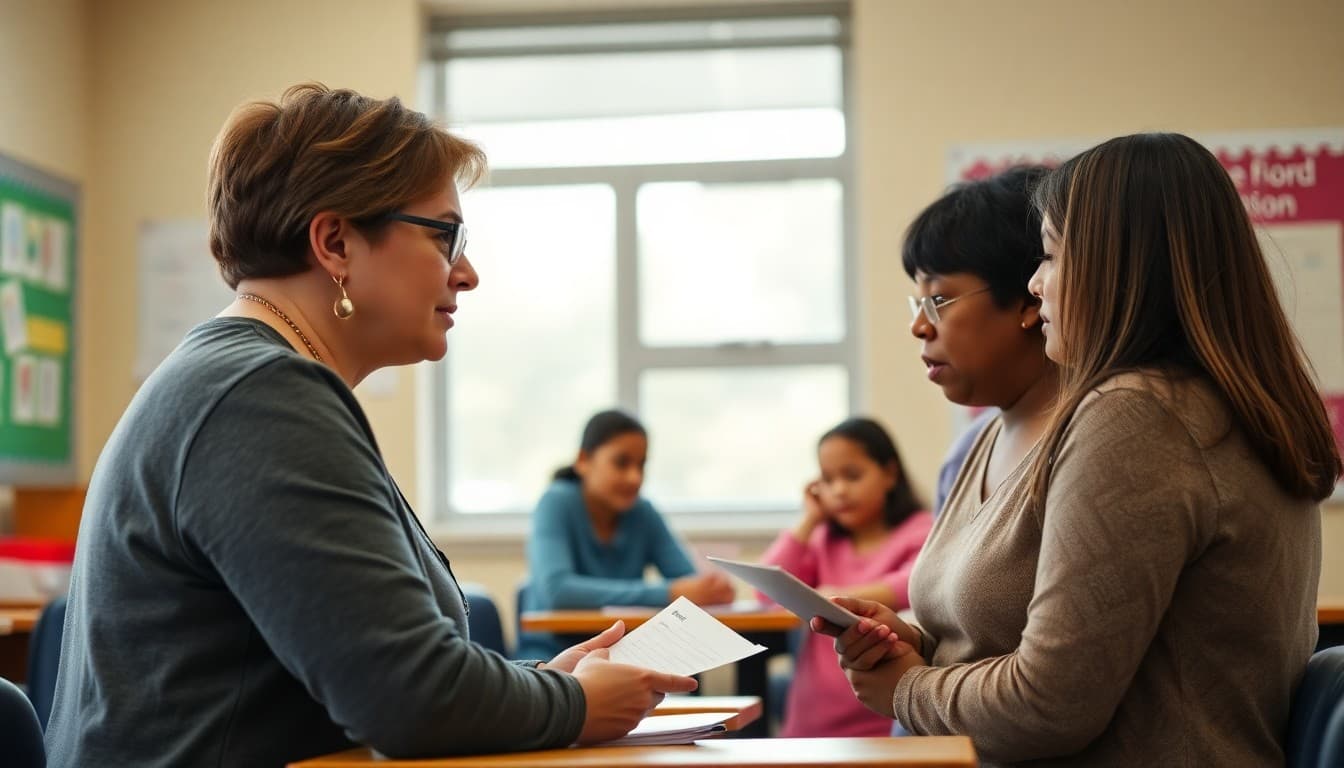
5th Grade ELL Support Newsletter for Multilingual Families
Fifth grade ELL newsletters have a specific responsibility that earlier grades do not share: preparing multilingual families for the middle school transition and the changes it will bring to their child's language support services. Many families assume services will continue automatically. Many do not know what reclassification means or when it happens. And many do not know how academic language demands will intensify in middle school in ways that may strain even students who seem fluent.
This guide covers what a fifth grade ELL newsletter should communicate about services, academic language development, the reclassification process, and how to prepare multilingual families for the most consequential school transition their child will face so far.
Acknowledging the Increased Academic Demands
Open the newsletter by acknowledging that fifth grade is a harder academic language year than fourth grade, even for students who appear fluent. Informational text is denser. Writing tasks are longer and more complex. Content vocabulary increases significantly across science, social studies, and ELA. Students who managed academic language demands in earlier grades may find fifth grade requires more support.
"Fifth grade increases academic language demands significantly across all subjects. Students read and write more complex informational text, analyze historical documents, and produce multi-paragraph explanations and arguments. Our ELL support this year focuses specifically on these academic language skills."
What Services Look Like in 5th Grade
Describe the specific ELL services your school provides at this grade level. How often does the student receive support? What is the focus? How has it shifted from earlier years? Families who understand what their child is working on in ELL sessions can reinforce the same content at home and make informed decisions about whether they want more support in specific areas.
Sample Newsletter Section Excerpt
Here is how a fifth grade ELL support newsletter section might read:
English language support in 5th grade:
Fifth grade is the year when academic language demands increase most significantly. Our ELL support this year focuses on the specific language skills needed for complex reading, extended writing, and content-area vocabulary across science and social studies.
Services: Your child meets with Ms. Gomez four times per week for 40-minute small group sessions. This year's focus is academic vocabulary, informational text structure, and argument writing.
Annual assessment: The WIDA ACCESS assessment will be administered in February. Results will reach you by late May with a plain-language explanation of your child's current proficiency level and what it means for services going forward.
Reclassification: Students who score at proficiency level 5 or 6 on the WIDA ACCESS and meet academic benchmarks may be recommended for reclassification from ELL services. Reclassification means formal ELL services end, but monitoring continues for two years. If your child is approaching reclassification, I will contact you directly before any recommendation is made.
Middle school transition: ELL services transfer to the middle school. Current service levels are documented in the student's records and shared with the receiving school. If your child will transition with ongoing services, their new ELL teacher will reach out before the end of fifth grade.
At home: Continue reading, talking, and building vocabulary in your home language. Fifth grade is not too late. It is exactly the right time to keep investing in home language literacy.
The Reclassification Conversation
Reclassification is one of the most anxious moments for families of ELL students. Some families worry that reclassification happens too soon and their child will lose needed support. Others are eager for it as a milestone. The newsletter should explain the criteria, the timeline, and the monitoring period that follows reclassification. Families who understand the full picture are better partners in the decision.
Middle School ELL Services
A brief, reassuring section explaining that ELL services do not disappear at the middle school transition addresses the most common family anxiety. Services transfer. Records transfer. The receiving school's ELL team reviews each student's profile. Families who want to visit the middle school's ELL program before transition can often do so. Providing this information proactively prevents the panic that sometimes accompanies the end of elementary.
The Home Language Recommendation: Fifth Grade Edition
Repeat the home language message at fifth grade with more specificity. By this age, students can engage with more complex texts and discussions in their home language. Encourage families to read longer books, discuss news events, and explore the current social studies and science content in their home language. The academic cognitive work their child does in any language builds their capacity for academic work in English.
Get one newsletter idea every week.
Free. For teachers. No spam.
Frequently asked questions
What should a 5th grade ELL newsletter communicate that earlier grade newsletters do not?
Fifth grade ELL newsletters should address the middle school transition explicitly. How do ELL services transfer to middle school? Will services continue? What is the reclassification process and where does a student stand? What academic language demands will increase in middle school? These are questions that appear in fifth grade and not in earlier grades, and families of ELL students have particular concerns about whether their child will have adequate support in a more complex school environment.
What is reclassification and how should the newsletter address it?
Reclassification (also called redesignation) is the process by which a student exits formal ELL services, typically when they demonstrate proficiency on the state language assessment and meet other academic criteria. The newsletter should explain what reclassification means, what criteria are used, and what happens after reclassification. Some families are relieved when their child is reclassified. Others are concerned that support will disappear before their child is truly ready for academic independence in English.
How do academic language demands change in 5th grade compared to earlier grades?
Fifth grade significantly increases the density of academic text, the complexity of writing tasks, and the volume of content-specific vocabulary across science, social studies, and ELA. Students who managed well with academic language in earlier grades may find fifth grade more demanding. The newsletter should acknowledge this and explain how ELL support addresses the increased academic language demands specifically, not just general English fluency.
What home language support is recommended for 5th grade ELL students?
Continued strong home language literacy remains the most powerful support even in fifth grade. Students who read complex texts in their home language, discuss school content in their home language, and maintain rich vocabulary in their home language continue to develop the cognitive academic language proficiency that supports English academic achievement. Encouraging home language use through fifth grade is not giving up on English. It is accelerating it.
How does Daystage help schools communicate with multilingual families effectively?
Daystage supports building and sending translated newsletters to specific family groups. ELL coordinators and classroom teachers can use Daystage to send ELL support newsletters in the relevant home languages alongside the English version, reaching multilingual families more effectively than English-only communication.

Adi Ackerman
Author
Adi Ackerman is a former classroom teacher and curriculum writer with 8 years in K-8 schools. She writes about school communication, parent engagement, and what actually works in real classrooms.
More for Classroom Teachers
Ready to send your first newsletter?
3 newsletters free. No credit card. First one ready in under 5 minutes.
Get started free