

Creative Writing: How Parents Can Help at Home in 5th Grade
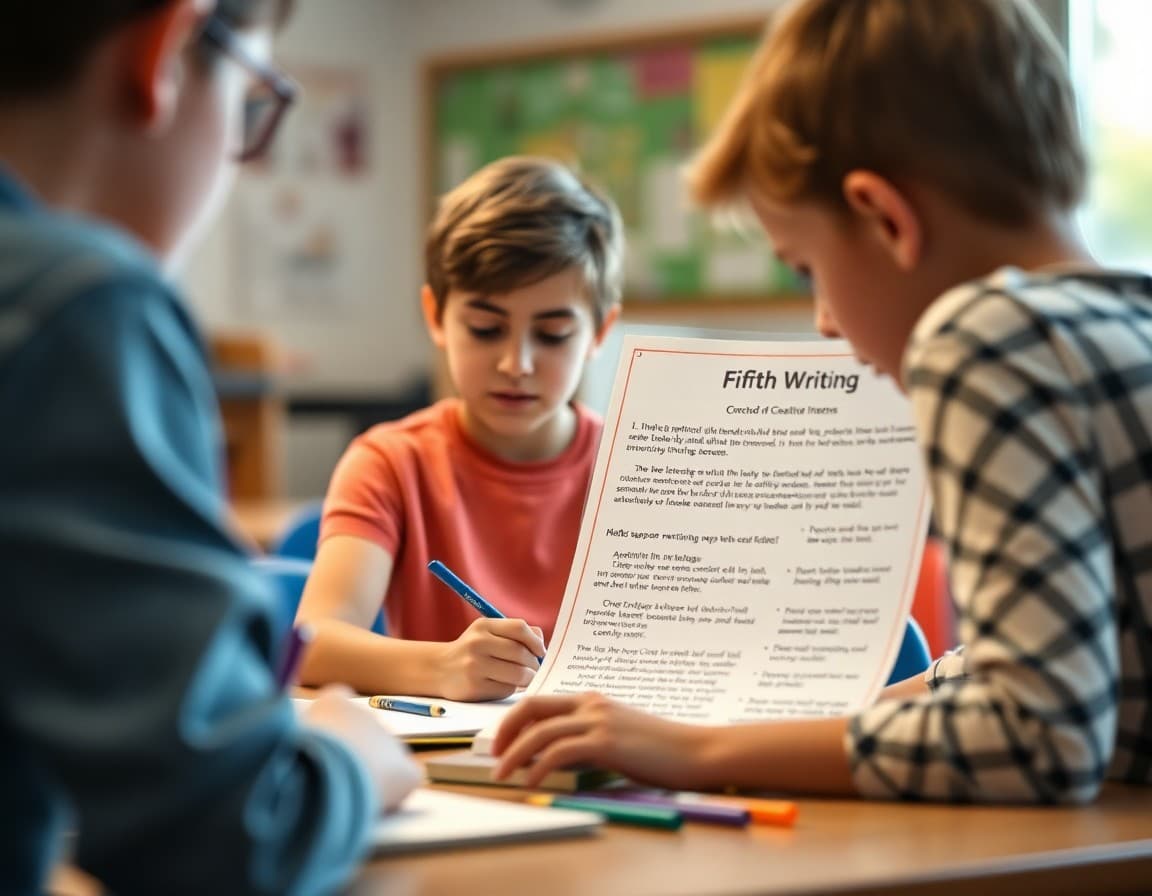
Fifth grade is when writing gets hard. Students are expected to move beyond simple recounts of events and develop actual craft: specific details, organized structure, a real sense of voice. Many struggle. Parents who know what to do at home can make a measurable difference during this transition, and your newsletter can tell them exactly what that looks like.
What Fifth Graders Need That Parents Can Provide
At this grade level, students need two things from home: a consistent opportunity to practice writing and an audience that cares about what they write. You can provide instruction, feedback, and revision support at school. What you cannot provide is the experience of having a trusted adult read a story and say "that is really interesting, what happens next?" That response builds a writer's identity in a way that no classroom activity can replicate.
How to Create a Writing Environment at Home
Give families concrete suggestions for the physical and logistical setup. A dedicated writing notebook that belongs only to the student, not a shared homework notebook, signals that writing is a special activity. A regular time slot, even 10 minutes before bed, creates the habit without requiring much scheduling. Reducing phone notifications and ambient noise during writing time is as important for 5th graders as it is for adults.
What to Do When the Child Says They Are Stuck
Writer's block in 5th grade almost always looks like one of three things: "I don't know what to write about," "I don't know how to start," or "I don't think what I wrote is good." Give parents a response for each. For "I don't know what to write about": offer a concrete starting point like "write about the most boring part of your day" or "write about something you know more about than most people your age." For "I don't know how to start": tell them to write the worst possible first sentence on purpose. For "I don't think it's good": ask what part they like the least and help them name one specific thing to change.
Sample Template Excerpt
Here is a newsletter section you can adapt:
"This week we started our fiction unit, and I wanted to share some easy ways to bring writing into your home without it feeling like extra homework. The most valuable thing you can do is ask your child what they are writing about and listen to the answer. If they want to tell you the whole story before they write it, let them. Talking through a story is one of the best pre-writing strategies there is. If they are stuck, try this: ask them what their main character wants more than anything. Once a student knows what their character wants, the story almost writes itself."
Activities Families Can Do Together
Provide a short menu of activities that do not require a teaching background. Telling stories at dinner, taking turns adding one sentence to a shared story, reading a picture book together and discussing what made it interesting, writing postcards to family members, keeping a gratitude journal are all low-barrier writing activities that build skills. The key is framing them as enjoyable rather than remedial. A child who writes for fun at home becomes a more confident writer in class.
Avoiding the Trap of Over-Correction
This deserves its own section. Many parents default to correcting spelling and grammar when they see their child's writing. That impulse makes sense, but at the drafting stage it is counterproductive. In creative writing especially, voice and risk-taking are fragile. A parent who circles every misspelling in a freewrite is teaching their child to write carefully and briefly rather than boldly and expressively. Save the corrections for the final revision stage. Before that, respond to the content: the story, the idea, the details.
Signs a Child Needs More Support
Tell families what to watch for. If their child regularly refuses to do writing assignments, finishes in under five minutes without any content on the page, or says they hate writing every single time it comes up, those are signals worth sharing with you. Early communication about a struggling writer lets you intervene before the anxiety compounds. Invite families to reach out rather than wait for a grade report to surface the issue.
Get one newsletter idea every week.
Free. For teachers. No spam.
Frequently asked questions
What is the single most effective thing a parent can do to support a 5th grade writer?
Show genuine interest in what their child is writing. Asking 'tell me about your story' and listening with real curiosity does more for a young writer's confidence and motivation than any worksheet or practice activity. Children who feel their stories matter to someone write more willingly and more fluently.
How do I explain to parents that they should not correct grammar during home writing?
Frame it in terms of what the research supports: during drafting, focusing on ideas produces better writing than focusing on mechanics. Corrections during drafting shut down creative thinking. There is a time for editing, and it comes after the ideas are on the page. Parents who save their corrections for the revision stage get better results without conflict.
What should parents do when their child says they have nothing to write about?
This is the most common 5th grade writing block. Tell parents to offer a starting point rather than a topic. 'Write about the worst homework assignment you ever had' or 'describe what you see right now as if it were a scene in a movie' gives a reluctant writer somewhere to begin without requiring them to think of something original from nothing.
How long should home writing practice sessions be for 5th graders?
Ten to 15 minutes is ideal for building the habit without burning out a 10 or 11-year-old. Regular short sessions are more effective than occasional long ones. Two or three practice sessions per week will produce noticeable improvement over a unit compared to one or no sessions.
Does Daystage have features that help families stay connected to classroom writing goals?
Teachers using Daystage can include specific home activity suggestions in each newsletter so families receive a consistent, readable communication every time a new unit begins. Families stay aligned with classroom goals without needing to log into a separate platform.

Adi Ackerman
Author
Adi Ackerman is a former classroom teacher and curriculum writer with 8 years in K-8 schools. She writes about school communication, parent engagement, and what actually works in real classrooms.
More for Classroom Teachers
Ready to send your first newsletter?
3 newsletters free. No credit card. First one ready in under 5 minutes.
Get started free