
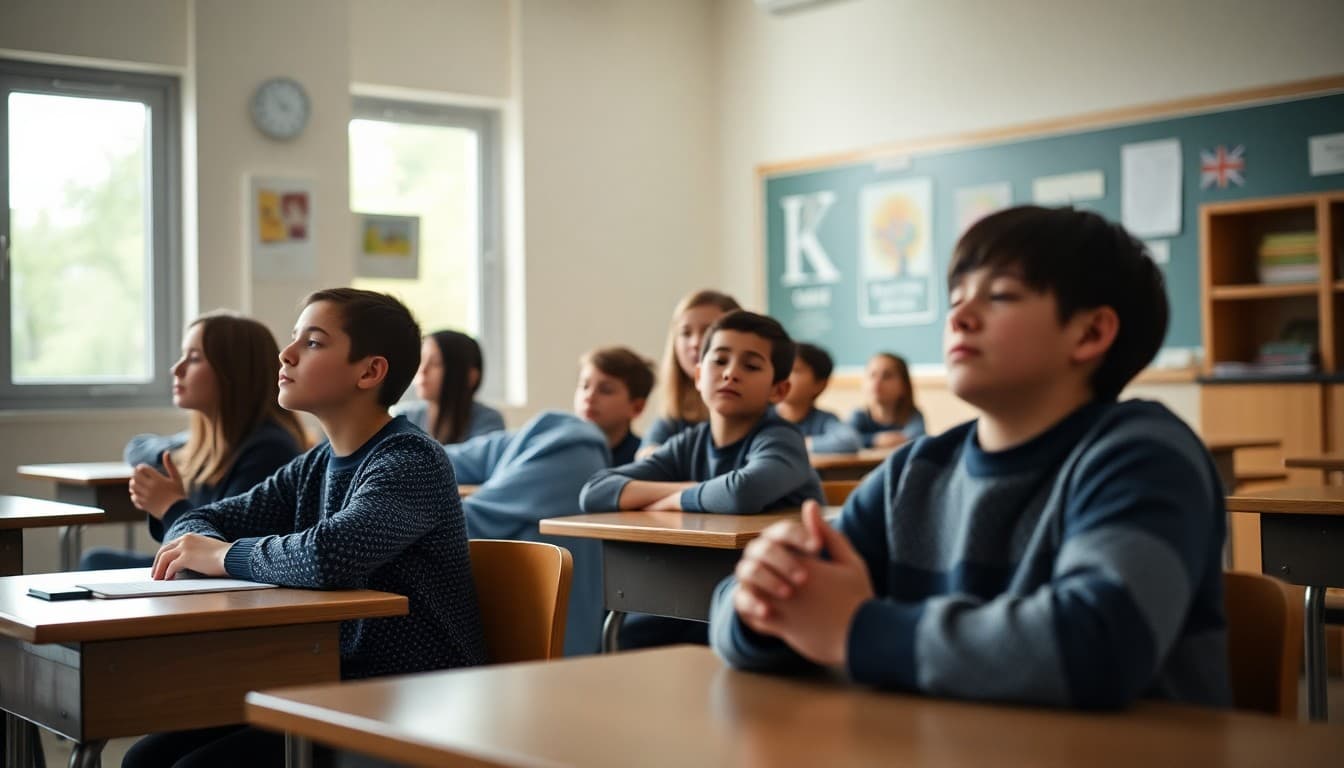
Classroom Mindfulness Newsletter: Calm and Focus at School

You have started doing a two-minute breathing exercise before every test. Your students are calmer. The fidgeting is down. A few kids are even using the technique on the playground. But if parents do not know it is happening, the first time they hear about it is when their child does "the school breathing thing" at the dinner table and they have no context for it. A single newsletter update fixes that.
What Mindfulness Means in a School Setting
In classroom practice, mindfulness means helping students notice their emotional and physical state and giving them a tool to shift it when needed. It is not meditation in the traditional sense. It is closer to self-regulation training. Teaching a student to take three slow breaths before a hard test is a cognitive skill, the same way teaching them to reread a confusing paragraph is a reading skill.
Why You Are Using It
Anxiety affects learning. Students who are in a stress response retain less, produce less, and perform below their actual ability. Simple calming techniques that activate the parasympathetic nervous system reduce that response. That is the honest reason schools teach breathing exercises. Not for spiritual reasons. For performance and well-being reasons.
The Specific Practices in Your Classroom
Name what you actually do. "Before our Friday math check, we do four counts in, hold for four, four counts out. It takes 90 seconds." Or "We have a calm-down corner with a sand timer and some sensory tools. Students can go there for three minutes when they need to reset." Specific descriptions remove the mystery and give families something to ask their child about.
The Difference Between Calm and Checked Out
Some parents worry that calming activities mean less learning time. Address this directly. You are not replacing instruction with relaxation. The breathing exercise takes 90 seconds and the test it precedes takes 20 minutes. Students who are calm before assessments perform better on them. You are investing a small amount of time to get better outcomes from the time that follows.
A Simple Home Practice to Share
Box breathing for families: breathe in for four counts, hold for four, breathe out for four, hold for four. Repeat twice. That is the whole thing. Try it before a stressful homework session, before a car ride argument, or before bedtime when a child is wound up. You are not asking families to add a new routine. You are giving them one technique that works in two minutes.
What to Say When Your Child Resists
Some students roll their eyes at mindfulness activities. That is normal. Acknowledge to families that not every student connects with every technique. If their child is resistant, it is okay. The goal is exposure and availability, not forced participation. Over time, even resistant students often reach for the tools during genuinely stressful moments.
Connecting This to Academic Performance
If you have noticed measurable changes since adding mindfulness practices, share them. Not as a formal study, but as an observation. "Since we started the pre-test breathing routine, I have noticed students finishing with more time to check their work." That kind of concrete observation matters more to most parents than research citations.
An Invitation to Ask Questions
End the mindfulness section of your newsletter with an open invitation. "If you have questions about how we practice these skills or want to talk about whether they are working for your child, I am happy to discuss it." That single line acknowledges that the topic might feel new to some families and positions you as approachable rather than defensive about the practice.
Get one newsletter idea every week.
Free. For teachers. No spam.
Frequently asked questions
How do I explain mindfulness to parents who are skeptical?
Keep the description practical. Mindfulness in a school context means teaching students to notice when they are stressed or distracted and giving them a simple technique to reset. Box breathing, a calming corner, or a brief body scan before a test. You are not asking families to adopt a philosophy. You are teaching a skill that helps students focus.
What mindfulness practices should I mention in a newsletter?
Name the specific techniques you use. If you do a breathing exercise before tests, describe it. If you have a calm-down corner with a sand timer, explain it. Concrete descriptions reduce misunderstanding and help families recognize what their child is talking about when they demonstrate the technique at home.
Should I include a mindfulness activity families can try at home?
Yes, and keep it short. One simple technique that takes under two minutes is enough. A four-count breathing exercise or a 'five things you can see' grounding activity gives families something real to try without requiring any prior knowledge or equipment.
How do I address parents who have religious concerns about mindfulness?
Acknowledge that some families approach the topic differently and describe your practice in secular, skill-based terms. 'We practice slow breathing to help students calm their nervous system before assessments' is different from language that implies a spiritual practice. If a parent has specific concerns, offer a brief conversation to address them directly.
Can Daystage help me include mindfulness resources in my newsletter?
Yes. You can include links to short videos or printable breathing guides directly in your Daystage newsletter. Adding a visual like a breathing chart or a calm-down card makes the content more usable for families who want to try it at home.

Adi Ackerman
Author
Adi Ackerman is a former classroom teacher and curriculum writer with 8 years in K-8 schools. She writes about school communication, parent engagement, and what actually works in real classrooms.
More for Classroom Teachers
Ready to send your first newsletter?
3 newsletters free. No credit card. First one ready in under 5 minutes.
Get started free