
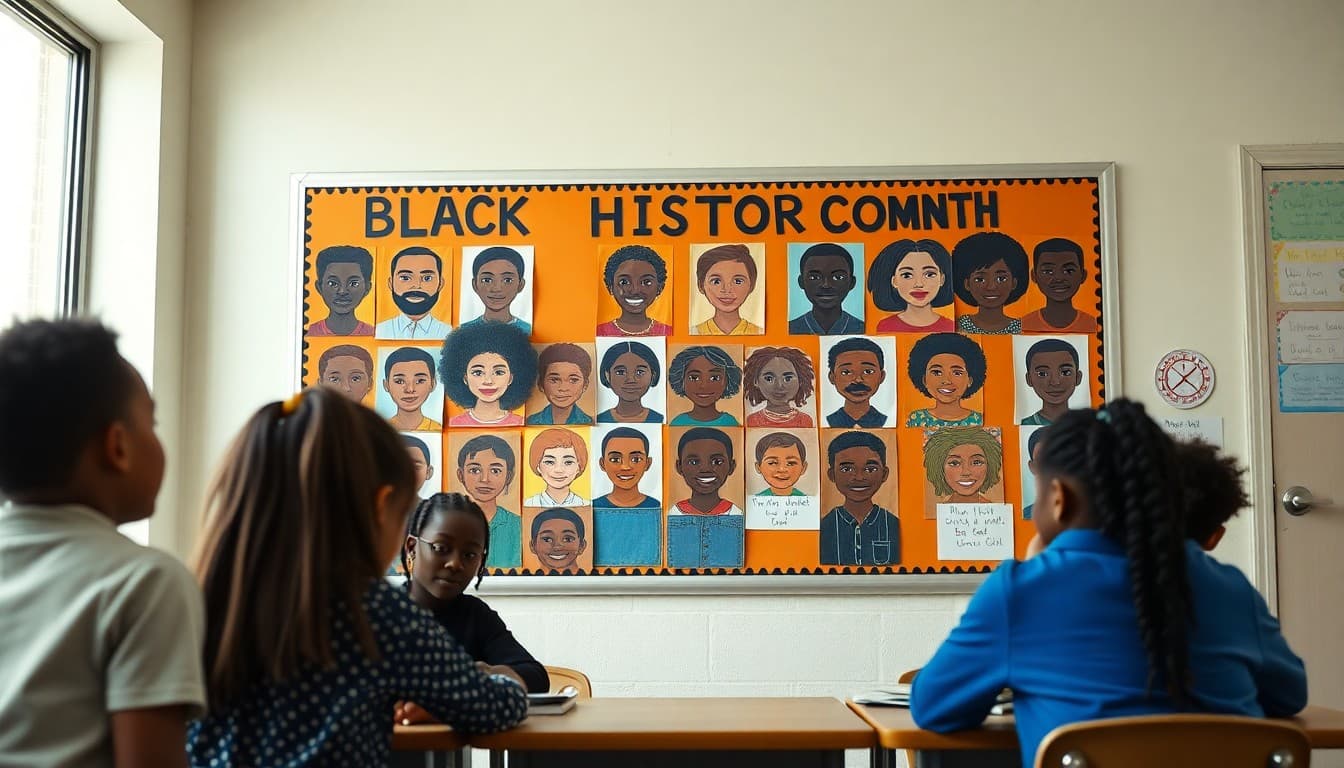
How to Write a Black History Month Classroom Newsletter to Parents

A Black History Month newsletter that says "this month we celebrate Black history" and nothing else tells families almost nothing. A newsletter that describes what you are specifically teaching, which individuals and ideas students are encountering, and how families can extend the learning at home is a genuine communication tool. It reinforces learning, invites family conversation, and signals that this is not a token activity but real curriculum.
Tell families what you are specifically teaching
Name the individuals, events, and ideas you are exploring. "This month we are studying the Harlem Renaissance as a period of extraordinary Black artistic and intellectual achievement. Students are reading poetry by Langston Hughes, looking at art by Jacob Lawrence, and listening to jazz recordings from that era." That paragraph tells families what their student is learning and gives them language to use at home.
Connect it to your year-round curriculum
Black History Month is most powerful when it connects to your ongoing work rather than arriving as an isolated February unit. "The themes we are exploring this month, resilience under constraint, the power of art to challenge power, the importance of documenting your own story, connect directly to our year-long writing focus." This framing signals that Black history is integrated rather than additive.
Highlight specific figures students are learning about
A brief mention of two or three people students are studying gives families concrete names and stories to ask about. "Students are learning about Mae C. Jemison, the first Black woman in space, and connecting her story to our science unit on space exploration. They are also studying Ida B. Wells and her work as an investigative journalist at a time when that work was genuinely dangerous." Specific stories are more memorable than general curriculum descriptions.
Give families conversation starters
The best newsletters include something families can use at dinner. "Ask your student: Who is one person we have learned about this month, and what did they do that required courage? What is something you learned that surprised you?" These questions open conversations that extend the learning and give students a chance to teach their families something, which is often one of their favorite experiences.
Recommend books at the right level
A short, curated reading list is more useful than a long one. One or two picture books for younger grades, one or two chapter books for older grades, and one title for families who want to read alongside their student. "If your family wants to explore further, I recommend [title] for home reading. It is [brief description of what makes it compelling]." Curated and annotated beats comprehensive.
Be honest about why this month matters beyond February
Families of all backgrounds appreciate honesty about what you are trying to accomplish. "I want every student in this room to see themselves reflected in the stories of people who changed the world, regardless of what those students look like. And I want every student to understand the full history of this country, not a version that leaves out the people who were most affected by it." This kind of direct statement is more effective than no framing at all.
Acknowledge the whole class is part of this
Black History Month belongs to every student in the classroom. "This learning belongs to every student in our class. Understanding the history and contributions of Black Americans is not optional American history. It is American history, and it makes all of our students better informed, more empathetic people." This framing prevents any family from feeling the month is not for their student.
Daystage makes it easy to include book cover images, linked video resources, and a curated reading list in your Black History Month newsletter so families receive a rich, useful communication rather than just a text update.
Get one newsletter idea every week.
Free. For teachers. No spam.
Frequently asked questions
What should I include in a Black History Month classroom newsletter?
What specifically you are teaching, which figures and themes you are exploring, how the learning connects to your broader curriculum, conversation starters for families, and recommended books or resources at grade level.
How do I communicate about Black History Month in a way that is substantive rather than performative?
Be specific about what you are actually teaching. Name the individuals, events, and ideas you are exploring. Connect them to themes and questions that live in your classroom all year. A newsletter that describes real learning is more credible and more useful than a newsletter that says 'we are celebrating Black History Month' without detail.
How do I address the complexity of Black history in a classroom newsletter for young students?
Be honest and age-appropriate. At younger grades, focus on resilience, achievement, and the ongoing work of building a more just world. At older grades, engage more directly with historical and ongoing injustice in a way that invites critical thinking rather than despair.
What book recommendations should I include in a Black History Month newsletter?
Include at least one picture book and one chapter book for students to read, and one book or resource for parents who want to learn more alongside their student. Age-appropriate and high-quality. Curate rather than list everything.
Can Daystage help me share classroom resources and links with families during Black History Month?
Yes. Daystage lets you embed book covers, link to videos and reading resources, and include family conversation starters all in one newsletter.

Adi Ackerman
Author
Adi Ackerman is a former classroom teacher and curriculum writer with 8 years in K-8 schools. She writes about school communication, parent engagement, and what actually works in real classrooms.
More for Classroom Teachers
Ready to send your first newsletter?
3 newsletters free. No credit card. First one ready in under 5 minutes.
Get started free