
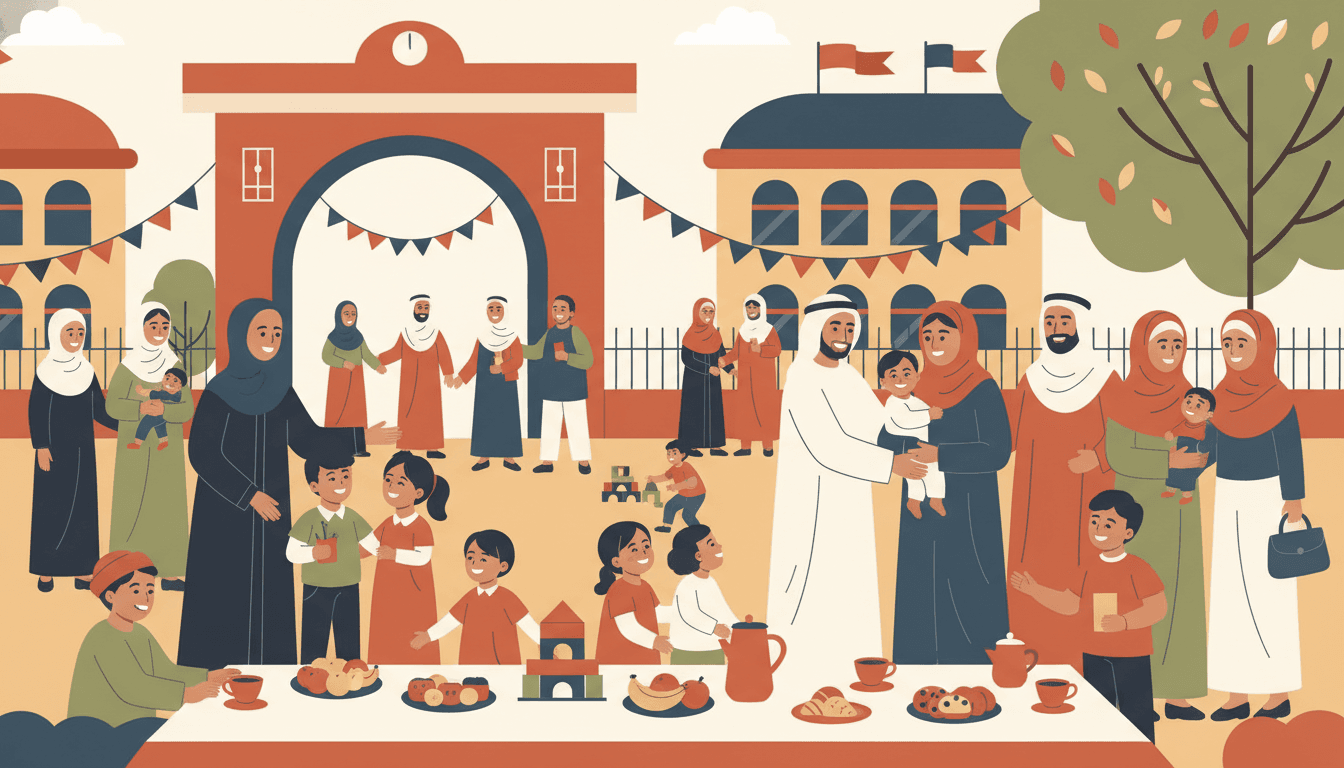
School Newsletter for Italian-Speaking Families: Communicating with Italian-American and Italian Immigrant Communities
Italian-speaking families in US schools represent two distinct communities with different communication needs. The long-established Italian-American community, whose roots in the United States stretch back generations, has largely assimilated into English-dominant life while maintaining Italian as a heritage and cultural language. More recent Italian immigrants, including professionals, academics, and their families, represent a newer presence with different language needs.
Understanding which of these communities you are serving, and what they actually need from a bilingual newsletter, shapes how you build your Italian-language school communication.
Heritage language families versus recent immigrants
For Italian-American families who have been in the United States for two or three generations, Italian is often a heritage and cultural language rather than a language of daily life. These families may speak some Italian at home with older relatives, use Italian in cultural and religious contexts, or maintain Italian as a language of pride without using it as a primary means of communication.
For these families, a school newsletter section in Italian carries cultural meaning more than practical access. It signals that the school sees and values their heritage. The families who most need Italian-language access are more recent arrivals, particularly those who arrived as adults with children who are now in US schools.
Technical simplicity of Italian
Italian uses the standard Latin alphabet with a handful of accented characters, primarily vowels with grave accents. These characters are fully supported in all modern email and newsletter systems. Adding Italian content to your school newsletter requires no special fonts, no right-to-left configuration, and no script-specific rendering checks.
Italian is also one of the languages for which machine translation performs very well. A machine translation draft for an Italian newsletter section is often accurate enough for general content with minimal review. Native Italian speakers are common enough in many US communities that volunteer review is usually straightforward to arrange.
Family-centered communication
Italian culture places family at the center of social life, with extended family involvement in children's upbringing being the norm. Italian-speaking families often include grandparents, aunts, and uncles in the circle of caregivers who engage with school communications. A newsletter that acknowledges the extended family, rather than only addressing the nuclear household, fits this cultural reality.
"We welcome all family members to our school events and encourage parents, grandparents, and extended family to participate in our school community" is the kind of language that resonates with Italian family culture and signals that the school understands how these families are structured.
Regional identity and standard Italian
Italy has significant regional diversity, and Italian families often carry strong regional identities tied to their region of origin. Sicilian, Neapolitan, and Northern Italian families may think of themselves as distinct communities. For school newsletters, standard Italian is appropriate and universally understood across all regional backgrounds.
If you have community members who offer to help review translations, they may occasionally suggest regional vocabulary. Standard Italian is the right choice for institutional communication regardless of the reviewer's regional background, since it is comprehensible to all Italian speakers.
Religious and cultural calendar
The majority of Italian and Italian-American families have a Catholic background, even if not all are practicing. The Catholic calendar, particularly Christmas and Easter, carries cultural significance for Italian families even beyond religious observance. Italian families also celebrate national Italian holidays like the Feast of the Republic in June, though these carry less school-scheduling significance.
Acknowledging Christmas and Easter in school communications without assuming universal observance is appropriate and resonates with Italian-speaking families who connect these holidays to cultural identity as much as religious practice.
Building connection with a community that is often overlooked
Italian-American communities are so long-established in the United States that they are sometimes not thought of as a community requiring language outreach. This can leave more recently arrived Italian-speaking families without the communication support they need, and it misses an opportunity to honor the heritage language of a community with deep roots in American life. A bilingual Italian newsletter serves both purposes: practical access for recent arrivals and cultural recognition for the broader Italian-American community.
Get one newsletter idea every week.
Free. For teachers. No spam.
Frequently asked questions
Are there Italian-speaking families in US schools who need Italian-language newsletters?
Yes, though the profile is different from many other language communities. Established Italian-American families who have been in the US for two or three generations are generally English-proficient and typically do not need Italian-language school communication. However, recent Italian immigrants, families on visa programs, and first-generation Italian-American families may have Italian as their primary home language and benefit from Italian-language newsletters, particularly for legally significant or complex communications.
What script does Italian use, and are there rendering considerations?
Italian uses the Latin alphabet with some accented characters, primarily grave accents on vowels. These characters are universally supported in modern email clients and browsers with no special rendering considerations. Italian is one of the simplest languages to add to a bilingual newsletter from a technical standpoint.
What cultural values are most relevant for Italian-speaking families?
Italian culture places strong emphasis on family as the central unit of social life, and Italian families often have extended family involvement in children's education. Education and academic achievement are valued, and formal communication is respected. For more recent Italian immigrants, regional identity within Italy can be significant, though standard Italian is appropriate for school newsletters.
How accurate is machine translation for Italian?
Italian machine translation is among the most reliable available. Italian is a well-resourced language for AI translation tools, and machine translation drafts are generally accurate enough for general newsletter content with a light review from an Italian speaker. Professional translation is recommended for legally significant documents.
How does Daystage support Italian newsletter delivery?
Daystage lets schools add Italian-language sections to newsletters with no technical complexity, since Italian uses standard Latin characters. The subscriber tagging system identifies Italian-speaking families for targeted delivery. Machine-translated Italian content can be added directly to the block editor.

Adi Ackerman
Author
Adi Ackerman is a former classroom teacher and curriculum writer with 8 years in K-8 schools. She writes about school communication, parent engagement, and what actually works in real classrooms.
More for Bilingual
Ready to send your first newsletter?
3 newsletters free. No credit card. First one ready in under 5 minutes.
Get started free