
School Newsletter for Portuguese-Speaking Families: Reaching Brazilian and Portuguese Communities
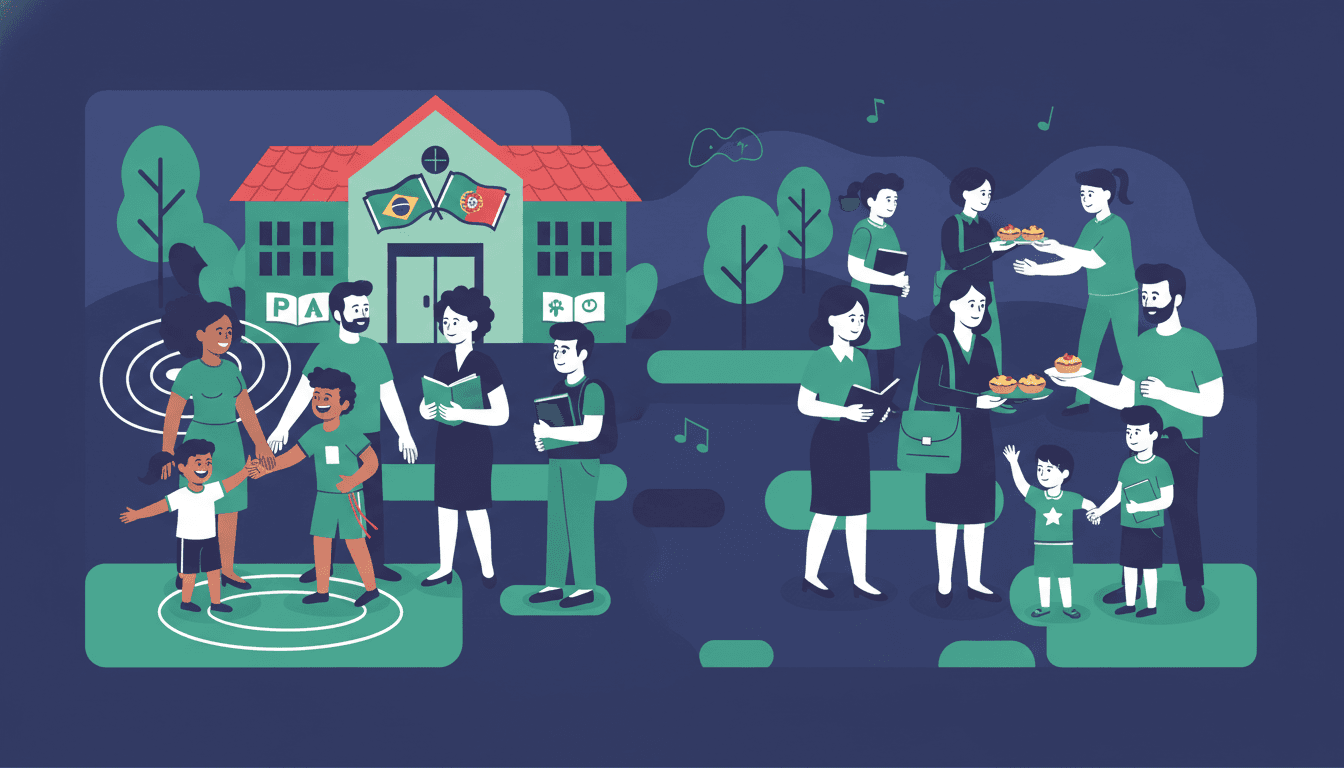
Portuguese is the sixth most spoken language in the world and one of the growing languages in American public schools. Brazilian families make up the largest Portuguese-speaking immigrant group in the United States, concentrated in Massachusetts, Florida, New Jersey, Connecticut, and California. But Portuguese-speaking communities also include families from Portugal, Cape Verde, Angola, and other Lusophone countries.
A school newsletter strategy for Portuguese-speaking families needs to account for these differences. Brazilian Portuguese and European Portuguese share the same written standard in many respects, but vocabulary, idioms, and tone differ enough that a newsletter written for one community can feel foreign to another.
Brazilian Portuguese versus European Portuguese
The distinction that matters most for school newsletters is between Brazilian Portuguese and European Portuguese.
Brazilian Portuguese is the dominant variety for most Portuguese-speaking families in American schools. Brazil has the largest Portuguese-speaking population in the world, and Brazilian immigrants are the most common source of Portuguese-speaking students in most U.S. districts. For the majority of schools, Brazilian Portuguese is the right choice for translation.
European Portuguese, spoken in Portugal and in some communities from Cape Verde and other former Portuguese territories, has different pronunciation, vocabulary, and some grammatical conventions. A translation in Brazilian Portuguese will be largely understood by European Portuguese speakers, but it may feel slightly off. If you have a significant Portuguese or Cape Verdean community, consult with families about their preference.
Machine translation tools like Google Translate generally produce Brazilian Portuguese as the default when you select Portuguese. This is the right default for most American schools.
Translation quality for Portuguese
Portuguese is one of the better-supported languages for machine translation. For general newsletter content such as event announcements, calendar reminders, and classroom updates, a machine-translated draft reviewed by a bilingual speaker is often sufficient.
For legal or compliance-related content, including special education rights, discipline policies, attendance consequences, and enrollment forms, a certified translator is necessary. Educational terminology can be tricky. "504 plan," "IEP," "Response to Intervention," and similar terms either have established Portuguese translations in educational contexts or need to be explained rather than directly translated.
Many districts with Brazilian communities have Portuguese-speaking family liaisons, bilingual paraprofessionals, or community partners who can review translations. If yours does, use them. A five-minute review by a native speaker catches errors that undermine your credibility with the community.
Cultural context for Brazilian families
Brazilian families are often highly relationship-oriented. Personal warmth and directness are valued. A newsletter that feels corporate or cold will not connect as well as one that feels like it was written by a person who genuinely cares about the school community.
Brazilian culture is also generally less formal than American institutional communication tends to be. You do not need to be stiff or ceremonious in your newsletter. A warm, conversational tone in both English and Portuguese will land better than a formal letter-style communication.
Many Brazilian families are Catholic or Evangelical Protestant. Religious community plays a significant role in social life, and many Brazilian parents first connect with other school families through church networks. If your school hosts events that conflict with major Catholic or Evangelical observances, acknowledgment of this in your newsletter shows cultural awareness.
Brazilian families may have varying familiarity with how American schools work. Many Brazilians who immigrated as adults attended schools in Brazil where parent involvement looked very different. Your newsletter can help bridge this by explaining school expectations directly. "In our school, we invite all families to attend parent-teacher conferences, volunteer in classrooms, and ask questions anytime. Your participation matters."
Cape Verdean families: a separate consideration
Cape Verdean communities, concentrated particularly in Massachusetts and Rhode Island, speak Cape Verdean Creole (Kriolu) as their home language. This is distinct from Portuguese, though most Cape Verdeans also speak and read Portuguese.
For school newsletters reaching Cape Verdean families, Portuguese is an appropriate choice. Cape Verdean Creole does not have a single standardized written form and is primarily a spoken language. A newsletter in Cape Verdean Creole would require significant community expertise to produce accurately. Portuguese is more universally readable across the Cape Verdean community and more widely available for translation.
If your school has a significant Cape Verdean community, consulting with community liaisons about the best communication approach is worth doing before committing to a strategy.
Structuring your Portuguese-language newsletter
The most practical format for Portuguese-speaking families:
- A bilingual header that labels the newsletter in both languages. "Bilingual School Newsletter / Boletim Escolar Bilíngue" immediately tells families what they are receiving.
- Full English content followed by full Portuguese translation. This is easier to navigate than interleaved bilingual text.
- Keep the English source simple and direct. Avoid idioms and cultural references that do not translate well.
- Include a Portuguese-language contact point. If there is a Portuguese-speaking staff member, community liaison, or bilingual family resource person, name them and include their contact information in the Portuguese section.
How Daystage supports bilingual newsletters
Daystage makes bilingual newsletter publishing straightforward. The block editor lets you build a newsletter with separate English and Portuguese sections, clearly labeled, in a single email. Subscriber groups allow you to tag Portuguese-speaking families and ensure they receive the bilingual version.
The open-rate analytics in Daystage help you understand whether Portuguese-speaking families are engaging with the newsletter. If open rates for this group are low, it is a signal to look at delivery issues (email address quality, spam filtering) or to try a different format or subject line.
Building the relationship over time
A single translated newsletter does not build community engagement. What builds it is consistent communication over the course of a school year, where families come to expect and rely on the bilingual newsletter as a source of school information.
Brazilian and Portuguese-speaking families who feel genuinely connected to the school community become some of the most engaged supporters. They share information within their networks, volunteer, and advocate for the school. The newsletter is where that relationship starts.
Get one newsletter idea every week.
Free. For teachers. No spam.
Frequently asked questions
When should schools begin sending Portuguese-language newsletters to Brazilian and Portuguese-speaking families?
Begin at enrollment and confirm whether the family speaks Brazilian Portuguese or European Portuguese, since the vocabulary, tone, and some orthographic conventions differ enough to matter. A newsletter written in European Portuguese for a Brazilian family, or vice versa, can read as awkward or out of touch even when it is technically correct.
What should a school newsletter for Portuguese-speaking families include to be effective?
Use Brazilian Portuguese for the majority of Portuguese-speaking families in US schools, who are predominantly from Brazil. Include practical explanations of US school terms that do not have direct Portuguese equivalents, and acknowledge Brazilian community events and holidays where relevant. Families who see their specific cultural context reflected engage more than those who receive generic translated content.
How should schools approach translation quality for Portuguese-language newsletters?
Automated translation tools perform reasonably well for Portuguese compared to some other languages, but school-specific vocabulary, grade-level terminology, and legal terms like IEP or Title I still require human review. A Brazilian bilingual parent volunteer reviewing AI-drafted content is a cost-effective quality control step that most schools can establish within one semester.
What are common challenges with reaching Portuguese-speaking families through school newsletters?
Brazilian families in particular may have lower institutional trust, especially if they include undocumented community members who are cautious about engaging with official institutions. A school newsletter that is formal in tone and government-document in feel may not reach families who would respond to warmer, more community-facing communication.
How can schools manage Portuguese-language newsletter delivery efficiently alongside other languages?
A platform like Daystage with subscriber language tagging routes the Portuguese version to the right families automatically, removing the manual effort that causes bilingual newsletter programs to break down. Delivery data also shows which families are consistently not opening, which can guide decisions about alternative outreach through Brazilian community organizations.

Adi Ackerman
Author
Adi Ackerman is a former classroom teacher and curriculum writer with 8 years in K-8 schools. She writes about school communication, parent engagement, and what actually works in real classrooms.
More for Bilingual
School Newsletter Language Access: What Schools Are Required to Provide and How to Do It
Bilingual · 8 min read
Bilingual Classroom Newsletter Tips: What Actually Works for Multilingual Families
Bilingual · 5 min read
Bilingual School Newsletter Guide: Building a Communication System That Reaches Everyone
Bilingual · 7 min read
Ready to send your first newsletter?
3 newsletters free. No credit card. First one ready in under 5 minutes.
Get started free