

Bilingual Book Club Newsletter: Reading Across Languages
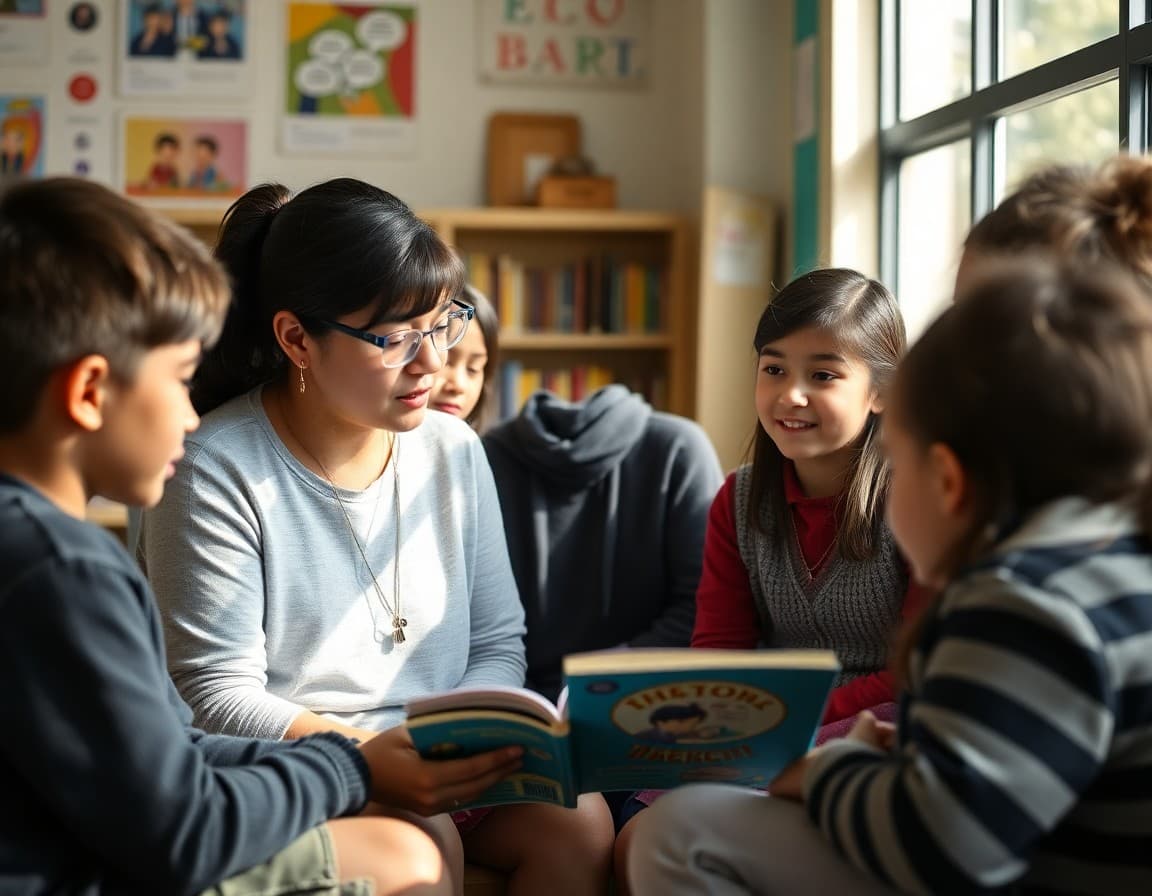
A bilingual book club does something no classroom can do efficiently: it puts reading at the center of a real community. Students who discuss books in two languages together are not just practicing vocabulary. They are experiencing literature as a bridge between cultural perspectives, and that experience compounds over months. A well-organized bilingual book club newsletter keeps members engaged between meetings, recruits new participants, and gives families the context they need to support the reading at home.
How to Launch a Bilingual Book Club
Start small. Eight to twelve participants is ideal for a meaningful discussion. Recruit through a brief announcement newsletter that explains the concept, lists the first book, and gives families a specific sign-up link or deadline. The announcement should answer three questions families will have: how much reading is required, when and where meetings happen, and whether both language levels are genuinely welcome or whether it is really a club for fluent speakers. Address that last concern directly because it stops many interested families from joining.
Choosing Books That Work Across Both Languages
The book selection determines whether the bilingual discussion works. Four types of books work reliably well. First, books published in bilingual editions where the two texts appear side by side: these make comparison of translation choices easy and interesting. Second, books by bilingual or bicultural authors who write about living between two languages. Third, books where the main character navigates two languages or two cultures: the theme resonates differently depending on which language you read it in, and that difference generates the best discussions. Fourth, classics translated into both languages: reading the same narrative in two different linguistic traditions reveals how much language shapes meaning.
A Sample Monthly Newsletter Structure
Here is a template for your monthly bilingual book club newsletter:
Club de Lectura Bilingüe / Bilingual Book Club - [Month] Meeting
This month's book: [Title in Spanish] / [Title in English] by [Author]
Pages to read before the meeting: [page range or chapters]
Meeting date: [Day, Date] at [Time], [Location]
Discussion questions to think about: What language does the main character feel most comfortable in? Is there a word or phrase in one language version that you think was lost in translation? What moment in the book felt most culturally specific to you?
Snack sign-up: [link or email]
Running the Discussion
Open each meeting with three minutes where each language group summarizes what they read in that language. Then move to the shared discussion questions where both groups respond. The moment when a Spanish reader and an English reader notice the same scene described differently in their versions is the heart of what a bilingual book club offers. Facilitate explicitly for these moments: ask whether the translation changed the meaning, whether a character feels different in one language than the other, whether cultural references came through clearly. These questions generate the kind of cross-language dialogue that most classrooms rarely have time for.
Family Book Club Extension
The most engaged bilingual book club participants often come from families where the reading became a household conversation before the meeting. Encourage this explicitly in the newsletter: invite families to read along in whichever language they prefer and to bring one observation from a family conversation to share at the meeting. Some schools run a parallel family book club track where parents and guardians meet separately to discuss the same books. The family track meets once a quarter rather than monthly, and the school provides childcare. The engagement data from programs that offer this consistently outperforms programs that treat the book club as students-only.
Celebrating What the Book Club Produces
At the end of each semester, feature the book club in your regular program newsletter. Publish a student reflection about a book that changed how they think about one of their languages. Include a photo from a meeting. List the books you read together and any student reviews. This visibility serves two purposes: it celebrates the participants who showed up consistently, and it recruits new members who see what the experience looks like. Book clubs that are invisible to the broader school community stay small. Book clubs that are regularly featured in school communication grow.
Get one newsletter idea every week.
Free. For teachers. No spam.
Frequently asked questions
How do you run a bilingual book club at school?
Choose a book available in both languages, or select two books on the same theme, one in each language. Meet monthly for 45 to 60 minutes. Start with a short summary of what each language group read, then discuss shared themes and compare how the language choices affected meaning. Rotate which language group presents first. Keep the discussion accessible to all language levels so newer speakers do not feel excluded. A bilingual facilitator helps but is not required if you structure the discussion well.
What books work well for bilingual book clubs?
Look for books published in bilingual editions, which include titles like Esperanza Rising, Inside Out and Back Again, and The House on Mango Street in Spanish-English editions. Children's picture books by Yuyi Morales, Carmen Agra Deedy, and Alma Flor Ada are available bilingually and work well for family book clubs with younger children. For upper grades, books by Sandra Cisneros, Julia Alvarez, and Edwidge Danticat explore the bilingual and bicultural experience directly and generate rich discussion.
How do I keep both language groups engaged in the same discussion?
Use discussion questions that do not depend on specific vocabulary from one version. Ask about themes, character decisions, and personal connections rather than plot details that might differ between translations. A question like 'How did the main character's language shape how others treated them?' is equally accessible to both language groups and more likely to generate a genuine bilingual dialogue than questions about specific scenes.
Should the bilingual book club newsletter be sent to students or parents?
Send it to both. Student members need the meeting schedule, book titles, and reading assignments. Parents need the same information plus context about how the book club connects to their child's bilingual development. A family book club version where parents and students read the same book in different languages and discuss it at home before the school meeting is an especially effective model. It turns the book club into a home language activity as well as a school one.
Can Daystage help coordinate a bilingual book club newsletter series?
Yes. Daystage works well for a recurring monthly series. You can set up the template once with the book club branding and fill in new book information each month. The scheduling feature ensures newsletters go out at the right time before each meeting without requiring you to remember to send them manually during a busy school week. Several school librarians use Daystage specifically for book club and reading program communication.

Adi Ackerman
Author
Adi Ackerman is a former classroom teacher and curriculum writer with 8 years in K-8 schools. She writes about school communication, parent engagement, and what actually works in real classrooms.
More for Bilingual
Bilingual Classroom Newsletter Tips: What Actually Works for Multilingual Families
Bilingual · 5 min read
Bilingual Community Outreach Newsletter: Reaching Multilingual Families Beyond the School Building
Bilingual · 6 min read
Heritage Speaker Program Newsletter: Honoring Home Languages
Bilingual · 6 min read
Ready to send your first newsletter?
3 newsletters free. No credit card. First one ready in under 5 minutes.
Get started free