
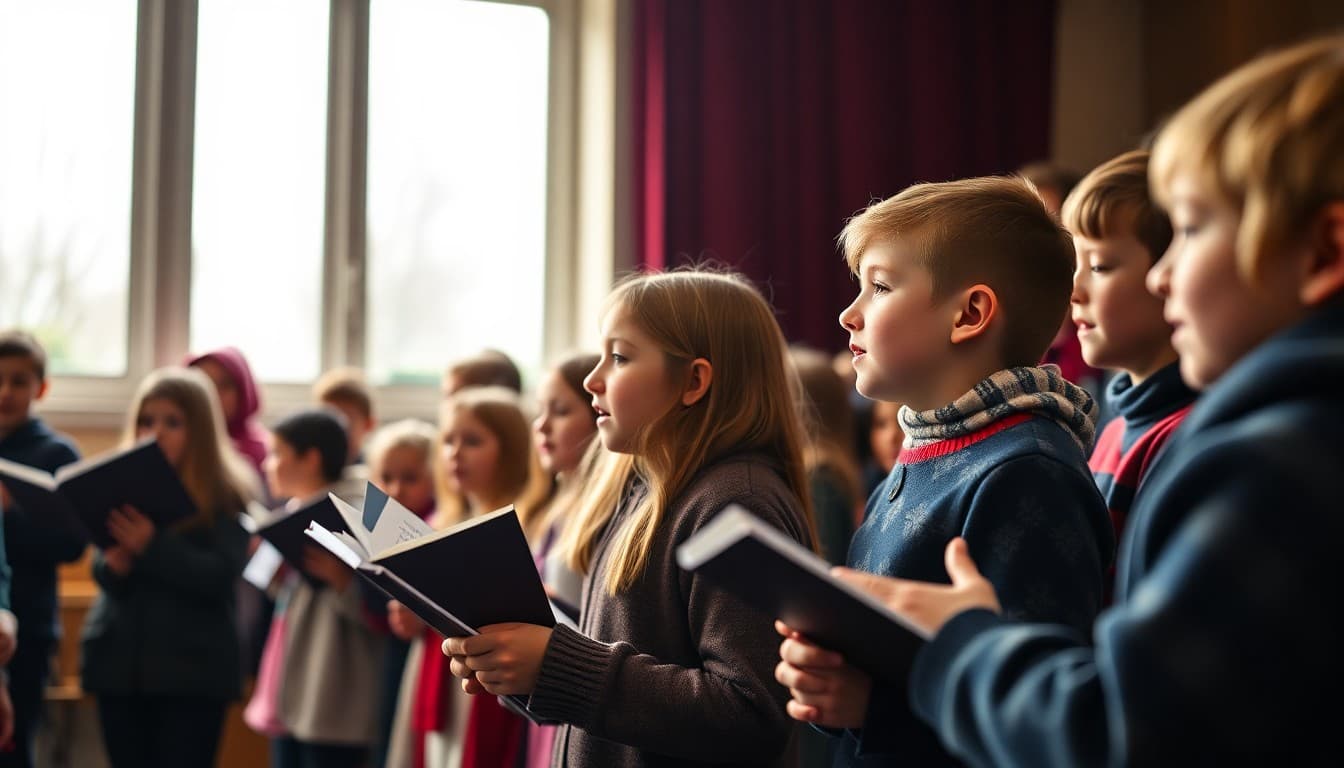
Winter Concert Newsletter: Holiday Season Performance Guide

The winter concert is often the most attended music event of the year, because families are already gathering for the holidays and the timing is natural. Your newsletter should take advantage of that seasonal momentum by treating the concert as an event worth planning around, not just a calendar item to note.
Open with the program in language that creates anticipation
The winter concert program often includes familiar holiday music alongside less familiar pieces. Describe both types in a way that makes families eager to hear them: the familiar with the specific context of what the ensemble is doing with it, and the unfamiliar with enough description to spark curiosity.
"The concert choir opens with a traditional arrangement of O Come All Ye Faithful that uses an unusual bass line developed for this specific arrangement. You know the melody. You have never heard it with this particular harmonic support underneath it. After that, we move into Tomer's Hinei Ma Tov, a Hebrew choral piece that most families in this audience will be hearing for the first time. Listen for the way the melody passes between sections."
Address the December scheduling reality directly
December is the most schedule-congested month of the year. A newsletter that acknowledges this and makes the concert easy to fit into the calendar generates more attendance than one that ignores the competing demands.
"We know December is packed. The concert is Tuesday, December 10th, at 7 PM. Running time is approximately 65 minutes, including intermission. You will be home before 8:30 PM. The concert is worth planning around. Your student has been working toward this performance since October."
Describe the cultural range of the program explicitly
Winter concert programs that represent multiple cultural traditions benefit from explicit description in the newsletter. Families from diverse backgrounds who recognize their cultural heritage in the program feel genuinely welcomed, and families who will hear an unfamiliar tradition arrive curious rather than confused.
"This year's program includes music from the Western Christmas tradition, the Jewish Hanukkah tradition, the West African Kwanzaa tradition, and a secular winter piece drawn from Nordic folk music. Students researched the cultural origins of each piece as part of the preparation process. Ask your student what they learned about the history of any piece they tell you about."
Cover logistics with attention to the December parking challenge
December school events have the worst parking situations of any school event because holiday gatherings are happening everywhere simultaneously. Give families specific parking information and, where possible, an alternative if the main lot fills.
"Main lot typically fills by 6:40 PM for the winter concert. Overflow parking is available at the church on the corner of Main and Oak, approximately a three-minute walk. Do not park along the fire lane on the east side of the building. Doors open at 6:30 PM. Concert begins at 7:00 PM."
Sample newsletter template excerpt
Winter Concert: Tuesday, December 10th, 7 PM, Main Auditorium.
Student call time is 6:00 PM. Students should arrive in concert dress and check in with their director. Families and guests arrive at 6:30 PM.
Concert dress: all-black formal wear. Holiday accessories like a festive scarf or pin are welcome. No athletic shoes or sneakers.
Tickets: no ticket required. Seating is open, first come first served. Accessible seating is available in the front left section and will be held until 6:55 PM.
Describe what the performance represents for each ensemble
By December, ensembles have been rehearsing together for three months. A newsletter that places the winter concert in the context of that work, describing where students started in September and what has changed since, helps families hear the concert as evidence of growth rather than a single performance event.
Build excitement for the spring concert without diminishing the winter one
The winter concert is the midpoint of the year. A brief mention in the newsletter of what students are looking forward to learning in the second semester creates continuity and gives families a reason to stay invested in the program beyond December.
Get one newsletter idea every week.
Free. For teachers. No spam.
Frequently asked questions
What should a winter concert newsletter include to maximize family attendance?
Winter concert newsletters that maximize attendance include the complete program with piece descriptions, clear venue and parking information, the concert's running time so families can plan around other December commitments, whether tickets are required or if seating is open, and a specific note about recording and photography policies. Including a short description of what audiences can expect to experience, rather than just a list of logistics, creates anticipation and makes the event feel worth planning around in a busy holiday season.
How do you handle holiday music in a school winter concert that includes diverse families?
Winter concert programming in a diverse school community benefits from including music from multiple cultural traditions alongside universal seasonal themes. A newsletter that describes the program's cultural range, including any non-Western holiday music, folk traditions, or secular seasonal pieces, helps all families feel represented and helps families from all backgrounds understand and appreciate the range of what they will hear. The newsletter should describe pieces from traditions that may be unfamiliar so all audiences arrive with context rather than encountering them cold.
How much rehearsal time do winter concerts typically require?
Winter concert preparation typically begins in October for December performances, giving ensembles six to eight weeks of rehearsal time. The holiday season's concert calendar means students in multiple ensembles may have back-to-back performances across multiple weeks. A newsletter that communicates the full rehearsal calendar for the winter season helps families anticipate the time commitment and plan the holiday season's competing demands. Students with solo or featured roles typically require additional sectional rehearsal time outside of the full ensemble.
How do you communicate about concert dress and holiday attire expectations?
Winter concert dress codes often vary from the standard all-black concert dress. Some programs allow students to wear holiday-themed accessories or specific colors for seasonal performances. A newsletter should specify exactly what is expected: 'all-black with an optional holiday accessory' or 'festive but formal: dark suits or dresses, no athletic wear' communicates more clearly than 'dress appropriately for the season.' Send dress requirements at least three weeks before the concert and include a reminder in the final pre-concert newsletter.
How does Daystage help music teachers communicate about winter concerts?
Daystage lets music teachers send winter concert newsletters with the complete program, links to recordings of holiday pieces, ticket purchasing links, and venue maps all in one readable format. When families receive a Daystage newsletter in late November with the full winter concert program and a note that tickets are going fast, purchases happen immediately rather than two days before the concert. Daystage's ability to embed links and include RSVPs in a single newsletter makes winter concert communication significantly more effective than paper flyers.

Adi Ackerman
Author
Adi Ackerman is a former classroom teacher and curriculum writer with 8 years in K-8 schools. She writes about school communication, parent engagement, and what actually works in real classrooms.
More for Arts & Music
Ready to send your first newsletter?
3 newsletters free. No credit card. First one ready in under 5 minutes.
Get started free