
School Orchestra Newsletter: Concert Season Communication
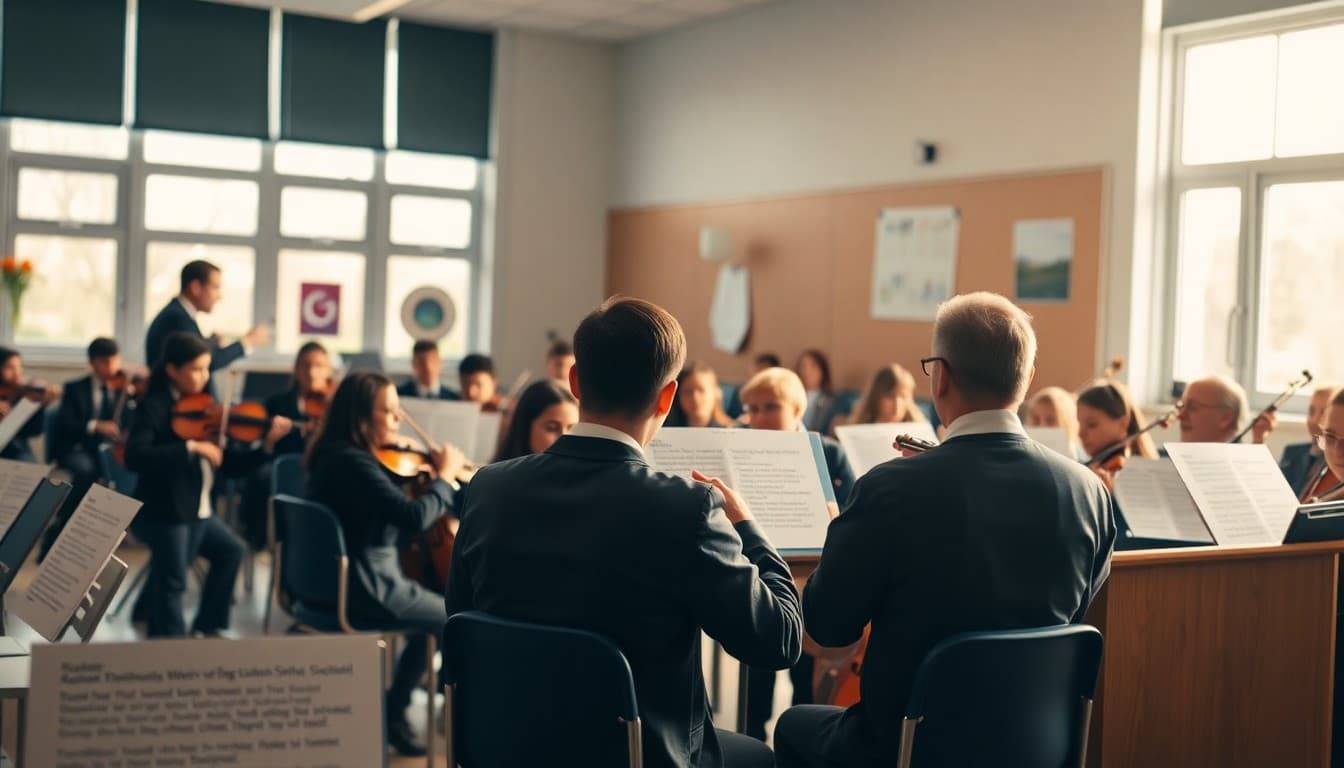
An orchestra newsletter is building an audience for something families may not have much vocabulary for. Your goal is to give them enough context about the music, the ensemble work, and the concert experience that they show up excited rather than just dutiful.
Introduce the season's repertoire with genuine descriptions
Do not list piece titles and composers as if they are self-explanatory. Describe each piece as if you are recommending it to a friend who has never heard it. What is the character of the piece? What does it feel like to hear it? Why does it matter?
"We are opening the fall concert with Holst's 'Jupiter' from The Planets Suite. It is one of the most recognizable pieces in all of orchestral music, and there is a reason for that: the central theme is so singable that it has been set to lyrics in multiple countries as a patriotic hymn. Your child will be playing the melody that those audiences have been humming for over a hundred years."
Explain what makes orchestra different from individual music lessons
Many families have children in private lessons. Orchestra develops skills that individual lessons cannot, and naming those skills helps families understand why ensemble participation matters even for advanced private students.
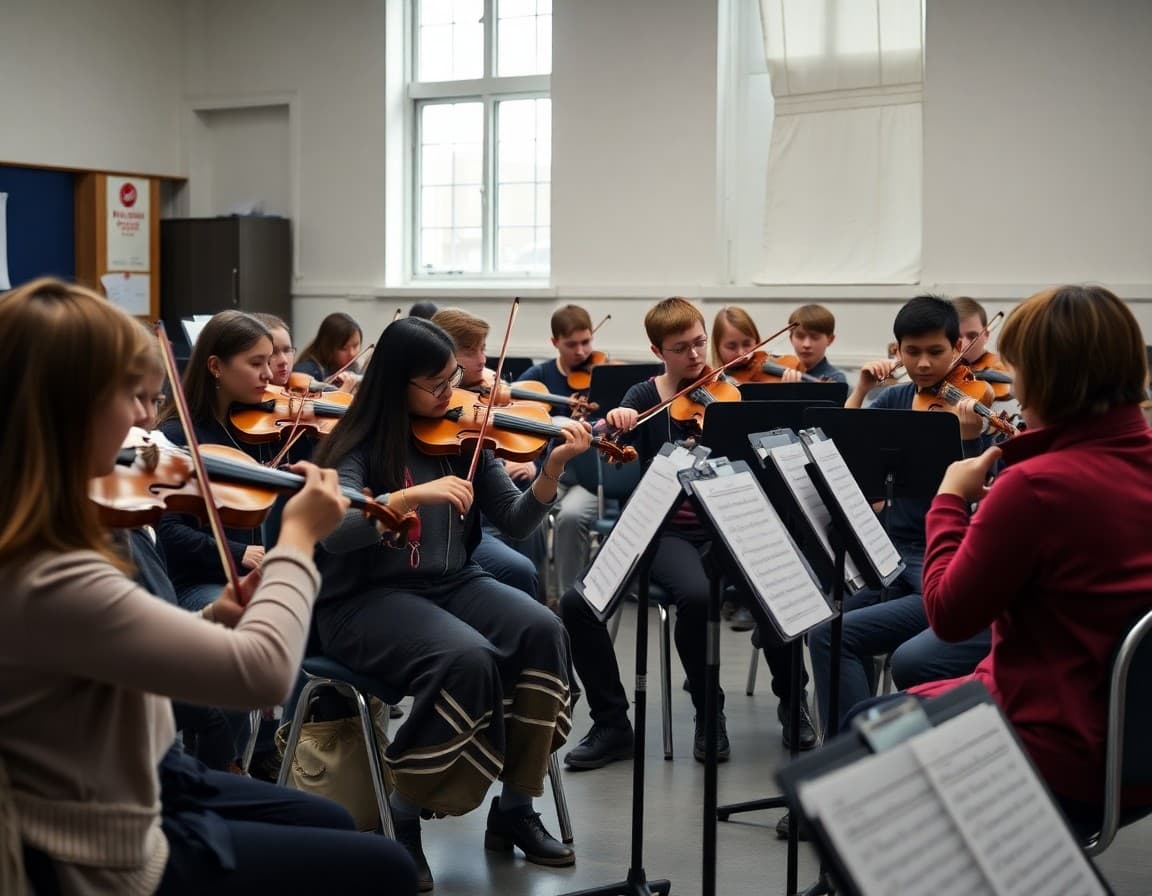
"Playing in an orchestra requires a musician to listen horizontally, meaning to what everyone else is playing simultaneously, not just vertically, meaning their own notes. A student who can play a passage perfectly alone must then learn to play it in tune with 34 other instruments, adjust their timing to match the section, watch the conductor while reading the music, and respond to dynamic cues in real time. Those are skills you cannot develop by practicing alone."
Describe the rehearsal schedule and practice expectations
Ensemble rehearsals only work if students come prepared. Tell families specifically what prepared means for each concert cycle and why it matters for the group.
"For the November concert, students should be able to play their part in all three pieces at performance tempo before the last two rehearsals. The final two rehearsals are for ensemble work, not individual learning. Students who have not learned their part by that point make it impossible for the group to rehearse effectively. The practice expectation for this month is 20 minutes per day, six days per week."
Cover concert logistics with complete specificity
Concert logistics questions are the most common parent emails orchestra directors receive. Answer them in the newsletter before anyone asks: where students check in, what time they arrive, where families sit, whether recording is allowed, and when the concert ends.
"Student call time is 6:15 PM. Families and audience arrive at 6:45 PM. Concert begins at 7:00 PM. Running time is approximately 70 minutes. Students in full concert black: black dress shirt, black dress pants or skirt, black shoes. No athletic shoes. Instruments should be in cases and labeled with the student's name. Enter through the main entrance, not the band room. Family seating is open seating, first come."
Sample newsletter template excerpt
Fall Concert is November 14th. Here is what your orchestra student needs to know and what you need to know:
We are performing three pieces: Holst's Jupiter, the first movement of Beethoven's Symphony No. 5, and a medley of film scores arranged for youth orchestra. The Beethoven has been our most challenging rehearsal piece this fall. When you hear the opening four notes on Friday night, you will know why we have spent six weeks on those four notes. They are not easy to play together correctly, and your child's section has worked hard on them.
Recognize the work of specific sections or students
Orchestra newsletters that celebrate specific accomplishments within the ensemble build morale and give families concrete things to celebrate with their child. Name the section that nailed a difficult passage, the student who sight-read a difficult part in rehearsal, or the group that stayed late to work on tuning. Specific recognition is more motivating than general praise.
Connect concert attendance to the student's investment
Students who know their family is coming to a concert practice harder than students who are uncertain whether anyone is coming. A newsletter that explicitly asks families to confirm their attendance, and explains why attendance matters to the student, is more effective than a general invitation. "Your student knows you are coming. That knowledge changes how they practice."
Get one newsletter idea every week.
Free. For teachers. No spam.
Frequently asked questions
What should an orchestra newsletter cover at the start of concert season?
A concert season opening newsletter should cover the concert dates and locations, what the orchestra will perform including composer names and brief descriptions of the pieces, rehearsal schedule and attendance expectations, uniform or concert dress requirements, any fees for music rental or uniform, and how families can support the orchestra outside of rehearsals. Including a brief description of each piece on the program helps families listen to recordings at home before the concert, which significantly improves their appreciation of the live performance.
How do you explain orchestral music to families who have little classical music background?
Connect the music to context families can understand: when it was written, what historical event or story inspired it, what makes it distinctive as a listening experience. Instead of describing a piece in musical terminology, describe what it feels like to hear it and why it was chosen for this program. 'Beethoven wrote this piece just after losing most of his hearing. The dramatic opening notes are the most famous in all of classical music. Your child has been learning to play those notes together as an ensemble, and you will hear the result on Friday.'
How do you communicate rehearsal expectations to families of orchestral students?
Orchestra newsletters should be clear that individual home practice is required for ensemble rehearsals to be productive. Describe the specific practice expectation: how many minutes per day, which sections of which pieces, and what students should be able to do before the next rehearsal. Families who understand that their child's home practice directly affects the quality of the group's performance take practice requirements more seriously than families who see home practice as optional extra credit.
What uniform or concert dress should school orchestra newsletters communicate?
Orchestra concert dress is often a source of family confusion. Be specific in the newsletter: all-black formal attire, specific color combinations, whether a suit or dress is required, whether jeans are acceptable, what footwear is expected, and whether the school provides any uniform elements or whether all clothing must be supplied by families. Include a deadline for uniform acquisition if the concert is within six weeks. Offer to help families who have difficulty accessing the required attire.
How does Daystage help orchestra directors communicate with orchestra families?
Daystage lets orchestra directors send concert season newsletters with the full program listed, rehearsal schedule in a format families can reference, and RSVP links for concert tickets when applicable. When families receive a Daystage newsletter with the concert date prominently displayed and a short description of each piece, they arrive at the concert having already heard the music once or twice at home, which transforms the audience experience and makes the student's work feel even more meaningful.

Adi Ackerman
Author
Adi Ackerman is a former classroom teacher and curriculum writer with 8 years in K-8 schools. She writes about school communication, parent engagement, and what actually works in real classrooms.
More for Arts & Music
Ready to send your first newsletter?
3 newsletters free. No credit card. First one ready in under 5 minutes.
Get started free