
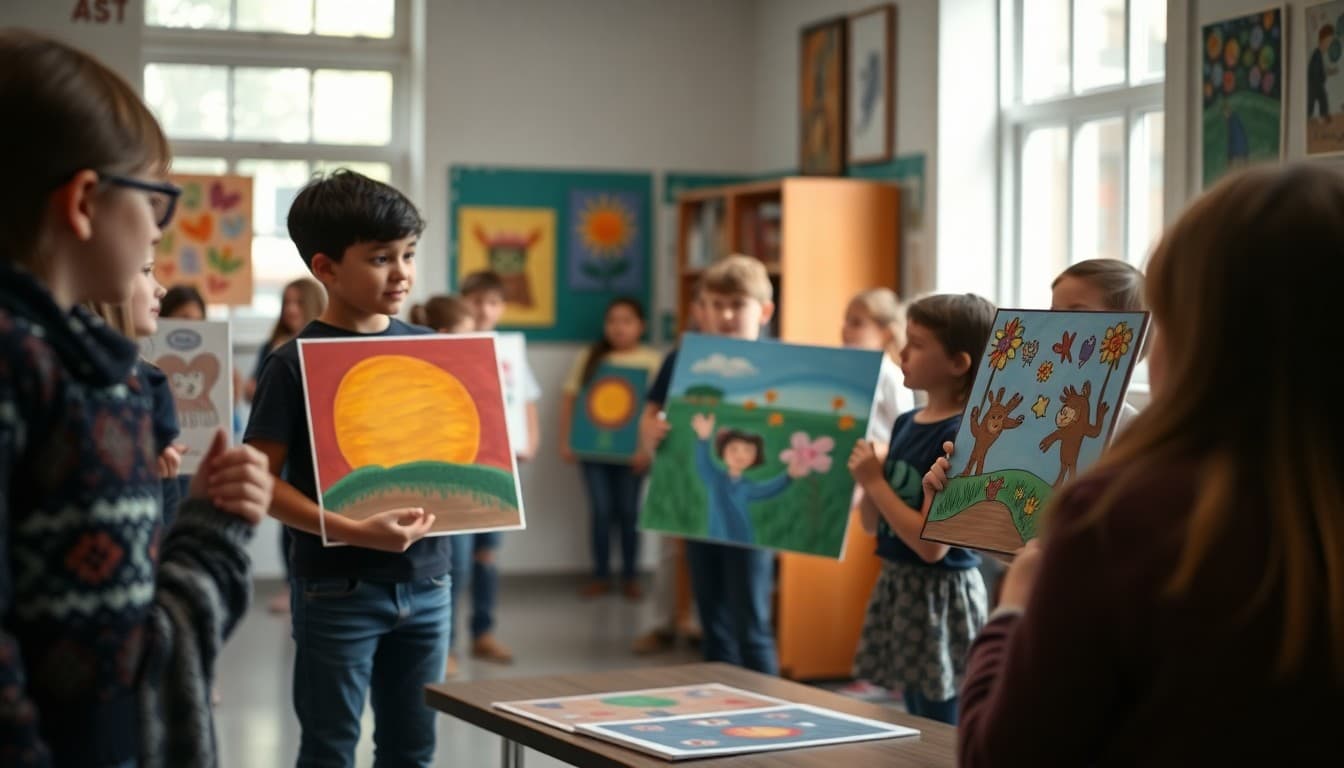
May Art Class Newsletter: What We Are Learning
The May newsletter closes the year. Everything you have communicated from September through April comes together in this final issue. Get it right and you send families into summer with a strong memory of what the art program did for their child. Miss it or phone it in and you lose a chance to cement the relationship that makes next year's newsletter welcomed rather than ignored.
Open by naming the year honestly
Not "it has been such a wonderful year" but something specific and true. A challenge the class overcame. A project that went better than expected. A student who changed your view of what the class could accomplish. Honesty in the year-end newsletter is what makes it feel like a real reflection rather than a form letter.
Summarize the year's curriculum arc
Give families a map of what students covered: the units, the skills, the progression. This full-year summary is useful for families who want to know what their child learned and for students who will carry the skills forward. "In September we started with observational drawing. By May, students are making self-directed work in a medium of their choice. That arc is the point."
Celebrate specific student accomplishments
Name something from this specific class that stood out. A piece that was more ambitious than anything you assigned. A student who found their voice in a medium that surprised them. A moment when the class got genuinely quiet because they were all absorbed in work. These specifics give the year a character that families will remember.
Give logistics for final events and portfolio return
If the spring show has not yet happened, include the date and details. If portfolios are coming home, tell families when, what is in them, and how students selected the pieces. If there is a last day of class acknowledgment or a student gallery, include that. Logistics at the end of the year deserve the same clarity as logistics at the beginning.
Sample newsletter template excerpt
Dear Art Families,
This is the last newsletter of the year and I want to use it to tell you something real: this class made better work in May than I expected in September. The self-directed final projects going up in Friday's show are genuine. Please come.
Spring Art Show: Friday, May 23rd, 6:00 to 8:00 PM, gymnasium and main hallway. No tickets needed. Portfolios come home with students on the last day of class.
Offer summer art ideas with specifics
A short list of concrete summer suggestions, a particular sketchbook challenge, a museum in the area, a free online tutorial, a local summer arts program, gives families something to act on. Students who continue making art over the summer return in September further ahead than they would be otherwise. That matters for the whole class.
Close with genuine gratitude
Thank the families who contributed supplies, volunteered, attended events, and engaged with the program. Thank the students specifically for the work they did. A closing that names the actual people and actual contributions is worth more than a paragraph of general appreciation. End the year the way you started it: specifically and personally.
Get one newsletter idea every week.
Free. For teachers. No spam.
Frequently asked questions
What should a May art class newsletter accomplish?
The May newsletter is the final communication of the year and should do three things: celebrate what students have accomplished across the full year, provide logistics for any end-of-year events still to come, and give families a strong final impression of the program. It is also the right moment to encourage students to keep making art over the summer with specific suggestions rather than just a general encouragement.
How do you write an end-of-year art newsletter that feels meaningful rather than routine?
Avoid boilerplate year-end language. Instead, name one specific thing that happened in this class this year that you will remember, name one student who had a visible breakthrough, describe one project that exceeded what you expected. Specificity makes the year feel real and worth celebrating. Generic year-end language, 'it has been a wonderful year,' is true but forgettable.
How should the May newsletter handle returning portfolios to families?
If portfolios are coming home at year-end, the May newsletter should explain what is in the portfolio, how students selected the pieces, and what families can do with the work. Tell families whether you recommend keeping or storing the portfolio and why. A student who graduates from your program with a curated portfolio and understands what it represents is carrying something real. Tell families that.
Should a May newsletter include summer art suggestions?
A brief summer suggestion section is one of the most useful things an art teacher can include in a May newsletter. Not a homework assignment, just a few concrete ideas: a sketchbook challenge, a list of summer art programs in the area, a YouTube channel or museum to explore, a specific medium to try with basic supplies. Families who receive a list of concrete options are more likely to act on one of them than families who receive a general encouragement to keep making art.
How does Daystage help art teachers close the year with families?
Daystage makes it easy to build a beautiful May newsletter that combines photos from the spring art show, a year-in-review curriculum summary, and a personal note from the teacher in a single professional format. When a Daystage year-end newsletter lands in a family's inbox with photos of their child's work and a genuine summary of what the class accomplished, it becomes something families save rather than archive.

Adi Ackerman
Author
Adi Ackerman is a former classroom teacher and curriculum writer with 8 years in K-8 schools. She writes about school communication, parent engagement, and what actually works in real classrooms.
More for Arts & Music
Ready to send your first newsletter?
3 newsletters free. No credit card. First one ready in under 5 minutes.
Get started free