
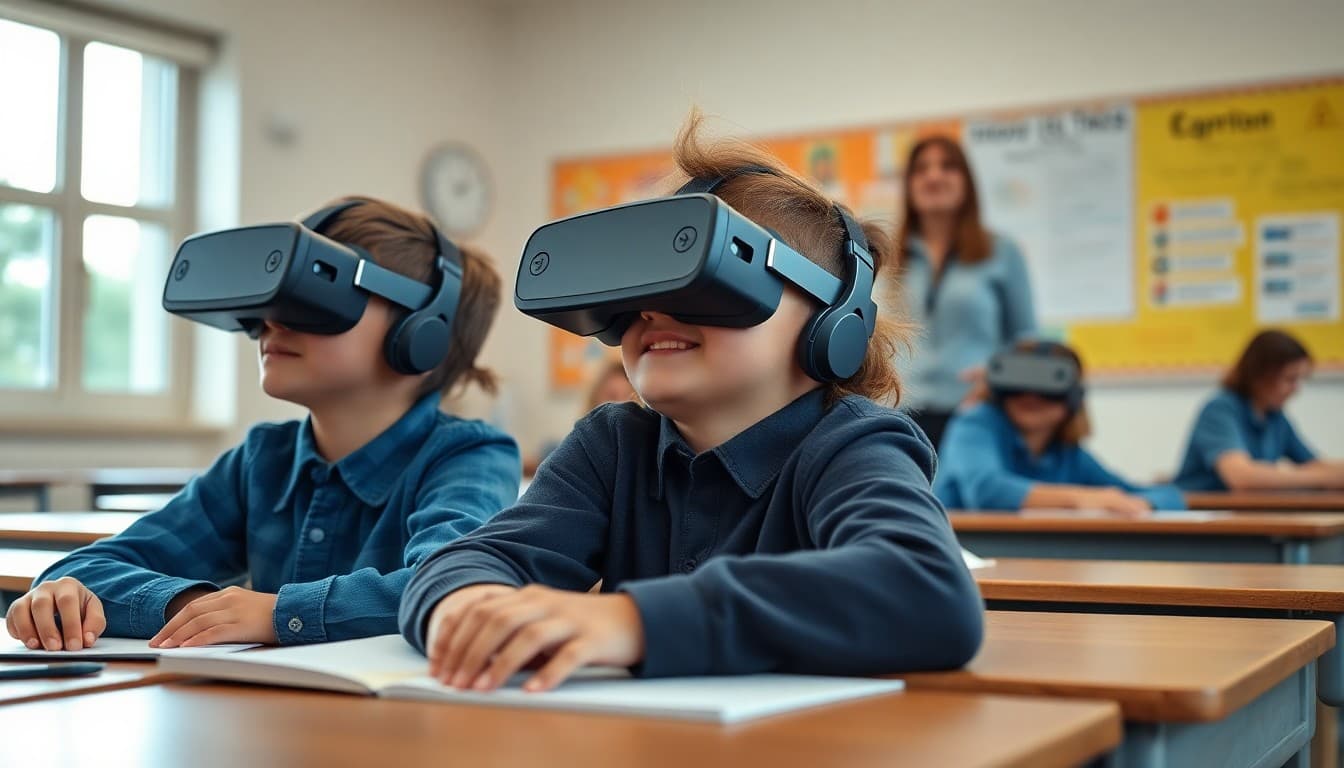
Virtual Reality Classroom Newsletter: Immersive Learning Updates
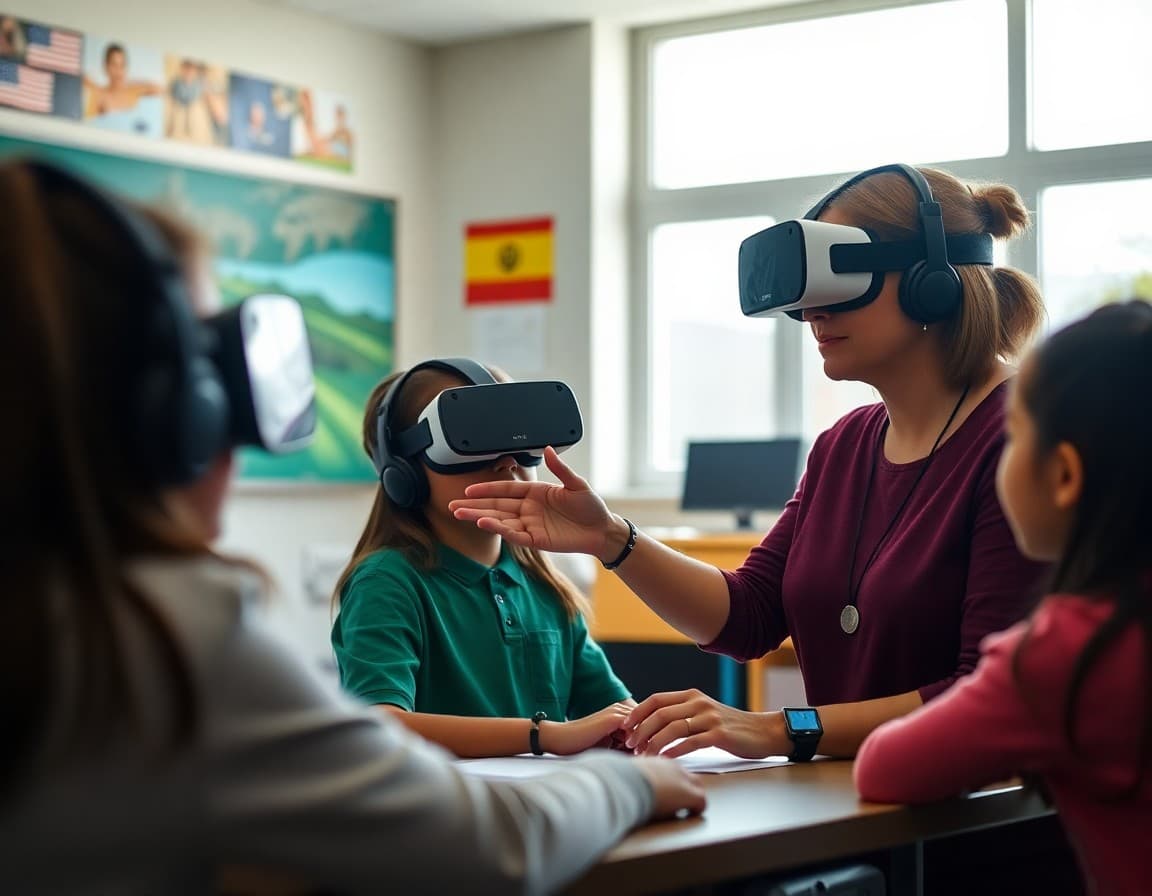
Virtual reality in the classroom turns abstract curriculum content into something students can stand inside of. A student who has virtually walked the streets of ancient Pompeii remembers more than one who read about it in a textbook. A family newsletter about your school's VR program explains what students experience, why the school invested in the technology, and how these immersive experiences connect to the curriculum goals that drive academic performance.
What VR Looks Like in a School Classroom
Unlike the portrayal of VR in consumer gaming, classroom VR is typically brief, structured, and teacher-directed. A VR session in a sixth grade social studies class might last 15 minutes, during which students use headsets to virtually walk through the ruins of Ancient Rome while the teacher provides narration and asks questions. In a biology class, students might explore a 3D model of a human heart, rotating it and zooming in on specific structures. In elementary school, students might take a virtual field trip to a coral reef as part of an ocean ecosystems unit. The technology serves the lesson. The lesson does not exist to use the technology.
Why Immersive Learning Works
Research on embodied cognition suggests that learning experiences that engage the body and spatial sense are processed and retained differently than text-based instruction. A 2019 study from PwC found that VR learners were four times more focused than e-learners and retained information 75 percent more effectively than classroom instruction alone. While most of that research focused on adult learners, the principle applies to K-12 students: experiences that engage multiple senses create stronger memories. VR is one way to deliver that kind of experience within a standard school schedule without a physical field trip.
Health and Safety Considerations
Many families have questions about the safety of VR headsets for young students, and those questions are worth addressing directly. Most headset manufacturers recommend against extended use by children under 12. Schools that use VR responsibly limit sessions to 20 to 30 minutes and monitor students for signs of motion sickness or eye strain. Students who feel dizzy or uncomfortable are encouraged to remove the headset immediately. Teachers conduct brief pre-VR briefings to set expectations and give students permission to opt out of any experience without penalty. If your school has specific age or session length guidelines, state them clearly in your newsletter.
What Subjects Benefit Most From VR
VR has the highest educational impact in subjects where physical presence matters. Social studies and geography benefit enormously: students can visit geographic locations and historical sites that are impossible to reach on a school budget. Science benefits from 3D visualization of objects and systems that are too large (the solar system), too small (cell biology), or too dangerous (chemical reactions) to observe directly. Literature classes have used VR to recreate the settings of novels being studied, giving students a spatial understanding of the world a character inhabits. Art history classes can visit virtual museum galleries. The common thread is that VR makes the inaccessible accessible.
Sample Template Excerpt
Here is a section you can adapt for your own newsletter:
Introducing VR Experiences in Our Classrooms
This year, students in grades 4-8 will have access to virtual reality experiences as part of several curriculum units. Here is what that means for your child.
What they will do: Students use headsets in 15-20 minute guided sessions as part of specific lessons. This month, fifth graders are using VR to explore the ecosystems of the Amazon Basin as part of their geography unit.
What we do for safety: We limit session length, monitor all students during use, and give every student the option to participate using a tablet view instead of a headset. No student is required to wear a headset.
What you can do at home: Ask your child what they saw and experienced. "What was the most surprising thing you saw?" is a better question than "What did you learn?" Most students will remember specific vivid details that open up a deeper conversation about the curriculum content.
Addressing the Cost Question
Families sometimes wonder whether money spent on VR headsets is better used elsewhere. It is a fair question. Address it honestly. Your school's VR program was funded by a specific source, whether that is a technology grant, district bond, federal funding, or a community donor. The specific budget allocation and the evidence base for the investment are worth sharing. Schools that explain their technology decisions in terms of learning outcomes and responsible funding build more community trust than schools that introduce new technology without context.
The Long-Term Skill Building Behind VR Experiences
Beyond the specific content of each VR lesson, using VR in school builds technology fluency that extends beyond the classroom. Students learn to navigate three-dimensional digital environments, which is increasingly relevant in architecture, engineering, medicine, and many other fields. They practice spatial reasoning in an immersive context. They experience technology as a learning tool rather than just an entertainment device. These broader outcomes are worth naming in your newsletter alongside the specific curriculum connections, because they help families see VR as preparation for a technological world rather than a novelty.
Get one newsletter idea every week.
Free. For teachers. No spam.
Frequently asked questions
How are schools using virtual reality in the classroom?
Schools use VR primarily for virtual field trips, immersive historical and geographic exploration, science simulations, and empathy-building experiences. Students can walk through ancient Rome, explore the surface of Mars, or stand inside a functioning cell. Platforms like Google Expeditions, Nearpod VR, and CoSpaces Edu are common in K-12 settings. Most classroom VR use is brief and purposeful rather than extended sessions, given equipment availability and the documented effects of extended headset use on younger students.
Is VR safe for elementary and middle school students?
Most VR headset manufacturers recommend against extended use by children under 12 and advise limiting sessions to 20 to 30 minutes with breaks. Schools that use VR responsibly design short, focused experiences rather than extended immersive sessions. The main concerns are eye strain, disorientation, and in rare cases motion sickness. Teachers monitor students for discomfort during VR experiences. If your school uses VR, your newsletter should address these concerns directly so families understand what precautions are in place.
What curriculum standards does VR address?
VR is most valuable as an enhancement to existing curriculum, not a standalone subject. A geography lesson on the Amazon rainforest is more memorable when students can virtually walk through it. A history unit on World War I trench warfare has deeper impact when students can stand in a simulated trench. The curriculum standards addressed are the same as the underlying lesson: geographic concepts, historical understanding, scientific observation. VR adds experiential depth but does not replace direct instruction.
How do schools fund VR equipment?
VR programs in K-12 schools are typically funded through grants, technology bonds, ESSER funds, or Title IV-A funding which supports well-rounded educational opportunities including technology programs. Some districts start with a single shared VR cart that rotates between classrooms rather than individual classroom sets. Partnerships with local businesses or community foundations have also funded equipment in some districts. Your newsletter can briefly explain how your school's VR program is funded if families are curious about costs.
Can Daystage help schools communicate about new technology programs like VR?
Yes. When a school introduces a new technology program like VR, the initial family communication sets the tone for how the community perceives the investment. Daystage makes it easy to send a well-designed newsletter with photos of students using the technology, an explanation of what it does educationally, and answers to the questions families are most likely to ask. A strong introduction newsletter builds excitement and reduces the concern that the school is spending on gadgets rather than learning.

Adi Ackerman
Author
Adi Ackerman is a former classroom teacher and curriculum writer with 8 years in K-8 schools. She writes about school communication, parent engagement, and what actually works in real classrooms.
More for Technology
Ready to send your first newsletter?
3 newsletters free. No credit card. First one ready in under 5 minutes.
Get started free