
School Phone Ban Newsletter: Communicating a No-Phone Policy to Families

A phone ban is one of the school policy changes most likely to generate immediate parent pushback. Families have real concerns about emergency contact, their child's access to transportation apps, and whether they are being shut out of their child's day. A newsletter that anticipates those concerns and addresses them directly, before families have a chance to form the objections fully, gives the policy the best chance of gaining community support.
This guide covers how to structure a phone policy newsletter, what to include on enforcement methods, how to handle the emergency contact question families always raise, and how to use the research backing the policy without turning the newsletter into an academic paper.
Lead with the why, not the what
Families are more likely to accept a restriction they understand the rationale for than one that feels arbitrary. Start your newsletter with a clear, direct statement of what the school observed or what the research shows, not with the policy rules.
Something like: "Phone use during the school day has contributed to increased distraction in classrooms, lower engagement during lunch and passing periods, and a documented increase in social conflict among students who monitor each other's social media activity in real time. Effective [date], we are implementing a no-phone policy during school hours to address these patterns directly." That opening is specific enough to be credible and honest enough to avoid sounding like administrative boilerplate.
The enforcement method: explain it precisely
Families need to know exactly how the policy is enforced before their child walks in with a phone. The range of enforcement options schools use includes:
- Yondr pouches. Students lock their phone in a magnetic pouch at the start of the day and carry the locked pouch with them. It unlocks at a release station at dismissal. The phone is physically present but inaccessible. Explain this clearly because many families have not heard of this system.
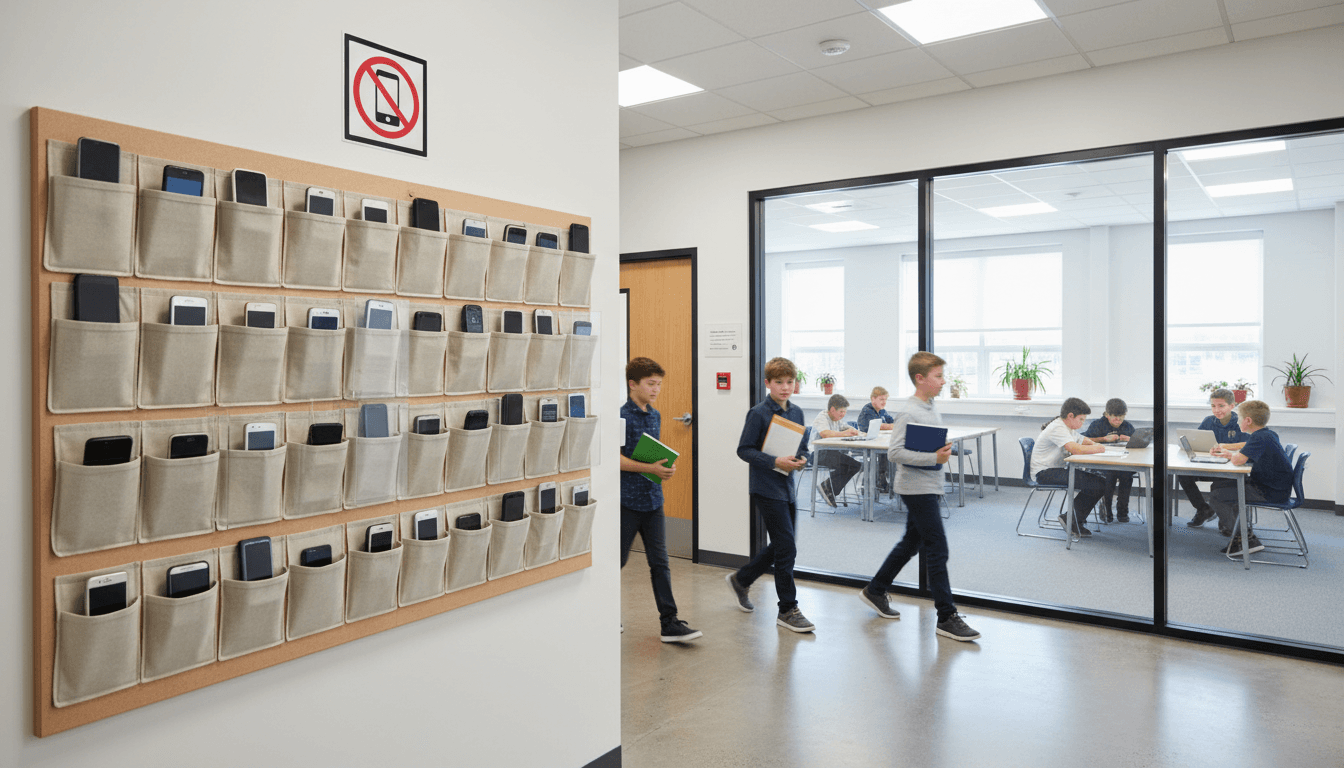
- Lock box or cubby storage. Phones are collected at the start of the school day and returned at dismissal. Students do not carry them during the day.
- In-backpack, off policy. Phones may come to school but must remain off and in the student's bag. Students are responsible for compliance. First violation results in a warning, subsequent violations result in confiscation.
Whichever system you use, describe it in operational detail. Families should not have to guess what happens to the device, who handles it, and how it is stored.
Emergency contact: the objection every family will raise
Address this directly in its own section. Families who fear they cannot reach their child in an emergency will resist any policy that puts a barrier between them and the phone. The reality is that schools had functioning emergency communication for decades before smartphones existed. State plainly how emergency contact works:
- The school office phone is answered during all school hours. Families can call to reach their child or pass a message.
- In a genuine emergency involving all students, the school will send emergency notifications through the established family communication system immediately.
- Students who experience a personal emergency during school hours can visit the office to use the phone or speak with an administrator.
Acknowledge the concern without dismissing it. Parents are not being unreasonable to want emergency access to their children. You are not eliminating that access, you are channeling it through a different path.
What the research actually shows
A growing body of research supports phone-free school environments, including studies showing improvements in academic performance, reduced anxiety, and improved peer relationships when students are not monitoring social media during the day. Reference one or two specific studies or name the source rather than making vague claims about "research shows." A link to a credible summary for families who want to read more is more useful than a dense in-newsletter citation.
Be honest about what the evidence does not show. Phone bans are not a cure for all behavioral issues or mental health challenges. Saying that builds more credibility than overselling the policy.
What happens if the policy is violated
Spell out the consequence ladder before the policy goes live. First violation, second violation, escalation to parent contact, and what happens if a student refuses to comply. Families who know the consequences in advance are better positioned to have conversations with their children and less likely to dispute a consequence as unfair when it occurs.
Managing family pushback
Some pushback is inevitable. Your newsletter should include a feedback channel: a specific email address or form where families can submit questions or concerns in writing. This accomplishes two things. It gives concerned families a constructive outlet rather than a hallway confrontation, and it gives administrators a record of family concerns that can inform policy refinements.
Commit to a timeline for reviewing family feedback and communicating any policy adjustments. Families who feel heard are far more cooperative than families who feel ignored, even when the policy itself does not change.
Implementation timeline
Give families adequate notice before the policy takes effect. Two to three weeks is reasonable for a moderate policy change. For a full Yondr or lockbox program, a month gives families time to prepare their children for the transition and address the emotional side of a significant routine change, especially for older students who have used phones freely during school for years.
Get one newsletter idea every week.
Free. For teachers. No spam.
Frequently asked questions
When should schools communicate a phone ban policy to families?
Give families two to three weeks notice before a moderate phone policy takes effect. For a full Yondr pouch or lockbox program, a full month is appropriate. Students who have used phones freely during school for years need time to adjust emotionally, and families need time to prepare their children for a significant routine change before day one.
What should a school phone ban newsletter include?
Lead with the specific reasons the policy is being implemented, then explain the exact enforcement mechanism in operational detail. Address emergency contact alternatives in its own section before families have to ask. Include the full consequence ladder, the feedback channel for family concerns, and reference to one or two specific studies so the policy feels evidence-based rather than arbitrary.
How should schools explain the emergency contact issue to families?
State plainly that the school office is answered during all school hours and that emergency notifications go through the established family communication system immediately. Acknowledge the concern without dismissing it: you are not eliminating family access to their children, you are routing it through a different channel. Families who feel heard on this point cooperate far more than families who feel dismissed.
What are common communication failures around school phone ban policies?
The most common mistake is leading the newsletter with the policy rules rather than the rationale. Families who do not understand why a restriction exists will resist it regardless of how clearly it is explained. A second failure is not describing the enforcement method in enough detail, which leaves families uncertain whether their child's phone is collected, locked, or simply trusted to stay in a bag.
How can schools use Daystage to manage phone policy communication and family feedback?
Schools using Daystage can include a direct feedback link in the phone ban newsletter so concerned families have a constructive outlet rather than a hallway confrontation. A dedicated newsletter send for a policy change also gives administrators a record of open and read rates, which helps gauge whether the communication actually reached the families who needed it before the policy went live.

Adi Ackerman
Author
Adi Ackerman is a former classroom teacher and curriculum writer with 8 years in K-8 schools. She writes about school communication, parent engagement, and what actually works in real classrooms.
More for Technology
Ready to send your first newsletter?
3 newsletters free. No credit card. First one ready in under 5 minutes.
Get started free