

Klaviyo for School Newsletters: Built for E-Commerce, Not for Teachers
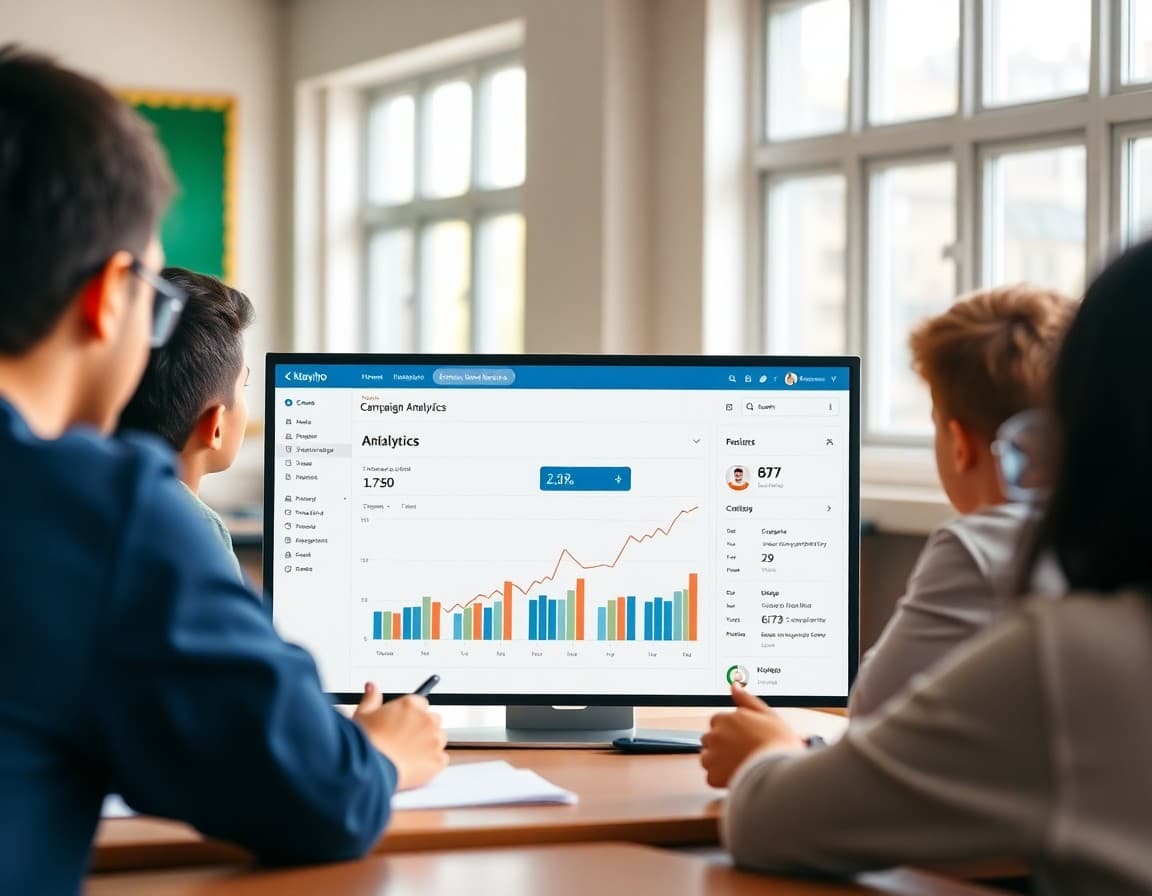
Klaviyo is one of the most capable email marketing platforms in the market for the use case it was built for: e-commerce. Its segmentation, behavioral automation, and revenue tracking make it genuinely powerful for online retailers. When school districts look at it for parent newsletters, they are usually attracted by Klaviyo's reputation for deliverability and sophisticated automation. What they find is a tool designed so specifically for retail that adapting it for school communication requires working against the grain of the entire platform.
What Klaviyo Is Actually Built For
Klaviyo's design centers on e-commerce data. It integrates natively with Shopify, WooCommerce, and other online retail platforms. Subscriber profiles in Klaviyo store retail attributes: products purchased, abandoned carts, website browsing history, total spend, and predicted customer lifetime value. Flows, which is Klaviyo's term for automation sequences, are triggered by shopping events: a purchase, a cart abandonment, a product view. The analytics dashboard shows revenue generated per campaign, revenue per recipient, and return on investment. For an online retailer, this is exactly the data that matters. For a school sending a weekly classroom update, none of these categories exist or apply.
The Cost Structure Does Not Fit School Budgets
Klaviyo prices its service at rates that make sense for businesses where email drives measurable revenue. A retailer who sends a campaign that generates ten thousand dollars in sales can justify a hundred-dollar-per-month email platform cost easily. A school that sends a weekly newsletter informing families about upcoming events and homework does not measure success in revenue. There is no revenue to offset the platform cost. Schools that evaluate Klaviyo based on its feature set often find the pricing unsustainable when they calculate the annual cost against their communications budget. At 5,000 contacts, Klaviyo costs around twelve hundred dollars per year. Most school-specific newsletter platforms cost significantly less for equivalent or superior school communication functionality.
The Interface and Terminology Mismatch
Every interaction in Klaviyo assumes you are managing customer relationships for a business. Contacts are referred to in retail customer terms. Segments are built using shopping behavior attributes. The campaign creation flow prompts you for information that does not exist in a school context. Even setting up a basic list and sending a newsletter requires navigating around a system that keeps asking for data you do not have. Teachers and school administrators who are not email marketing professionals find this interface confusing and frustrating. The learning curve is not simply unfamiliarity with a new tool. It is friction created by design assumptions that fundamentally do not match the school use case.
Klaviyo's Deliverability Reputation
One genuine advantage Klaviyo has is excellent email deliverability. The platform maintains strong IP reputation and has sophisticated tools for list hygiene and engagement management. Schools that are experiencing deliverability problems with another platform and are evaluating alternatives might notice Klaviyo's deliverability reputation. However, deliverability issues for school newsletters are almost always caused by email authentication problems, poor list hygiene, or inadequate technical setup rather than the sending platform itself. Fixing authentication and list hygiene on a school-appropriate platform will achieve equivalent deliverability results without the cost and interface mismatch that Klaviyo brings.
When Klaviyo Makes Sense in a School Context
There is one legitimate school use case for Klaviyo: schools that run an e-commerce component alongside their education function. A school store, a fundraising merchandise operation, a ticketing system for school events that involves online purchases. If your school organization has a genuine retail component and already uses Klaviyo for that purpose, extending it to parent newsletters is possible and might be worthwhile for operational consolidation. But this is a specific edge case, not a general school newsletter recommendation.
What Schools Actually Need From an Email Platform
The features that matter for school newsletters are direct inbox delivery, mobile-responsive templates, subscriber list management with school-appropriate grouping, open and click tracking, and enough automation to send welcome emails to new subscribers. Some schools also need embedded forms, event RSVPs, and grade-level segmentation. None of these require an e-commerce platform. They require an email tool built with school communication in mind. Daystage addresses these needs directly. So do several other platforms. Klaviyo does not, despite being capable in the contexts it was designed for.
The Bottom Line
Klaviyo is an excellent tool for what it was designed to do. School newsletters are not that thing. The combination of pricing designed for revenue-generating businesses, interface assumptions built around retail customer data, and features centered on shopping behavior makes Klaviyo a poor fit for school family communication. Recognizing when a powerful tool solves a different problem than the one you have is part of making good technology decisions. For school newsletters, choose a tool that knows what a classroom is.
Get one newsletter idea every week.
Free. For teachers. No spam.
Frequently asked questions
Can schools use Klaviyo for parent newsletters?
Schools can technically use Klaviyo for email newsletters, but Klaviyo is designed specifically for e-commerce businesses. Its features, terminology, and pricing model are built around online retail use cases: product recommendations, abandoned cart sequences, purchase-triggered flows, and revenue attribution. None of these features apply to school communication. Schools using Klaviyo for parent newsletters are paying for a sophisticated e-commerce engine they will never use while working around a platform interface designed for a completely different context.
Is Klaviyo free for schools?
Klaviyo has a free plan for up to 250 contacts and 500 emails per month. This is far too limited for most schools. Paid plans are priced for e-commerce businesses and become expensive as lists grow. At 1,000 contacts, Klaviyo costs around twenty dollars per month. At 5,000 contacts, around a hundred dollars per month. These prices are designed for businesses where email marketing drives significant revenue that justifies the cost. For schools where the budget does not scale with email list size, Klaviyo is an expensive choice.
Why do some school districts end up looking at Klaviyo?
Klaviyo gets noticed in school district searches because it has strong brand recognition and excellent deliverability. Some districts that also run a school store or fundraising e-commerce operation encounter Klaviyo in that context and consider extending it to parent newsletters. This consolidation logic makes sense on paper but runs into the platform mismatch in practice. The features a school needs for parent communication and the features an e-commerce store needs for customer marketing are almost entirely different.
What makes Klaviyo particularly unsuited for school newsletters?
Klaviyo's interface is built around products, purchase data, and customer lifetime value. The subscriber profile concept is built around retail customer attributes. Flows and sequences are designed around shopping behavior triggers. Setting up a simple weekly parent newsletter in Klaviyo requires navigating a system that constantly prompts you for e-commerce data you do not have. There is no concept of a classroom, a school year, grade levels, or teacher-family relationships. The mismatch is not a minor inconvenience. It is a fundamental design assumption difference.
How does Daystage compare to Klaviyo for school newsletters?
Daystage is built for school communication. It understands classrooms, school years, family relationships, and the specific types of content teachers send to families. The interface makes sense to teachers on day one without adaptation. Klaviyo requires significant adaptation to approximate what Daystage does natively. For school newsletters specifically, Daystage is the purpose-built tool and Klaviyo is a borrowed one.

Adi Ackerman
Author
Adi Ackerman is a former classroom teacher and curriculum writer with 8 years in K-8 schools. She writes about school communication, parent engagement, and what actually works in real classrooms.
More for Technology
Ready to send your first newsletter?
3 newsletters free. No credit card. First one ready in under 5 minutes.
Get started free