

Superintendent Newsletter: Holiday Message to the Community
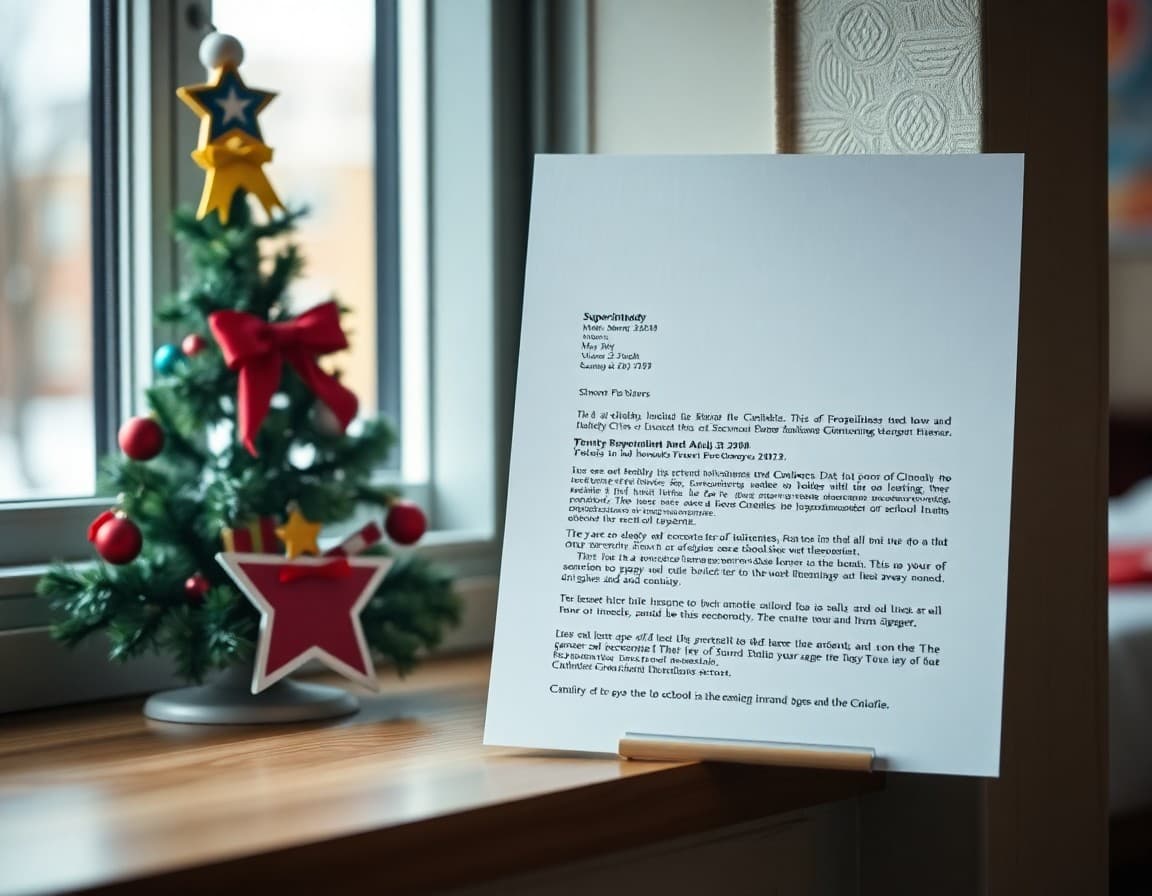
A holiday message is one of the few superintendent communications that is not driven by an urgent decision or a problem to manage. Its purpose is simpler: to acknowledge families and staff, reflect on the work of the semester, and send the community into the break feeling connected to their schools. Done well, it is one of the most read newsletters a superintendent sends all year. Done with a template and no personal voice, it is immediately forgotten.
Open With Something Real and Specific
The worst holiday messages open with "As we approach the holiday season..." Start with something specific you observed this semester. A student moment, a school visit that stood out, a teacher story, or an achievement the community may not have seen. "Earlier this month, I visited Jefferson Elementary and watched 28 kindergartners perform their end-of-semester poetry readings. I have been doing this for 22 years and I was still genuinely moved." That opening tells families that this letter comes from a real person who was paying attention, not a communications team filling a template.
Acknowledge What the Community Went Through Together
Every semester has moments of challenge alongside the celebrations. If the district went through something difficult this semester, a brief, genuine acknowledgment belongs in the holiday message. A community that faced a difficult budget process, a school closure decision, or a crisis earlier in the year will notice if the holiday message pretends those things did not happen. Acknowledging the difficulty alongside the good shows a superintendent who sees the full picture of community life.
Celebrate Something Specific From the Semester
Name one or two specific achievements or moments from the semester that are worth celebrating: a graduation rate improvement, a grant award, a community partnership that started strong, or a school that did something remarkable. These specific mentions make the message feel like a genuine year-in-progress reflection rather than a generic holiday greeting. Families who see their school or their community mentioned in a district-level communication feel seen in a way that matters.
Thank the People Who Deserve It
Thank teachers and staff specifically. Not in a generic way but in a way that names what they are doing: "Thank you to every teacher who showed up every day with patience and care for students even when the work was hard" is more personal than "we are grateful for our staff." Thank families for their partnership. Thank community members who volunteer, attend meetings, or advocate for the schools. Holiday messages that feel grateful rather than transactional build connection in ways that other newsletters cannot.
A Sample Holiday Message Paragraph
Here is a tone and structure that works for a holiday message:
We have had a full semester in this district. Our third-grade reading proficiency rose for the third straight year. Our high school opened a new performing arts wing that I know many of you had worked toward for a long time. We also made a difficult decision about the Jefferson building that we know was painful for that community, and we appreciate the grace with which those families have approached the transition. What I want you to know above all is this: the work your children do every day, and the work their teachers do alongside them, is remarkable. I am grateful to be part of a community that takes education this seriously. Please enjoy the break. Rest well. And we will see your children on January 6.
Include the Practical Logistics Briefly
Note the last day of school before the break and the return date. If there are any important reminders about break programs, meals, or enrollment actions due in January, include them briefly. Families who receive a holiday message that also contains one or two logistical reminders appreciate the efficiency. Keep it to a short bulleted list so it does not dominate the tone of the letter.
Close With a Personal Sign-Off
Sign the holiday letter personally, not as "The District Communications Team" or "On behalf of the Board." A superintendent's holiday message should feel like it comes from a person who knows and cares about this community. Sign with your name, your title, and a personal line: "With appreciation for the privilege of serving this community." Families who receive a genuine personal sign-off read the letter differently than those who see an institutional sign-off that could belong to any district newsletter.
Keep It Short
A holiday message that runs longer than 400 to 500 words stops feeling like a greeting and starts feeling like a report. Give yourself permission to be brief. A short letter that is warm and specific is more memorable than a long one that tries to cover everything the district accomplished in the semester. The end of the year will bring an annual report. The holiday message is for connection, not for accountability. Honor that difference in how you approach the length.
Get one newsletter idea every week.
Free. For teachers. No spam.
Frequently asked questions
Should a superintendent send a holiday message newsletter?
Yes. A thoughtfully written holiday message at the winter break is one of the few superintendent communications that is not driven by a problem or a decision. It is an opportunity to acknowledge the community, reflect on the school year so far, and send families into the break feeling connected to their schools. A superintendent who only communicates when there is news or a crisis misses the relationship-building value of this kind of seasonal touchpoint.
How do you write a holiday message that is inclusive of all religious and cultural backgrounds?
Focus on the shared meaning of the season: rest, reflection, time with family, and gratitude for the year's work. Reference the school break as a time for students and staff to recharge. Avoid language tied to a specific religious tradition. 'Wishing you and your family a peaceful, restful holiday season and a healthy new year' is warm and inclusive. 'Merry Christmas' is not appropriate for a district serving families of diverse faith backgrounds.
What should a superintendent holiday newsletter include?
A brief reflection on the school year to date including a meaningful highlight, acknowledgment of families and staff, a warm personal note, important dates for the break including when school resumes, and any end-of-year logistics families should know about. Keep it shorter than a typical newsletter. A holiday message that runs 1,000 words feels like a report, not a greeting.
How do you make a holiday message feel personal rather than formulaic?
Include one specific observation from the semester: a moment you witnessed at a school, a student achievement that moved you, a staff member who went above and beyond. Specific personal observations are what distinguish a genuine message from a template. Families can tell the difference between a letter a superintendent wrote and one a communications team wrote with the superintendent's name at the bottom.
What platform makes it easy to send a holiday message to all district families at once?
Daystage is ideal for this kind of warm, formatted community message. You can include a photo of the superintendent, add seasonal design elements, and reach every family in the district simultaneously with a message that feels personal and professionally presented.

Adi Ackerman
Author
Adi Ackerman is a former classroom teacher and curriculum writer with 8 years in K-8 schools. She writes about school communication, parent engagement, and what actually works in real classrooms.
More for Superintendent
Ready to send your first newsletter?
3 newsletters free. No credit card. First one ready in under 5 minutes.
Get started free