
Superintendent Newsletter: Our Community Partnership Update
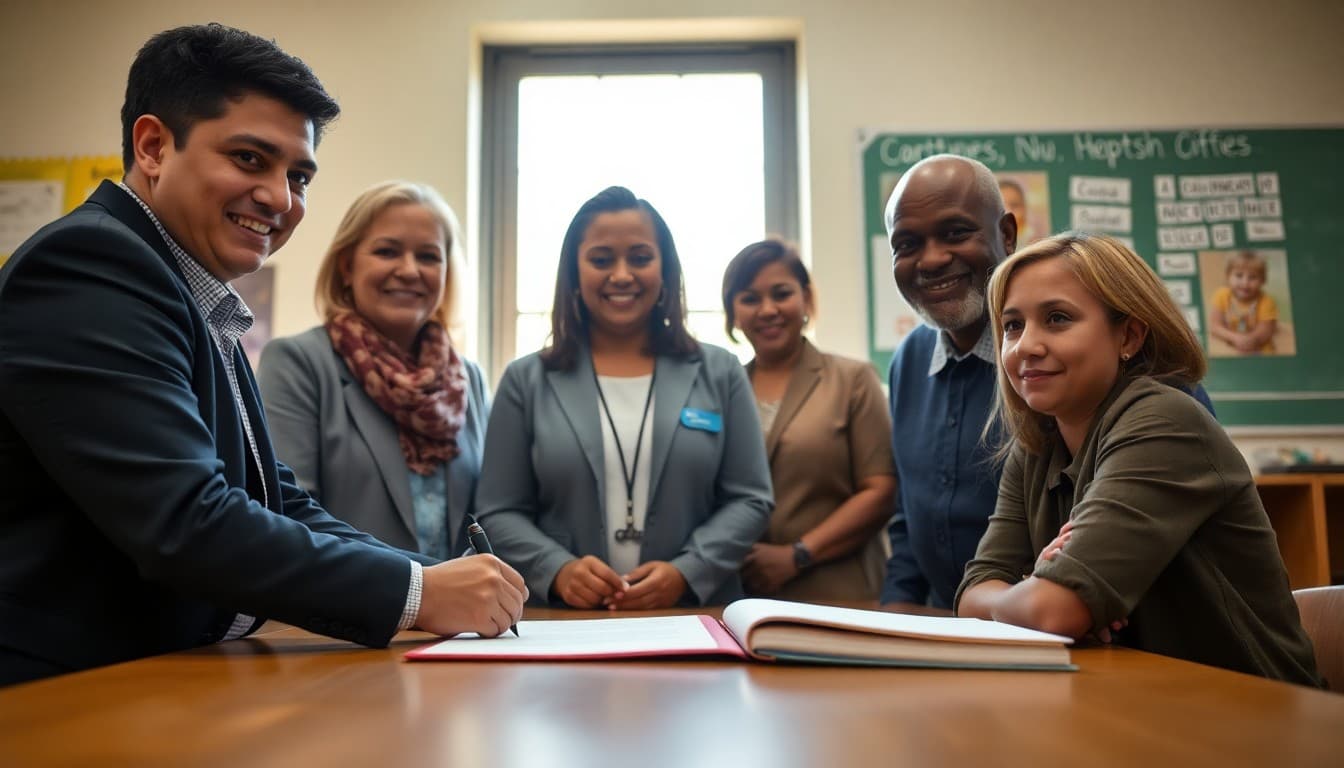
School districts cannot serve students well in isolation. The organizations, businesses, nonprofits, and community groups that partner with a district to extend its reach and resources are part of the educational infrastructure that most families never see.
A superintendent newsletter that communicates the district's partnership portfolio gives families visibility into that infrastructure and builds broader community investment in education beyond the school walls.
Describe the partnership landscape
Open with a brief overview of how many community partnerships the district currently has and across what areas: health and mental health services, tutoring and enrichment, career pathways, arts programming, family support services. This overview gives families a sense of the scope before you focus on specific partnerships.
Highlight two or three partnerships in depth
Rather than listing every partner organization, choose two or three partnerships that are delivering significant value and describe them in meaningful detail. What does the partner provide? How many students does it serve? What outcomes has the partnership produced? Which schools does it operate in?
Depth beats breadth in this communication. Families who understand two partnerships well are more engaged than families who read a list of twenty names.
Quote the partner organization
Ask the partner organization for a brief statement about why they invest in the district and what they observe in the students they serve. A quote from a community partner's leader adds a perspective that the district newsletter cannot generate internally and reinforces that the partnership is genuinely mutual.
Tell families how to access partner services
If any of the district's community partnerships provide services that families can access directly, describe how. A health partner that runs a free clinic at a community school, a tutoring organization that has open enrollment for after-school programs, or a career mentoring program that high school students can join. Families who know how to access these resources are more likely to use them.
Invite new partnerships
Close by noting that the district actively seeks community partners who can extend its work. Give a contact for organizations interested in partnering. This framing positions the district as a proactive community institution, not a closed system.
Sample excerpt
"This year, our district works with 31 community partner organizations serving students across all 14 schools. Among the most impactful: Westside Community Health has operated a weekly health clinic at Lincoln Elementary for three years, providing free health screenings to more than 400 students annually whose families do not have regular access to pediatric care. United Way tutoring volunteers have logged over 1,200 hours of one-on-one reading support at four elementary schools this year. And our career mentorship program, run with the local Chamber of Commerce, has connected 68 high school juniors with professional mentors in their fields of interest. If your organization is interested in partnering with us, contact our partnerships coordinator at partnerships@ourdistrict.org."
Daystage delivers this partnership update to every family inbox across all district schools, ensuring that every family understands the broader community investment that supports their children's education.
Get one newsletter idea every week.
Free. For teachers. No spam.
Frequently asked questions
Why should a superintendent communicate about community partnerships in a family newsletter?
Families often do not know what partner organizations are working in their schools and what services they provide. Naming partners builds community understanding of the district's resource network and helps families connect to services they may not have known were available. It also acknowledges the work of organizations that invest in student success.
What makes a community partnership newsletter compelling rather than just a list of organizational names?
Describing what each partnership actually delivers for students. How many students are served? What specific service or program does the partner provide? What outcomes has the partnership produced? Names without context feel like a sponsor list. Context makes the partnerships feel real.
Should new partnerships be highlighted more than existing ones in an annual update?
Not necessarily. Long-standing partnerships that are consistently delivering results deserve recognition too. A partnership that has served students for five years with measurable impact is often more valuable than a new one that has not yet been fully tested. Balance novelty with substance.
How do you handle a situation where a community partnership did not deliver on its commitments?
Do not feature it in the newsletter. Partnerships that are underperforming or have ended should be addressed through appropriate channels. The newsletter should reflect the partnerships that are genuinely delivering value to students.
How does Daystage support partnership announcement communication to all district families?
Daystage delivers the partnership newsletter directly to every family inbox, ensuring that families across all schools learn about the resources available through the district's partner network. For partnerships that involve services families can access directly, getting that information to inboxes rather than buried on a website dramatically increases uptake.

Adi Ackerman
Author
Adi Ackerman is a former classroom teacher and curriculum writer with 8 years in K-8 schools. She writes about school communication, parent engagement, and what actually works in real classrooms.
More for Superintendent
Ready to send your first newsletter?
3 newsletters free. No credit card. First one ready in under 5 minutes.
Get started free