

Teacher Newsletter for Spanish Unit Introductions: Preparing Families for New Spanish Learning
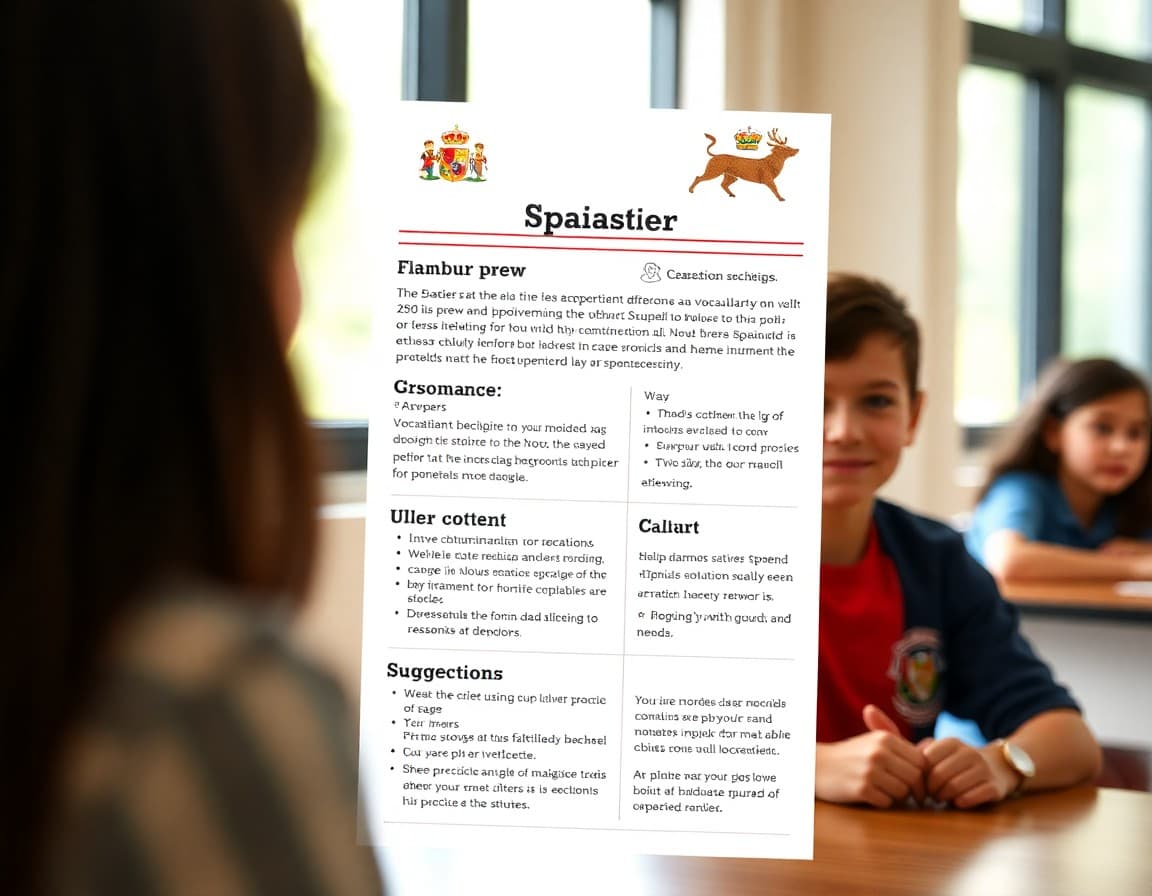
Language Learning Requires Practice Outside Class
Students who practice Spanish only during class periods develop language skills more slowly than those who use the language outside school as well. The most effective way to acquire a language is through repeated encounters across different contexts. A newsletter that gives families a specific at-home practice suggestion, one that does not require the family to speak Spanish, creates one more context for the language to live in during the week. The difference between ten encounters with a word and two encounters is the difference between retention and forgetting.
What This Spanish Unit Covers
Spanish units are organized around vocabulary themes, grammar structures, and cultural content, all of which advance the student's ability to communicate in specific real-world situations. A unit might cover the vocabulary for describing family relationships, the grammar structures for making comparisons, and the cultural content of family traditions in a specific Spanish-speaking community. A newsletter that names all three components gives families the complete picture of what their student is learning to do with the language, not just the words they are memorizing.
The Grammar Structure of This Unit
Every language unit introduces specific grammar structures that students must internalize to produce accurate sentences. Spanish grammar differs from English in ways that require active learning rather than intuitive transfer. Noun gender, verb conjugation patterns, and pronoun placement all require deliberate practice. A newsletter that names the specific grammar structure for the current unit and explains what it governs, "this unit introduces the preterite tense, which is used for completed past actions," gives families enough background to ask their student meaningful questions about what they are learning.
Cultural Content: The People Behind the Language
Spanish is spoken by nearly 500 million people across more than 20 countries, each with distinct traditions, foods, arts, and histories. A newsletter that names the cultural community or region the current unit's cultural content comes from, whether it is Mexican folklore, Argentine literature, Caribbean music, or Spanish cinema, gives families a context beyond grammar. Families who share a cultural background connected to the unit content are invited to offer what they know; families who are encountering the culture for the first time have a reason to explore it together with their student.
Home Practice That Works
The most effective home practice is low-stakes, frequent, and oral. Five minutes of vocabulary recall practice every day produces better retention than thirty minutes of list review on the night before a quiz. Asking students to label objects in the home with vocabulary Post-it notes, to describe their day using Spanish vocabulary they have learned, or to teach a family member three Spanish words before dinner creates the repetition that language acquisition requires. A newsletter that names a specific practice activity for the current unit gives families something they can do without Spanish skills.
The Role of Errors in Language Learning
Language learning requires producing language before it is correct. Students who are afraid to make errors in Spanish speak less, practice less, and progress more slowly than those who accept errors as the normal path to fluency. A newsletter that explains this to families, and asks them to respond to their student's Spanish practice with encouragement rather than correction, helps create the low-stakes practice environment that language acquisition needs at home as well as in class.
Spanish Unit Communication Through Daystage
Spanish teachers who use Daystage for unit introduction newsletters give families the vocabulary, grammar context, and cultural content they need to support language learning at home. Regular, unit-specific newsletters transform Spanish from a class subject into a family learning experience, which is the kind of sustained engagement that language acquisition requires.
Get one newsletter idea every week.
Free. For teachers. No spam.
Frequently asked questions
What should a Spanish unit introduction newsletter include?
A Spanish unit introduction newsletter should describe the vocabulary theme and grammar structures the unit introduces, explain the cultural content and which Spanish-speaking community or region it represents, name the major assessment and what language skills it will measure, give families a specific home practice activity that requires no Spanish knowledge, and connect the unit to real-world contexts where students might encounter and use the language.
How can families support Spanish learning without speaking Spanish?
Families who do not speak Spanish can support language learning by asking their student to teach them five vocabulary words from the current unit, by playing a vocabulary recall game where the student gives the Spanish word for objects in the home, by watching a Spanish-language show or listening to Spanish music with their student, and by being encouraging about the natural errors that language learning requires. Emotional support for the learning process is as valuable as linguistic support.
Why is cultural content an important part of Spanish language units?
Language and culture are inseparable. Students who learn Spanish vocabulary without cultural context learn a language disconnected from the people who speak it. Cultural content in Spanish units teaches students what it means to greet someone in a Mexican family versus a Spanish family, how food traditions vary across Spanish-speaking regions, and why certain language choices carry different social meanings in different communities. Cultural understanding produces more effective and more respectful communication than vocabulary alone.
What grammar concepts do Spanish students commonly find challenging?
Spanish grammar challenges that commonly appear in language units include: gendered nouns and agreement (a student must learn not just the word but whether it is masculine or feminine), ser vs. estar (two verbs meaning "to be" used in different contexts), the subjunctive mood, and reflexive verbs. A newsletter that names the specific grammar challenge for the current unit helps families understand what their student is working through and why it is conceptually demanding.
What tool helps Spanish teachers send unit newsletters efficiently?
Daystage is built for school communication. Spanish and world language teachers use it to send formatted unit introduction newsletters with vocabulary previews, grammar explanations, cultural content descriptions, and home practice suggestions directly to parent email lists.

Adi Ackerman
Author
Adi Ackerman is a former classroom teacher and curriculum writer with 8 years in K-8 schools. She writes about school communication, parent engagement, and what actually works in real classrooms.
More for Subject Teachers
Teacher Newsletter for French Unit Introductions: Helping Families Support French Language Learning
Subject Teachers · 6 min read
Teacher Newsletter: Sharing World Language Resources That Families Will Actually Use
Subject Teachers · 6 min read
Teacher Newsletter About Duolingo in Class: What Families Need to Know When Language Apps Support Instruction
Subject Teachers · 6 min read
Ready to send your first newsletter?
3 newsletters free. No credit card. First one ready in under 5 minutes.
Get started free