

School Social Worker Newsletter: How to Communicate Resources and Support to Families
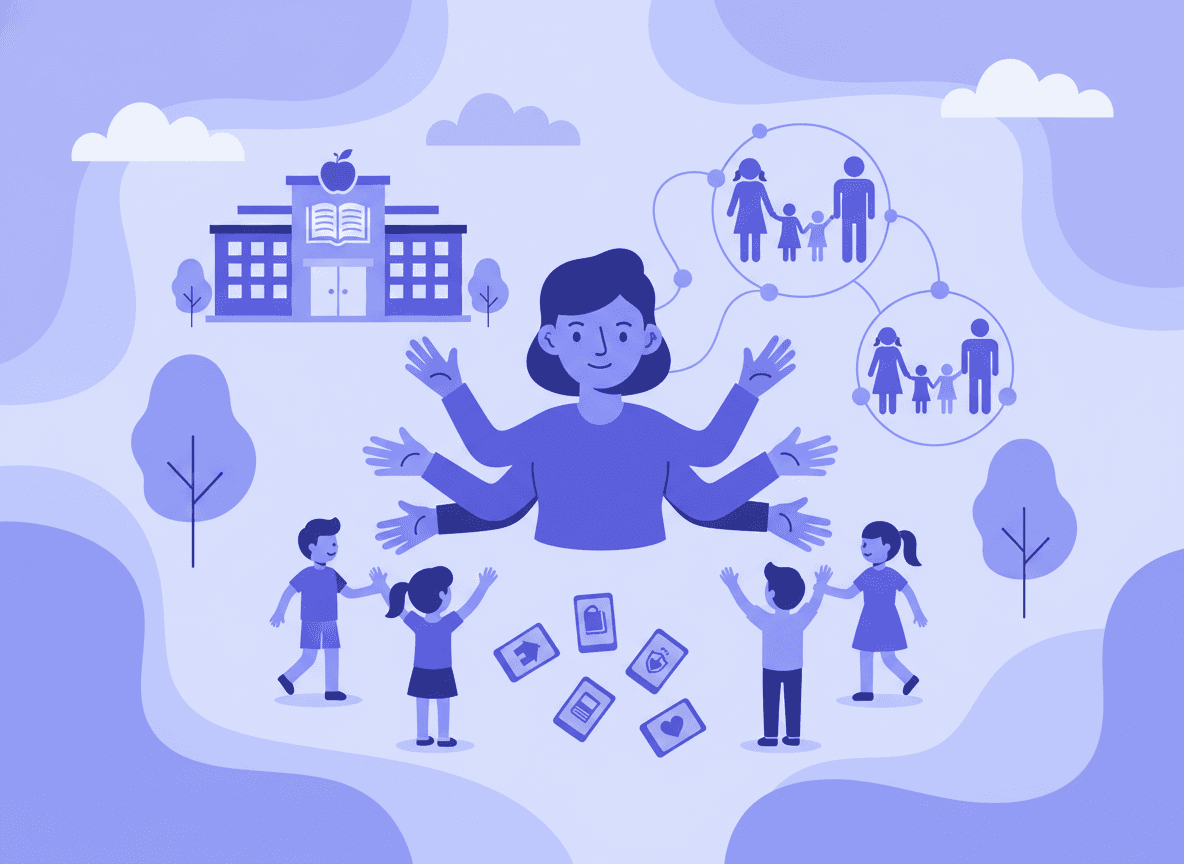
School social workers serve some of the most vulnerable families in the building. Many of those families have complicated relationships with school as an institution. They may have had negative experiences themselves, or they may feel judged or surveilled rather than supported. A consistent, warm newsletter from the school social worker can change that relationship over time, positioning the role as a resource rather than a threat.
This guide covers what to include in a school social worker newsletter, how to communicate about sensitive topics without alienating families, and how to use consistent communication to build the trust that makes your work possible.
The unique role of social worker communication
Social workers are often called in during a crisis. Families who first meet the social worker in a difficult moment may associate the role with judgment or investigation. A proactive newsletter that reaches families before any crisis establishes a different identity: a resource, a connector, and a support.
The families who are most likely to benefit from your services are also the ones least likely to reach out. They may not know what you do, they may be embarrassed to ask for help, or they may distrust institutions generally. A regular newsletter that is warm, practical, and non-judgmental is one of the most effective outreach tools you have.
How often to send a social worker newsletter
Monthly newsletters work well for most school social workers. Monthly communication is frequent enough to maintain presence and share timely resources without overwhelming families who are already managing a lot.
Consider supplementing the monthly newsletter with targeted one-off communications when community resources change, crisis services are needed, or a community event is coming up. Keep crisis communications separate and clearly flagged so families can quickly identify when something requires immediate attention.
What to include in a school social worker newsletter
- A social-emotional health topic for the month. Choose one topic that is seasonally relevant or connected to what students are experiencing. September might cover back-to-school anxiety. January might cover post-holiday adjustment. April might address testing stress. Write about the topic in practical, accessible language: what it looks like in children, what families can do, and when to seek extra support.
- Community resources families may not know about. Food banks, free mental health services, utility assistance, after-school programs, free dental clinics, domestic violence support lines: families who need these resources often do not know they exist or feel too embarrassed to ask. A newsletter that lists them matter-of-factly, without the recipient having to identify themselves as someone who needs help, removes a significant barrier. Include the name of the resource, what it provides, and a phone number or website.
- What the social worker does and how to connect. Many families do not know what a school social worker does or how to reach out. Include a brief section in each newsletter that describes your role and gives a clear way to contact you. "I am here to help families connect with resources, support students with social and emotional challenges, and assist during difficult family situations. Reach out to me at [email] or by calling the school office." That description, repeated monthly, gradually shifts how families perceive the role.
- Information about school-based support programs. Counseling services, attendance support, student assistance programs, food and clothing programs the school offers: if your school provides it, the newsletter is the right place to communicate it to the families who need it most.
- A reflection question or conversation prompt for families. Social-emotional health is built in conversations. A simple prompt families can use with their children is valuable. "Ask your child: what is one thing that felt hard this week, and one thing that felt good?" That kind of prompt is low-stakes, invites honesty, and helps parents check in without interrogating.
Writing about sensitive topics without shame or alarm
Social workers communicate about poverty, mental health, domestic instability, grief, abuse, and substance use. These are topics that carry stigma and can cause families to disengage if approached clumsily.
The tone that works across all of these topics: factual, non-judgmental, and focused on what families can do. "Many students experience grief at some point in their school years. Signs that a child may need extra support include changes in sleep, appetite, or behavior. I am available to talk with any family navigating a difficult loss." That framing is caring without being intrusive, and it is accessible to any family, not just the ones in crisis.
Avoid language that implies families should already know about a resource or should have asked for help sooner. The families who need the most support are often the ones who feel least entitled to ask for it. Your newsletter should make the ask feel easy, not shameful.
Building trust with the families who are hardest to reach
The families who do not respond to school communication, who miss conferences, and who do not answer phone calls are often the ones most in need of support. They have learned to be invisible because visibility has not historically worked out well for them.
A consistent newsletter does not immediately change that pattern, but over time it signals something. It says: this person communicates consistently, they are not only reaching out when there is a problem, and they share useful things without asking for anything in return. That pattern builds a kind of low-stakes trust that can, eventually, make a family willing to reach out.
Using Daystage for social worker outreach newsletters
School social workers often support multiple schools or a large school population with very limited administrative time. Daystage makes newsletter creation fast: draft in blocks, include resource links with the button block, and send to your whole school family list with one click.
If you work with a multilingual community, drafting a bilingual version of your newsletter in Daystage is straightforward. Reaching families in their first language is often the difference between a resource that reaches them and one that does not.
Proactive communication is the foundation of social work outreach
Social work is most effective when it happens before the crisis, not after. A newsletter that reaches every family every month, sharing resources and building trust, is one of the most scalable prevention tools you have.
The families who read your newsletter and find a resource they needed, or recognize the signs of stress in their child and reach out before a situation escalates, will never know that your newsletter was part of why things went well. But you will. Keep sending it.
Get one newsletter idea every week.
Free. For teachers. No spam.
Frequently asked questions
When should school social workers send newsletters to parents?
Monthly newsletters work well for most school social workers. Monthly communication is frequent enough to maintain presence and share timely resources without overwhelming families who are already managing a lot. Supplement with targeted one-off communications when crisis services are needed or major community resources change.
What should a school social worker newsletter include?
Choose one social-emotional health topic that is seasonally relevant (back-to-school anxiety in September, post-holiday adjustment in January). List community resources families may not know exist: food banks, free mental health services, utility assistance, after-school programs. Explain what the social worker does and how to connect. Highlight school-based support programs. Close with a simple conversation prompt families can use with their child this week.
How often should school social workers communicate with parents by newsletter?
Monthly is the recommended frequency. The newsletter's power is cumulative: families who do not need help now may need it in three months. A consistent monthly presence signals that this is a stable, approachable resource, not a crisis-only contact. Families who are hardest to reach often need the most support, and monthly communication builds the low-stakes trust that eventually makes outreach possible.
What are common mistakes school social workers make in parent newsletters?
Language that implies families should already know about a resource or should have asked for help sooner is the most damaging mistake. The families who need the most support often feel least entitled to ask. Writing in ways that make the ask feel shameful rather than easy directly reduces the effectiveness of the newsletter's outreach purpose.
What tool helps school social workers reach multilingual and low-resource families?
Daystage makes newsletter creation fast and lets you draft bilingual versions with minimal extra effort. For families navigating language barriers, reaching them in their first language is often the difference between a resource that lands and one that does not. The block editor lets you include community resource links directly via the button block so families can access help in one click.

Adi Ackerman
Author
Adi Ackerman is a former classroom teacher and curriculum writer with 8 years in K-8 schools. She writes about school communication, parent engagement, and what actually works in real classrooms.
More for Subject Teachers
Alternative Education Teacher Newsletter: Rebuilding Family Trust and Communicating Progress in Non-Traditional Settings
Subject Teachers · 6 min read
Fifth Grade Teacher Newsletter Guide: Preparing Families for the Middle School Move
Subject Teachers · 7 min read
Reading Specialist Newsletter: How to Communicate Literacy Intervention With Families
Subject Teachers · 7 min read
Ready to send your first newsletter?
3 newsletters free. No credit card. First one ready in under 5 minutes.
Get started free