

Newsletter for Your Statistics Unit: Connecting Math to Real Life for Parents
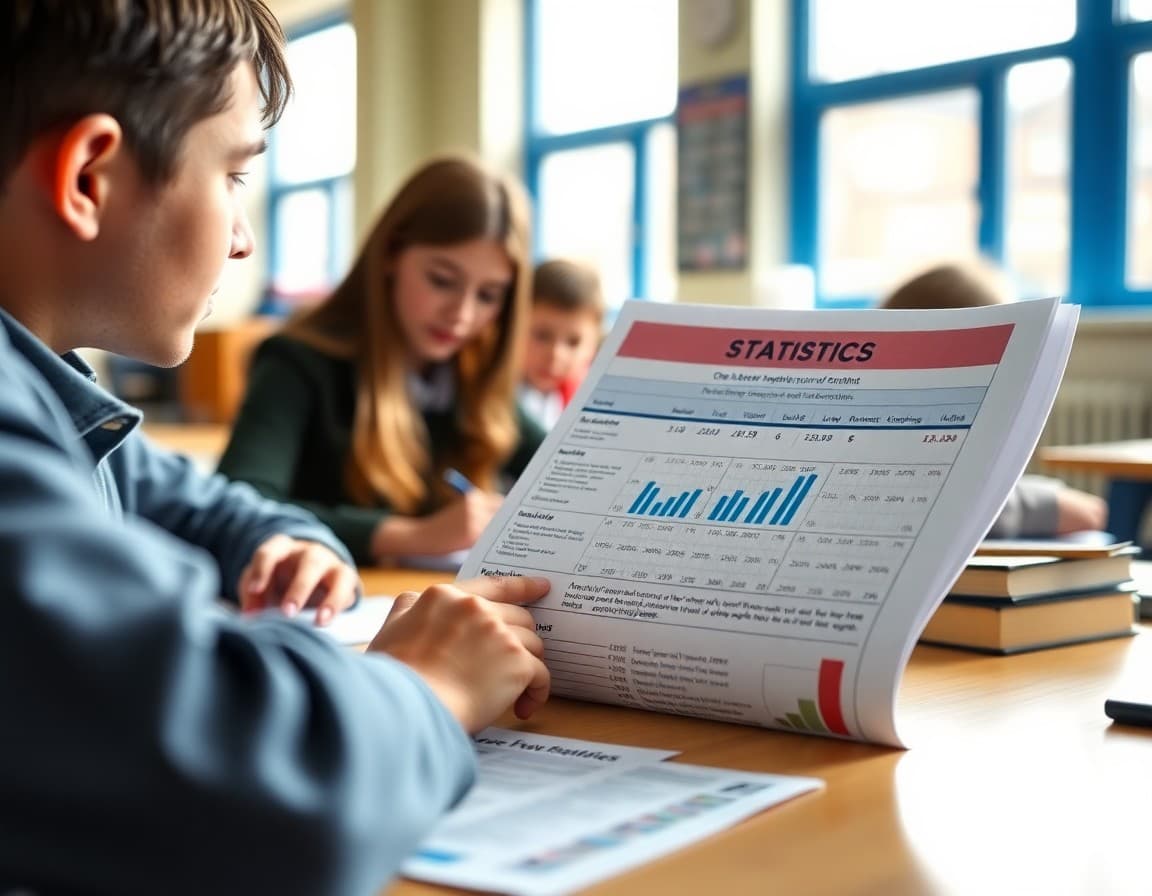
Statistics is arguably the most directly applicable unit students encounter in a mathematics class. The skills covered, reading data, understanding averages, evaluating probability, are used every day in news consumption, financial decision-making, and medical information. A parent newsletter for this unit has a natural advantage: the content is immediately relevant to adult life.
Why Statistics Matters More Than Most Parents Realize
Every poll, every news story with numbers in it, every medical study result, every sports statistic, and every financial projection requires statistical literacy to interpret correctly. Students who understand how data is collected, how averages can mislead, and what "statistically significant" actually means are better equipped to make informed decisions as adults. This unit is foundational to critical thinking in a data-saturated world.
Measures of Center: Mean, Median, and Mode
The mean (average) is found by adding all values and dividing by the count. The median is the middle value when data is sorted. The mode is the most frequently occurring value. These three numbers describe the center of a data set differently, and choosing the right one matters.
Example: a small company has five employees earning $35,000, $38,000, $40,000, $42,000, and $200,000. The mean salary is about $71,000. The median is $40,000. If you are a job seeker, which number is more informative? The median. One high outlier makes the mean misleading. This is the kind of reasoning students develop in this unit.
Measures of Spread: Range, Variance, and Standard Deviation
Knowing the center of a data set is not enough. You also need to know how spread out the data is. A class where all students scored between 78 and 82 on a test is very different from a class where scores ranged from 40 to 100, even if both classes had the same average. Range, variance, and standard deviation quantify that spread. Students will calculate these and, more importantly, interpret what they mean about the data.
Data Displays
Students will create and interpret histograms, box-and-whisker plots, dot plots, and scatter plots. Each display is suited to a different type of data and a different analytical question. A box plot is excellent for comparing the spread and center of two groups. A scatter plot is the right tool for showing the relationship between two variables. Knowing which display to use, and how to read one, is a core statistical skill.
Introduction to Probability
Probability measures the likelihood that an event will occur, expressed as a number between 0 and 1. Students will calculate theoretical probability (what should happen based on the math) and experimental probability (what actually happened in a trial). They will also examine how the two compare, which introduces the idea that randomness is predictable in aggregate even when individual outcomes are uncertain.
Evaluating Data Claims Critically
One of the most valuable skills this unit develops is skepticism about data claims. Students learn to ask: how was this sample collected? Could the results be biased? What is the margin of error? Is this a correlation or a causation? These questions apply to every statistical claim in the news, in advertising, and in political discourse.
How Families Can Engage at Home
Statistics is one of the easiest math subjects to extend at home because data is everywhere. Read a news article with statistics together and ask your student to evaluate the claims. Look at a food label and calculate the percentage of daily value for one nutrient. Pull the weather forecast for the week and discuss what the probability of rain actually means. Each of these is a five-minute activity that reinforces exactly the skills students are building in class.
Upcoming Assessment
The statistics unit assessment covers measures of center, measures of spread, interpretation of data displays, and probability calculations. Students will also be assessed on their ability to evaluate a statistical claim for potential bias or misrepresentation. A review guide goes home [timeframe] before the test.
Get one newsletter idea every week.
Free. For teachers. No spam.
Frequently asked questions
How do teachers explain statistics to parents without sounding like a textbook?
Connect every concept to a real-world decision or news story. Mean, median, and mode are not just vocabulary words; they are the tools used to summarize data in every news article with numbers in it. Probability is not just a math exercise; it is the reasoning behind weather forecasts, insurance rates, and medical testing. Lead with the application, then name the concept. This order makes statistics feel practical rather than academic.
What is the most important statistics concept for parents to understand from the newsletter?
The difference between mean and median, and why it matters which one is reported. A skewed data set, like income distribution, can have a very different mean and median. When you hear that the average household income is $80,000, that average is pulled up by a small number of very high earners. The median income is often much lower. Parents who understand this distinction are better equipped to read data in the news critically.
Should statistics newsletters include probability content?
Yes, especially if your unit covers both. Probability and statistics are often taught together and are deeply connected. A brief explanation of what probability measures, and how the class applies it to real scenarios, gives parents enough context to have a meaningful conversation with their student. Focus on one or two probability concepts rather than trying to cover the full curriculum.
How do statistics teachers explain data displays like histograms and box plots to parents?
Show rather than tell. If you can include one image of a histogram or box plot in the newsletter with a brief annotation, that communicates more than a paragraph of description. Describe what each part of the display tells you: where the data is concentrated, what the range is, whether there are outliers. Focus on interpretation rather than construction.
What tool works best for subject teacher newsletters?
Daystage supports image embedding, which is particularly useful for statistics newsletters where charts and data displays are the primary communication medium. Including a simple data visualization in the newsletter makes abstract content immediately concrete.

Adi Ackerman
Author
Adi Ackerman is a former classroom teacher and curriculum writer with 8 years in K-8 schools. She writes about school communication, parent engagement, and what actually works in real classrooms.
More for Subject Teachers
Ready to send your first newsletter?
3 newsletters free. No credit card. First one ready in under 5 minutes.
Get started free