
How to Write a Chemical Reactions Unit Newsletter to Parents
The chemical reactions unit is when many students have their first real "aha" moment about chemistry: they stop memorizing facts about atoms and start understanding how matter transforms. A parent newsletter for this unit should capture that energy and give families context for supporting their student through what is often a demanding but rewarding few weeks.
What Is a Chemical Reaction?
A chemical reaction is a process in which one or more substances are transformed into new substances with different properties. The substances you start with are called reactants. The substances you end up with are called products. Burning wood, digesting food, rusting iron, and photosynthesis are all chemical reactions. The key insight is that new substances are formed, not just mixed together.
This is distinct from a physical change, where the substance stays the same even if its form changes. Melting ice and dissolving salt in water are physical changes because the water and the salt can be recovered unchanged. Chemical reactions are different: you cannot un-burn wood or un-rust iron.
Types of Reactions Students Will Study
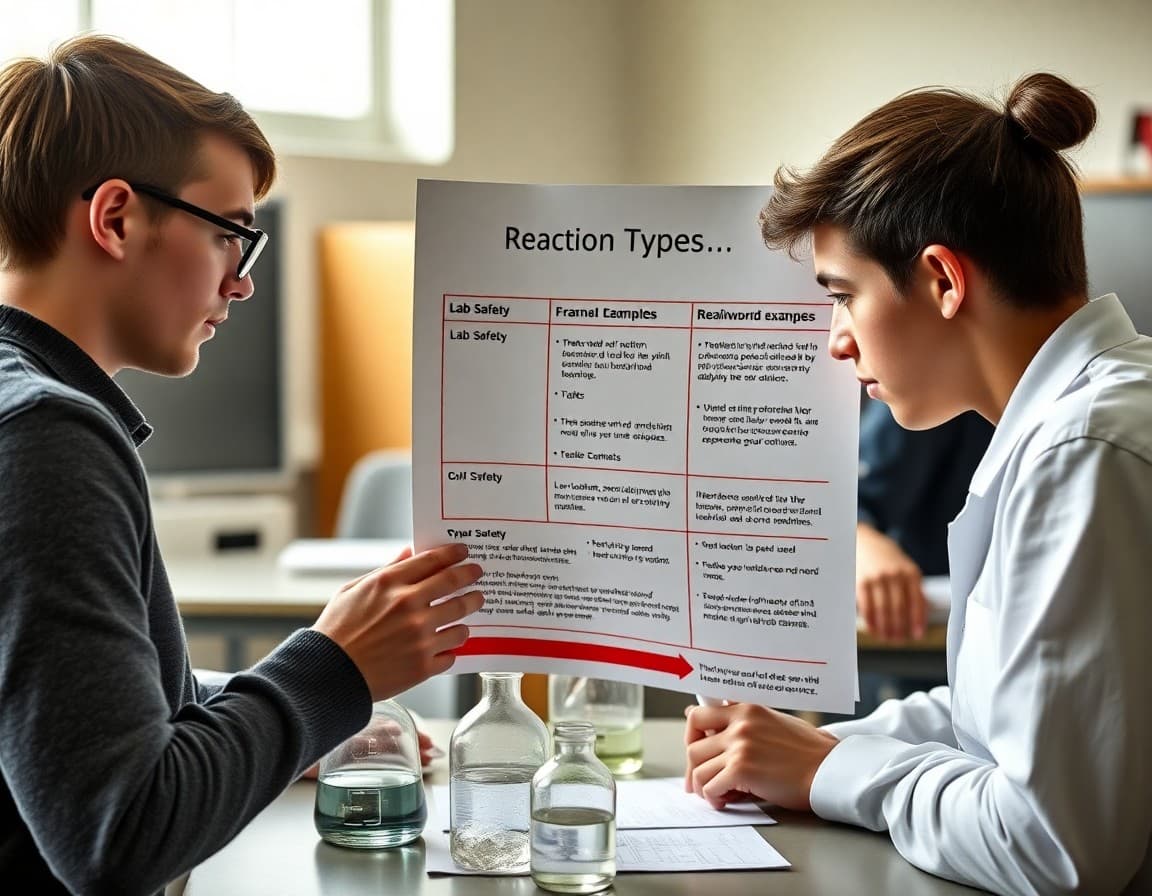
Synthesis: two or more substances combine to form one product. Example: iron and sulfur heated together form iron sulfide.
Decomposition: one substance breaks apart into two or more products. Example: hydrogen peroxide decomposes into water and oxygen gas.
Single displacement: one element replaces another in a compound. Example: zinc metal placed in hydrochloric acid produces zinc chloride and hydrogen gas.
Double displacement: two compounds exchange partners. Example: mixing silver nitrate and sodium chloride produces silver chloride (a white precipitate) and sodium nitrate.
Combustion: a substance reacts with oxygen and releases energy as heat and light. Example: methane burning on a stove produces carbon dioxide and water vapor.
Conservation of Mass and Balancing Equations
One of the most important principles in chemistry is that matter is neither created nor destroyed in a chemical reaction. Atoms rearrange themselves, but the same atoms that go in must come out. Students verify this by balancing chemical equations: making sure the number of each type of atom is the same on both sides of the equation arrow. This skill requires both chemistry understanding and mathematical precision.
Energy in Reactions
Some reactions release energy (exothermic), like burning and many combustion reactions. Others absorb energy (endothermic), like the cold pack chemistry used in sports medicine. Students will observe both types of reactions and measure the temperature changes associated with them. Understanding exothermic and endothermic reactions explains why some processes feel hot and others feel cold.
Lab Safety for This Unit
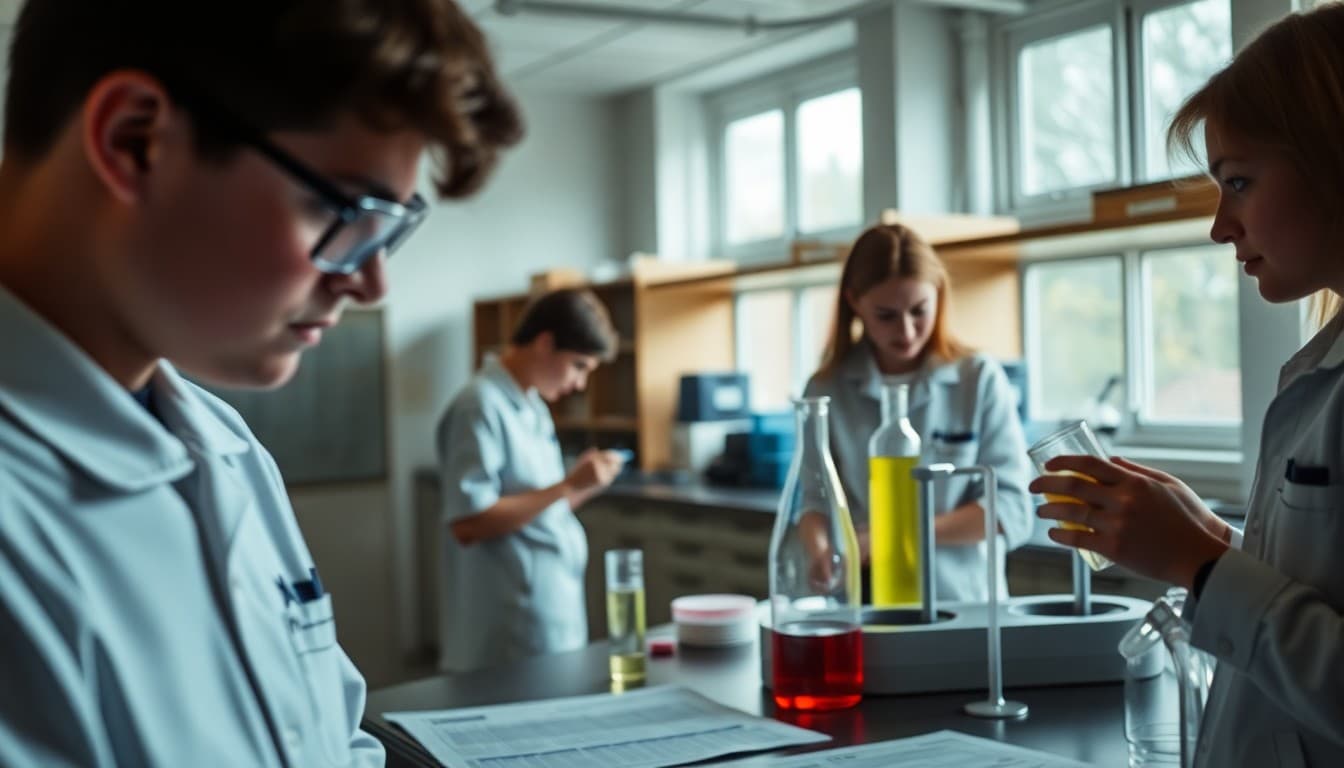
The chemical reactions unit involves more active lab work than most units. Students will always wear safety goggles. Gloves will be used for any reaction involving corrosive or irritating substances. The lab is ventilated. All students have reviewed the safety procedures posted at every lab station. If there is an incident, the procedure is to report to me immediately, rinse affected skin or eyes with water for 15 minutes, and follow up with the school nurse.
Real-World Applications to Discuss at Home
Chemical reactions are everywhere. The combustion in your car engine. The reactions in a battery that produce electricity. The Maillard reaction that browns food when you cook it. The reaction between antacids and stomach acid. Ask your student to identify one chemical reaction they encountered at home today and describe it in terms of reactants, products, and the type of reaction it represents.
Upcoming Assessment
The chemical reactions assessment covers reaction types, balancing equations, evidence of a chemical reaction (color change, gas production, precipitate formation, temperature change), and energy classification. Lab practical skills may also be assessed. A review guide will go home [timeframe] before the test.
Get one newsletter idea every week.
Free. For teachers. No spam.
Frequently asked questions
How do chemistry teachers explain chemical reactions to parents who haven't studied chemistry recently?
Start with examples from daily life. Cooking food, burning wood, rusting metal, and mixing baking soda and vinegar are all chemical reactions. The key feature of a chemical reaction is that the substances you start with are transformed into different substances with different properties. Iron plus oxygen becomes rust, which is iron oxide, a completely different material. Framing reactions as transformations rather than mixtures makes the concept accessible.
What lab safety information should a chemical reactions newsletter include?
Note the specific protective equipment students use (safety goggles, gloves, and lab coats or aprons as applicable), the ventilation measures in the lab, and the school's procedures for handling spills or accidents. If students will work with any chemicals that have strong odors or require special handling, mention it proactively. Parents who receive this information before the lab unit feel more confident than parents who worry about what their child is doing in the lab.
How do chemistry teachers explain balancing equations to parents in a newsletter?
Balancing a chemical equation is the mathematical record of a reaction. It tracks every atom that goes in and verifies that the same number comes out, just rearranged into new compounds. The law of conservation of mass says matter cannot be created or destroyed in a reaction. Balancing equations is how chemists confirm that principle mathematically. One sentence of context and one small example is enough for a parent newsletter.
What reaction types are most important to highlight in a chemistry newsletter?
The five main types are synthesis (two substances combine into one), decomposition (one substance breaks into two or more), single displacement (one element replaces another in a compound), double displacement (two compounds exchange partners), and combustion (a substance reacts with oxygen and releases energy). For a parent newsletter, name the types and give one familiar example of each. Parents remember the examples more than the category names.
What tool works best for subject teacher newsletters?
Daystage supports image embedding and structured text formatting, which works well for chemistry newsletters where diagrams, reaction examples, and safety information need to be organized clearly. A template with standing sections for lab updates, safety information, and real-world connections can be reused across each unit of the year.

Adi Ackerman
Author
Adi Ackerman is a former classroom teacher and curriculum writer with 8 years in K-8 schools. She writes about school communication, parent engagement, and what actually works in real classrooms.
More for Subject Teachers
Ready to send your first newsletter?
3 newsletters free. No credit card. First one ready in under 5 minutes.
Get started free